
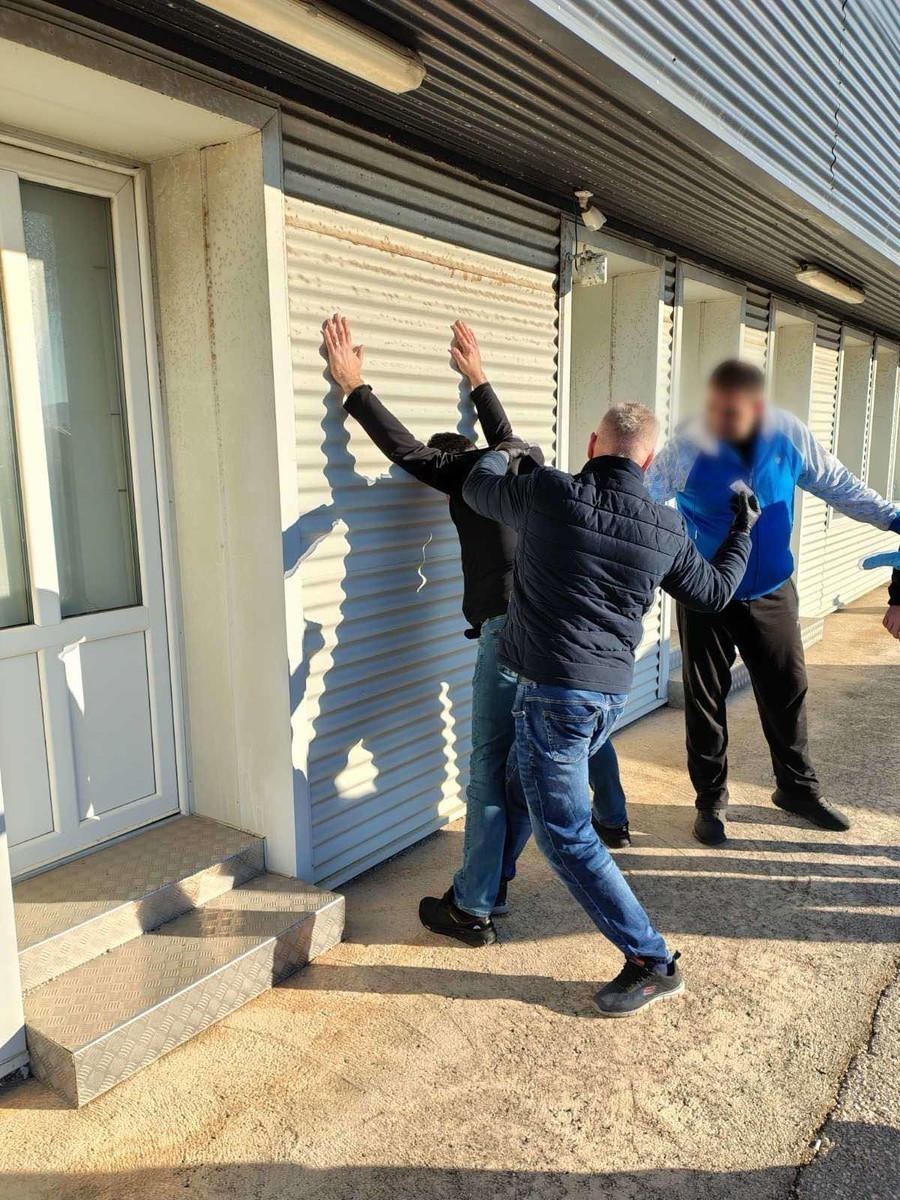
Support to capacity-building of law enforcement and border authorities enhanced their capacities to undertake preventive and repressive actions to detect and counter illicit possession and trafficking of firearms, ammunition and explosives from and through their jurisdictions. This is achieved through improved procedures (dedicated SOPs developed for the first time), equipment and training of the targeted law enforcement institutions specifically focusing on the implementation of the SOPs.
With substantively enlarging the assistance to border and criminal police services though this project (compared to the previous projects), the region is better equipped not only to detect trafficking and misuse of weapons in the region, but also to detect and combat any potential trafficking after the war in Ukraine which has received large amounts of military equipment and weapons during the war.
There is a noted increase in the number of weapons seizures in the last 5 years in the Western Balkans; 52% since 2019. While a total of 17,792 firearm incidents were reported in the Western Balkans, weapons seizures represented 46% of all of these incidents in the last 6 years. This demonstrates a proactive law enforcement response to the illicit possession, proliferation, and misuse of firearms, and increased capacities of law enforcement institutions, also thanks to the support provided thought this project.
Support to the Border Police Services
Needs-Based Support to Border Police Authorities
Comprehensive support to Border Police Services in the region has been provided based on findings of comprehensive needs assessments[1] of capacities of the Border police authorities in four Western Balkan jurisdictions: Albania, Montenegro, North Macedonia, and Serbia[2] to suppress illicit firearms trafficking that were conducted under the EU Council Decision 2018/1788. This involved support for the development of Standard Operating Procedures (SOPs), training, provision of equipment, and facilitation of regional knowledge sharing.
Development and Implementation of Standard Operating Procedures
A total of 12 Standard Operating Procedures were developed for Border police services in Albania, Serbia, Montenegro, and North Macedonia on the detection of FAE, risk analysis and emergency situations. SOPs were translated into local languages and endorsed by relevant local authorities. Workshops dedicated to the development of Standard Operating Procedures (SOPs) for the Border Police Services were organized in Albania, Montenegro, North Macedonia and Serbia.
Provision of Equipment for Enhanced Detection and Surveillance
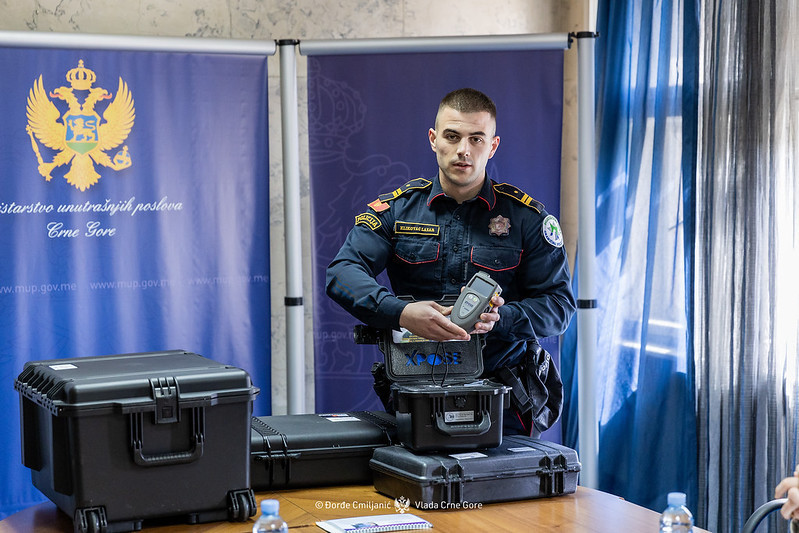
Furthermore, 940 pieces of equipment were procured for Border police of Albania, Serbia, North Macedonia and Montenegro. The procured equipment includes comprehensive set of detection, surveillance, and operational tools, ranging from handheld thermal cameras, X-ray scanners, explosives and narcotics detectors, and endoscopes to advanced drones, specialized surveillance systems, trail cameras, inspection mirrors, and IT equipment, significantly increasing capacities for detecting trafficking of firearms. Procurement of equipment was grounded on findings of Needs Assessments of border police services. and technical specifications agreed with the authorities.
Joint Training with FRONTEX for Border and Customs Officers
Capacities for firearms detection, risk analysis, emergency situations, and investigations of 64 border police officers and 20 customs officers from Bosnia and Herzegovina, Serbia, North Macedonia, Albania, Kosovo[3], and Montenegro have been increased though five trainings organised by SEESAC in cooperation with FRONTEX between June and October 2023 at the Croatian MOI Police Academy training centres. The training curriculum, focused on enhancing the skills of front-line officers in firearms, ammunition, and explosives detection, as well as in the identification of weapons, their components, and ammunition, thus integrating various aspects of the work developed under the project, making the effort more comprehensive and sustainable.
Addressing Emerging Trafficking Trends
In 2020, based on the request for support received from FRONTEX, SEESAC together with FRONTEX and in close cooperation with the authorities in the region developed the “Handbook on Firearms for Border Guards and Customs – the Western Balkans version” (the Handbook). The comprehensive process of the development of the Handbook lasted from December 2020 until December 2022, involving three regional meetings and a series of bilateral consultations with each of the jurisdictions. SEESAC contributed by co-organizing the regional meetings with FRONTEX, providing substantial inputs, facilitating bilateral consultations, organizing and cross-checking the translation of the documents, and collecting comments from jurisdictions, thus bringing this important document to its completion. The Handbook was translated into local languages and disseminated to Border police and Customs Services in 6 Western Balkan jurisdictions with SEESAC support.
In addition to this and building on the previous joint work of SEESAC and FRONTEX, on the 4-5 May 2023 in Belgrade, SEESAC organized a Workshop on the addendum of the “Handbook on Firearms for Border Guards and Customs – the Western Balkans version” related to the influence of the war in Ukraine and migrant crisis on the firearms trafficking in the SEE for the representatives of six Western Balkan jurisdictions. The addendum to this Handbook, focused on weapons trafficking following the invasion, was published by FRONTEX.
Regional Meetings of Border Police and Customs representatives
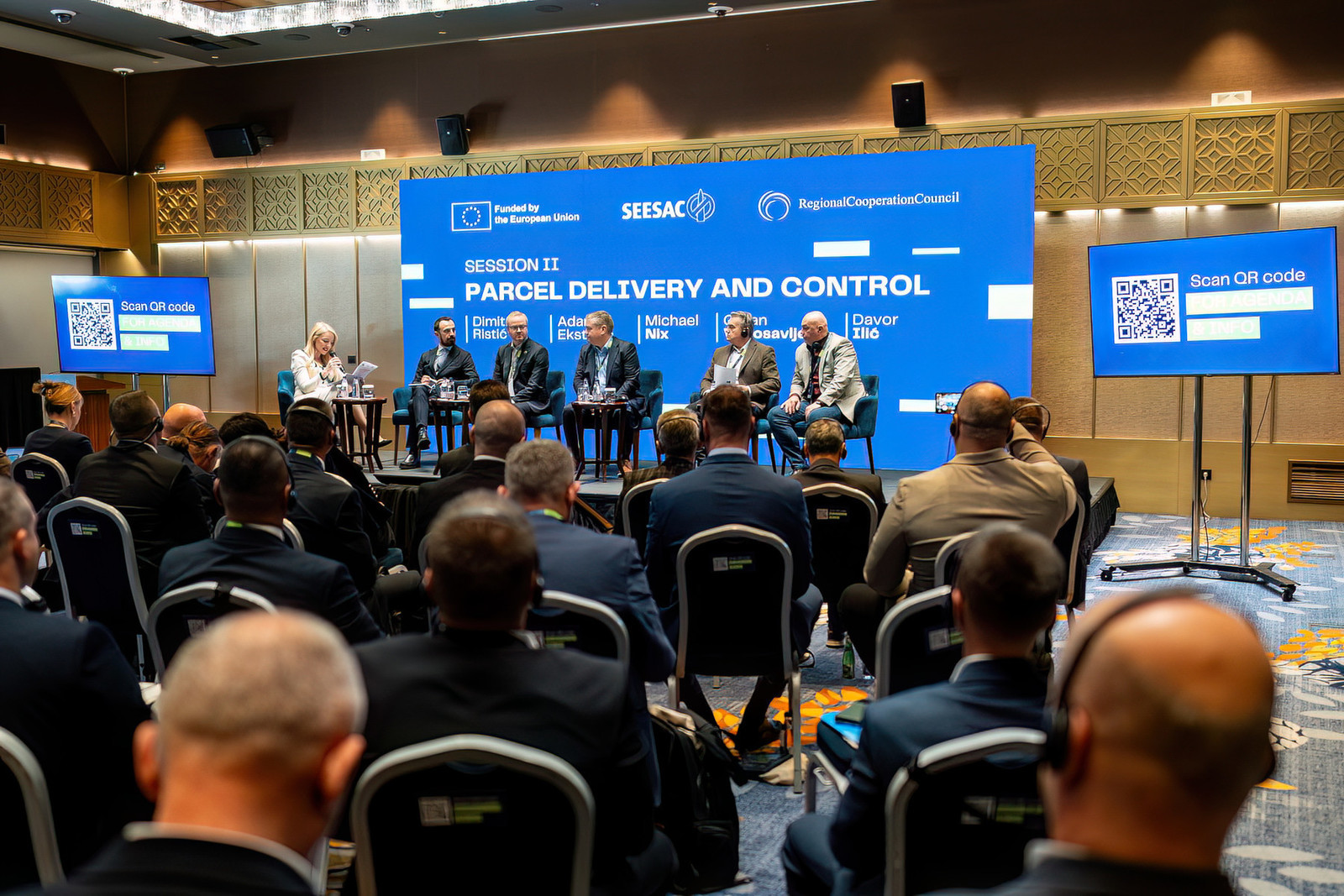
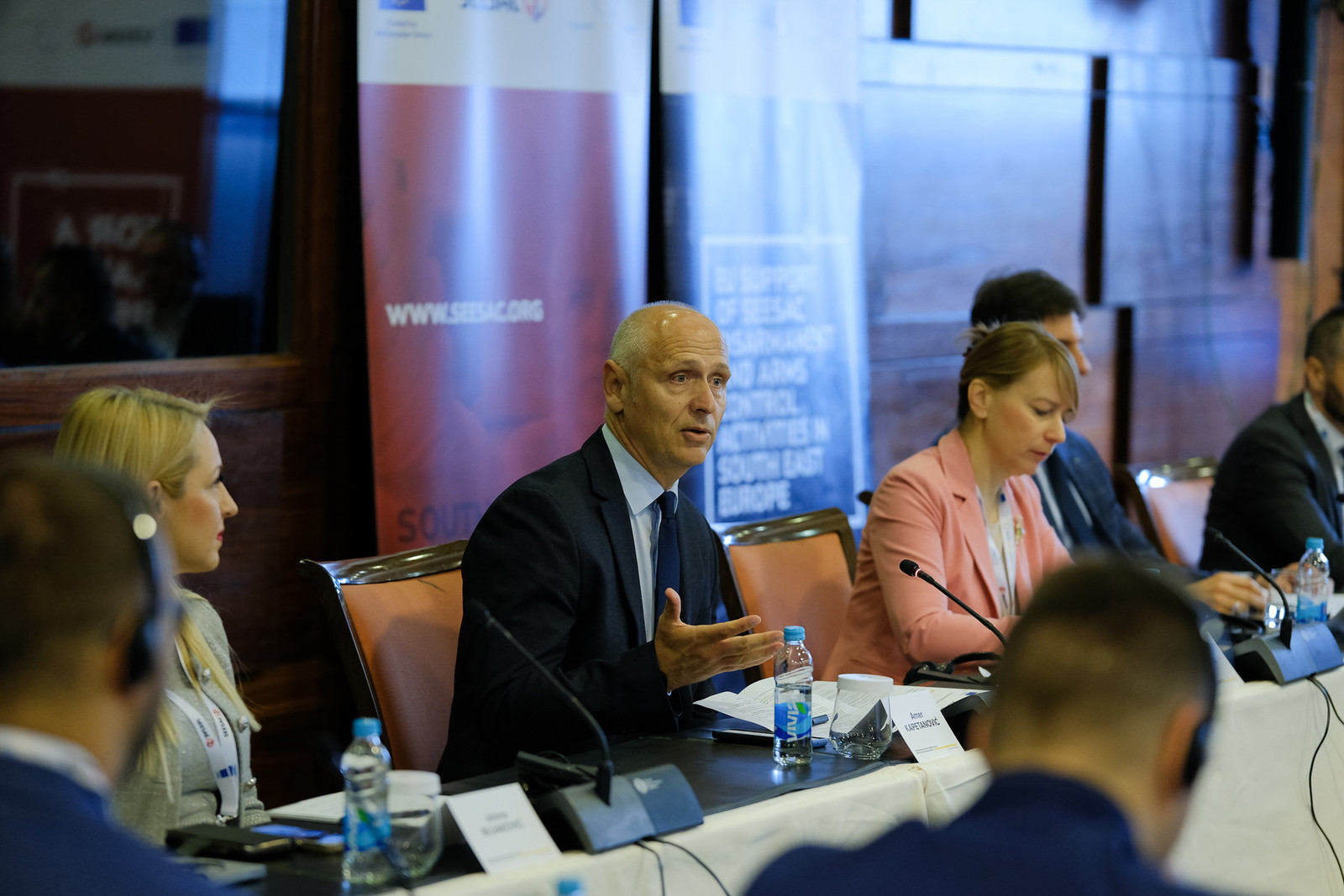
At the regional level, SEESAC organized four Regional Meetings of the Border Police and Customs representatives, gathering relevant representatives from all 6 Western Balkan jurisdictions and the Republic of Moldova; meetings were organized on 23-24 November 2021 in a hybrid format, on 6-7 December 2022 in Tirana, Albania, on 21-22 November 2023 in Skopje, North Macedonia, and in Budva, Montenegro on 5-6 November 2024. Three meetings were organised together with FRONTEX. These meetings contributed to enhanced cooperation of Border and Customs Services within the system of Integrated Border Management. They also serve as a platform for exchange of information on new modalities of trafficking of firearms, new challenges in efficient border control but also information on best practices in various border operations.
Support to the Criminal Police Services
Needs-Based Support to Criminal Police Authorities
Comprehensive support has also been provided to Criminal Police Services in Albania, North Macedonia, Montenegro, Serbia, Bosnia and Herzegovina, and Kosovo to increase their detection and investigation capacities of firearms related crimes, based on findings of a separate needs assessment conducted focusing specifically on criminal police services, through Council Decision 2018/1788. This involved support for the development of Standard Operating Procedures, provision of equipment and training, and facilitation of regional knowledge sharing.
Development and Implementation of Standard Operating Procedures
A total of 20 Standard Operating Procedures on detection, risk analysis, firearms/ammunition/explosives (FAE) related investigations, and emergency situations for the Criminal Police authorities were developed by SEESAC. SOPs were drafted during five dedicated workshops, organized in Albania, North Macedonia, Montenegro, Serbia and Bosnia and Herzegovina[3] during the period of September – November 2022. All SOPs have been finalized, translated, and sent for approval to relevant authorities of all five jurisdictions. SOPs were finally endorsed by relevant authorities in Serbia, Albania and Montenegro by the end of 2024 while they are still under the review of relevant authorities of BIH due to complexity of their intergovernmental organisation and by authorities of North Macedonia.
Provision of Equipment for Enhanced Detection, Forensic Investigation, and Surveillance
In addition to this, 905 pieces of equipment for the Criminal police forces in Western Balkans were procured. The procured equipment comprises a wide range of advanced tools for detection, forensic investigation, surveillance, and operational support including ground-penetrating radar, thermal and night vision binoculars, handheld X-ray and explosives detectors, crime scene investigation kits, drones, forensic light sources, digital cameras, specialized laboratory instruments, GPS trackers, software tools for digital investigation, IT equipment and other technical gear aimed at significantly enhancing the operational, investigative, and analytical capabilities of Criminal Police authorities in addressing licit firearms trafficking and their misuse across the Western Balkans. Procurement of equipment was grounded on findings of Needs Assessments of criminal police services. SEESAC worked closely with the authorities to develop the technical specifications for the procurement of the equipment.
Capacity-Building through Targeted Training
A total of 6 trainings related to the detection of firearms, investigations, emergency situations, and practical implementation of the risk analysis methodology for altogether 137 representatives of the Criminal Police of Serbia, North Macedonia, Kosovo, Albania, Montenegro, and Bosnia and Herzegovina took place, in that order, in the period between May and July 2023.
Additional training on the detection of firearms, emergency situations, and practical implementation of the risk analysis methodology was held for 24 representatives of the State Investigation and Protection Agency (SIPA) in BIH on December 5-8, 2023.
Regional meetings of Criminal Police Services
To facilitate the regional knowledge exchange, SEESAC organized 4 Regional meetings of Criminal Police Services from Western Balkans and the Republic of Moldova. The first meeting was organized in a hybrid format on 14 and 15 December 2021, while the following three were organized in person on 30 November - 1 December 2022, in Budva, Montenegro, on 25-26 April 2023 in Skopje, North Macedonia and on 23-24 April 2024 in Sarajevo, Bosnia and Herzegovina.
[1] Needs assessments have been conducted as part of implementatin of EU Council Decision 2018/1788.
[2] In parallel, same line of support was provided to the Border Police of Bosnia and Herzegovina and Kosovo through separate projects implemented by local UNDP Country offices.
[3] For the United Nations Development Programme, references to Kosovo shall be understood to be in the context of Security Council resolution 1244 (1999). For the European Union, this designation is without prejudice to positions on status, and is in line with UNSCR 1244/1999 and the ICJ Opinion on the Kosovo declaration of independence.
[4] The organisation of the workshop for Kosovo has been postponed at the request of the Ministry of Interior.