Support to Combating Illicit Arms Trafficking in Kosovo1 for Criminal Police (CPIAT)

Implementing period: February 2020 - June 2022

Budget: US$660,000

The objective of the project “Support to Combating Illicit Arms Trafficking in Kosovo for Criminal Police (CPIAT)” was to support the Kosovo Police in strengthening their capacities to better detect and increasingly confiscate firearms, components and ammunition, and improve the quality of investigations. The emphasis was placed on investigations against organized crime and criminal groups dealing with international arms trafficking using Kosovo as a transit route for illicit arms trafficking into the Western European countries. The project was implemented in line with the Small Arms Light Weapons and Explosives control strategy and action plan, as well as the Countering Organized Crime strategy, Intelligence Led Policing strategy and Community Policing Strategy and Action Plan.

The project was based on the organizational model People-Processes-Technology and increased the human and technical capacities including standardizing processes through reviewing and updating SOPs. The SOPs and regulatory framework will contribute to successfully implement the requirements of the UN Firearms Protocol and UN Palermo Convention, the European and SEE Action to combat Illicit Arms Trafficking.

The project included activities addressing first responders, police officers or border patrol officers, development of risk assessment and targeted operations including victim assistance. The project aimed at the following specific results: 1) Higher detection rates during traffic controls and house searches; 2) Increased number of leads during special investigative measures; 3) Higher seizure of weapons; 4) Increased public safety.

Overall achievements:

  • The project enhanced capacities of the Kosovo Police to detect and confiscate firearms, their components and ammunition, as well as improved the quality of FAE-related investigations, through the following accomplishments:
    • Gap analysis report on explosives investigations was successfully completed. The report identified the needs of all entities involved in the investigation of explosives, hand grenades, precursors, and category 4 pyrotechnics, in terms of required procedures, equipment, and human resources. The analysis also provided recommendations for improving the coordination and cooperation between all entities.
    • 201 police officers were trained on basic firearms investigations (177 men and 24 women), representing patrolling officers, community policing officers, traffic police, and investigators at the local level from 8 Regional Police Directorates, thus enhancing their knowledge on various types of firearms, converted firearms, blank firing weapons, potential trafficking routes of SALW, legal framework on SALW including international standards and practices, as well as the local and international cooperation through the Firearms Focal Point/International Law Enforcement Cooperation Unit (ILECU).
    • 30 police investigators (26 men and 4 women) from central level investigations and all 8 Regional Police Directorates undertook advanced training on firearms investigations. The investigators enhanced capacities in the use of special investigative measures in the field of IAT and cooperation with law enforcement units locally and internationally in effective investigations of smuggling of firearms, ammunition, explosives, drugs, immigrants, as well as on counterterrorism matters.
    • 40 members of police special units (all men) passed through two (2) five-day training sessions, improving their skills on firearms detections during house searches through theoretical and practical exercises, enhancing knowledge on legal and professional standards, general SOP, documenting at house searches, and presenting at court and to the media.
    • Police investigators were provided with equipment to support investigations. Eighty (80) computers with monitors and docking stations, forty (40) multifunctional printers and forty (40) toners, five (5) tablets and seventeen (17) laptops were procured and donated to the regional level police investigators, contributing to enhanced investigations in line with the intelligence led policing process, preparation of intelligence reports and products which will contribute to further increase the productivity and quality of police investigations on illicit arms trafficking and SALW control.
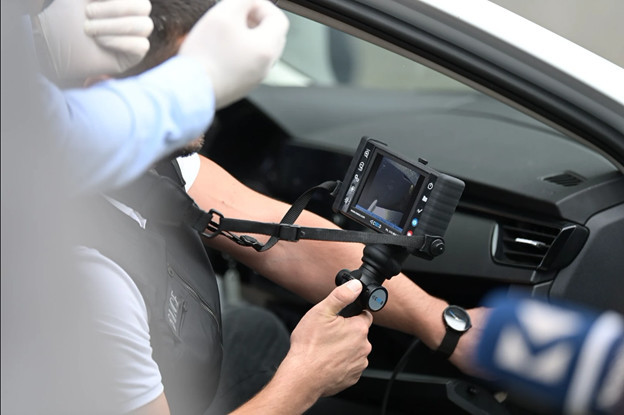
    • Kosovo Police investigation department was equipped with specialized equipment consisting of one (1) MALTEGO Software (XL Annual License) with one (1) desktop, one (1) server and one (1) training on using the license; one (1) dashboard/tableau visualization platform; two (2) explosive detectors; three (3) endoscopes; eight (8) thermal cameras and two (2) flying observation cameras. The project also ensured accompanying training for utilizing the new equipment.
    • Overall, through the project’s support to the human capacity development and enhancement of technological aspects of investigation branch, Kosovo Police planned and conducted a number of intelligence-led operations where firearms, converted firearms and ammunition were confiscated and the suspects prosecuted as per the applicable legislation.

      As reported by the Kosovo Police, the total number of confiscated firearms of various types during the project’s implementation amounted to 1,135 in 2020, 1,280 in 2021, and 1,473 in 2022.
       

The project contributed to Roadmap Goals 2, 3, 5 and key performance indicators 3, 4, 8, 10, 14 of the Roadmap for a sustainable solution to the illegal possession, misuse and trafficking of Small Arms and Light Weapons and their ammunition in the Western Balkans.

 

Cross-Border Integrated Institutional Approach Towards Combating Illicit Arms Trafficking

Implementing period: March 2021 - March 2023

Budget: U$522,067

The project, implemented jointly by UNDP Kosovo1 and UNDP North Macedonia, aimed to improve the capacities of the authorities in both jurisdictions to create more violence-resilient communities through series of closely coordinated activities such as joint trainings and sharing of experience and intelligence, joint actions in combating converted weapons trafficking, joint police patrols at the border, joint analysis and problem and risk profiles, information sharing as well as promoting an integrated institutional approach towards dealing with firearms-related threats. Project activities built upon and complemented other SALW and Roadmap related projects in Kosovo and North Macedonia, achieved synergies, developed best practices and enabled more coherent approaches.

The project was intended to reduce and overcome the knowledge and skills gap on SALW investigations and complexities and inconsistencies in operational structures and working procedures between the two jurisdictions and bring them closer to best European practices in the field. Project results directly enhanced the cross-border and inter-institutional collaboration in the field of SALW from the early stage of investigations and improved the capacities of law-enforcement institutions to deal with trans-national arms trafficking threats. Through its efforts, the project also aimed to reduce the workload to national resources, improve the quality of investigations and secure solid and reliable information flow, thus increasing the number of conviction cases at courts.

Overall achievements:

  • Strengthened institutional capacities and police officers’ knowledge and understanding of illegal possession, misuse and trafficking of SALW through specialized trainings.
    • Completed needs assessment and gap analyses in relation to IAT, SALW control, possession and misuse as well as weapons categorization, for both jurisdictions. Several meetings and workshops were organized to verify or present the findings of the gap analyses.
    • A series of specialized training sessions enabled 820 police officers from both jurisdictions (77 women, 743 men) to enhance understanding and knowledge on illegal possession, misuse and trafficking of SALW. More specifically:
      • 12 training sessions on information gathering, information sharing, and information analysis were provided for 420 police officers in total from both jurisdiction, 220 from Kosovo and 200 from North Macedonia (36 women, 384 men).
      • 11 training sessions on weapons categorization and their essential parts, explosives and other handmade explosives, the possession and misuse of firearms and community policing/ILP were provided for 400 police officers in total from both jurisdictions, 200 each jurisdiction (41 women, 359 men).
    • Knowledge products were developed and translated into local languages to serve as a continuous resource, in addition to the needs assessment and gap analysis for each jurisdiction, including:
      • Manual on explosives, handmade explosives, and precursors.
      • Manual on community policing and intelligence led policing.
         
  • Strengthened institutional capacities and improved operational information sharing between North Macedonia and Kosovo law-enforcement institutions in combating trafficking of converted firearms.
    • Four comprehensive training sessions and one workshop on converted firearms trafficking were developed and delivered, enabling 119 law enforcement officers (75 men and 24 women) to jointly exchange and enhance knowledge and understanding on the subject matter. Per jurisdiction, this encompassed 59 (46 men and 13 women) from North Macedonia and 60 (49 men and 11 women) from Kosovo.
    • A Joint Investigative Operation between police of Kosovo and North Macedonia was planned and successfully executed in November-December 2022, tackling a potential organized crime group dealing in illicit arms trafficking. This paved the way towards future joint operations and actions.
    • Improved capacities of Cyber Crime Units and Firearms Focal Point (FFP) in dealing with illicit firearms trafficking on the Internet and Darknet
      • In joint efforts, the project developed a Practical Manual on the Investigation of Small Arms and Light Weapons (SALW) on the Internet. This was made accessible in local languages for a continuous use of the law enforcement agencies.
         
  • Increased outreach and communication to citizens through mass-media and targeted awareness raising campaigns.
    • The project successfully completed two mass media awareness raising campaigns (one in each jurisdiction) and four targeted campaigns (two in each jurisdiction) on the dangers of the misuse and trafficking of firearms. The campaigns were highly praised by the project beneficiaries in both jurisdictions and achieved excellent visibility within the targeted audiences, with more than 1.3 million registered social media views and more than 8 million social media impressions.
       

The project contributed to Roadmap Goals 3, 4, 5 and key performance indicators 4, 5, 9, 10 and 14 of the Roadmap for a sustainable solution to the illegal possession, misuse and trafficking of Small Arms and Light Weapons and their ammunition in the Western Balkans.

Support to Firearms Related Investigations

Implementing period: January 2023 - October 2023

Budget: US$ 350,318

The project built upon the previous Roadmap projects implemented in the jurisdiction and further strengthened firearms investigations and operations of law enforcement authorities. The project specifically advanced the operations of the Firearms Focal Point in Pristina through the provision of technical support for enhanced data collection as well as through linking relevant databases and systems for better analytical work of FFP. The project also supported the efficiency of the Forensic Agency and exchange of forensic data with the FFP. Specialized equipment, training and peer exchange were provided to the Forensic Agency to advance its ballistic examinations in line with recognized standards. Finally, Kosovo Police was supported to advance its investigation capacities through the provision of specialized equipment for detection of weapons hidden underground, thus facilitating investigation and prosecution of firearms related crime.

Overall achievements:

  • Data collection and analysis by the Firearms Focal Point has been improved.
    • Following a thorough assessment and expert recommendations and support, the iBase data management system of the Firearms Focal Points was linked with the Traffic ballistic system and Evofinder Ballistic Identification system. The links of the databases successfully passed the testing and are currently in use by the law enforcement agencies in the jurisdiction. The linking of iBase to the Traffic system is expected to result in better data collection and analysis with regards to ballistic intelligence, while the linkage with the Evofinder system will help to ensure that ballistic intelligence can be linked to criminal intelligence. The interconnected systems should not only enable a more streamlined flow of information but also enable more effective and data-driven decision-making processes and operations.
    • As a critical aspect of the activities, the project also supported the digitalization of information held by the FFP. It converted physical or unstructured data into digital formats, thus making it more accessible and easier to manage. The digitalization is to significantly improve data search, retrieval, and analysis.
    • A dashboard solution was established at the FFP via the TABLEAU visualization platform. The established links between the IBase solution with Traffic and Evofinder enable the digitalization and the visualization of info that FFP possesses, feeding into the dashboard solution.
    • In addition, access to CartWin Pro head stamp information database was made available to the MoIA, Kosovo Forensic Agency, FFP, and Police Investigation department. The provided CartWin Pro licenses enabled the four entities to more efficiently identify aspects of ammunition.
       
  • Enhanced examination of seized firearms by the Ballistic Department at the Kosovo Forensic Agency
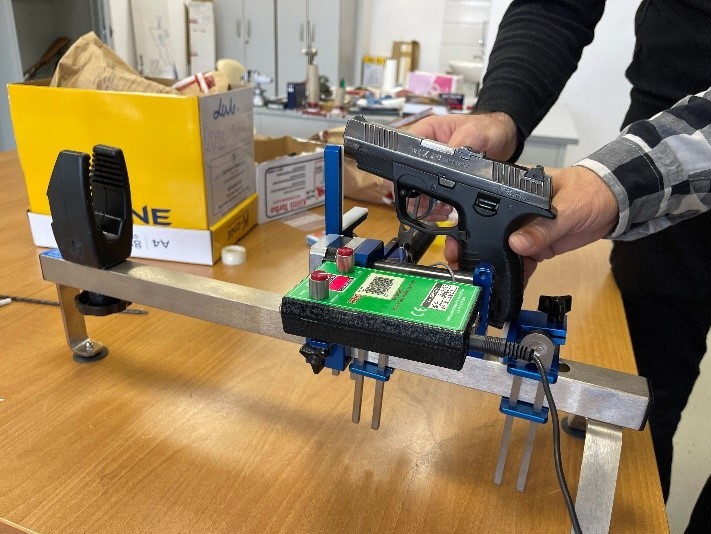
    • The KFA’s Ballistic Department was equipped with seven stereomicroscopes, five borescopes and two Trigger Scan systems. The provision of the specialized equipment is aimed to improve the quality of investigation and evidence provided to the justice system.
    • Nine forensic staff technicians (2 women and 7 men) were trained to professionally utilize the new equipment.
    • The preparation process for accreditation as per ISO 17025 has been completed. The MoI of Croatia supported the validation and accreditation of two methods at KFA according to ISO 17025: i) serial number restoration; and ii) shooting distance determination with chemical methods. Two experts from the Croatian Forensic Institute were engaged to deliver training for Kosovo Forensic Agency staff on the two methods, which are to be validated and accredited. The training equipped 15 forensic staff (5 women and 10 men) with skills and knowledge to perform with higher standards of work in accordance with the ISO 17025, and to ensure that the results they produce are accurate and dependable, providing reliable forensic evidence.
       
  • Improved capacities of Kosovo Police to detect weapons hidden underground.
    • One ground penetration radar (GPR) was provided to the Kosovo Police and five police operators (all men) were trained in using and maintaining the device This device is to support detection and seizure of weapons hidden underground.
       

The project contributed to Roadmap Goals 1, 2,3, 5 and 7 and key performance indicators 3, 4, 7, 8, 9 of the Roadmap for a sustainable solution to the illegal possession, misuse and trafficking of Small Arms and Light Weapons and their ammunition in the Western Balkans.

Integrated Institutional Approach and Strengthening Cross-Border Cooperation to SALW Control (Phase I)

Implementing period: November 2023 – December 2026

Budget: $1,600,990

This project, implemented by UNDP Kosovo, builds upon the previous work in support of the Western Balkans SALW Control Roadmap and has as its main goal to further advance institutional approach and community engagement in Kosovo towards addressing firearms- ammunition- and explosive (FAE)-related crime and misuse, and to strengthen bilateral cooperation between Kosovo1 and Albania in the field of SALW control.

Central to the project is the advancement of intelligence-led policing and deeper engagement with local communities through awareness-raising, trust-building, and support for legalization and voluntary surrender of SALW. In addition, the project will improve border control systems to prevent, detect, and counter the illegal flow of weapons. The project will further enhance the investigative and analytical capacities of Kosovo law enforcement, with a strong focus on the analytical capacities of the Firearms Focal Point, ballistic examinations of the Kosovo Forensic Agency, and cyber investigation capabilities of Kosovo Police to combat illicit arms trafficking via the darknet. Investments will be made in strengthening the secure handling, storage, and management of seized or surrendered FAE in accordance with international safety standards. Finally, the project will enhance police exchange and cooperation on SALW matters between Albania and Kosovo through joint police trainings and operational coordination.

The project contributes to Roadmap Goals 1, 2, 3, 4 and 5 and key performance indicators 1, 2, 3, 4, 7, 8, 9, 10, 11 and 13 of the Roadmap for a sustainable solution to the illegal possession, misuse and trafficking of SALW their ammunition and explosives in the Western Balkans by 2030.