
Western Balkans Mark the International Gun Destruction Day by Disposing of over 5000 Guns
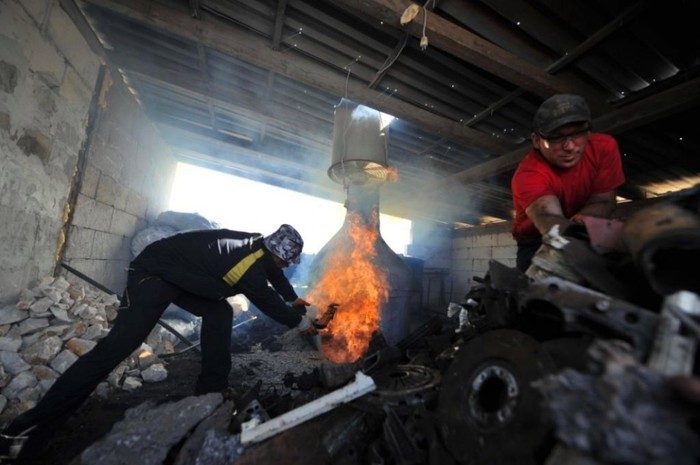
9th July Destruction in Kosovo
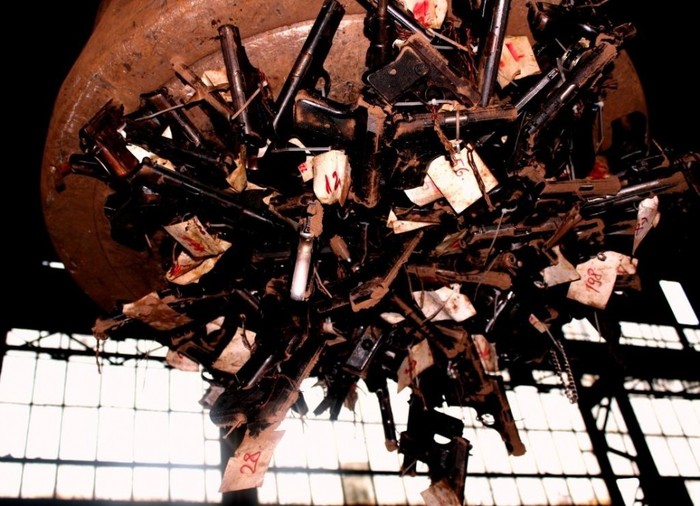
9th July Destruction in Bosnia and Herzegovina
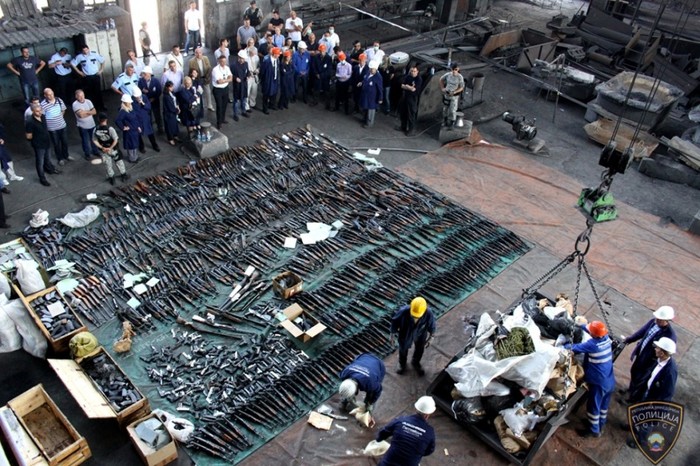
9th July Destruction in the former Yugoslav Republic of Macedonia
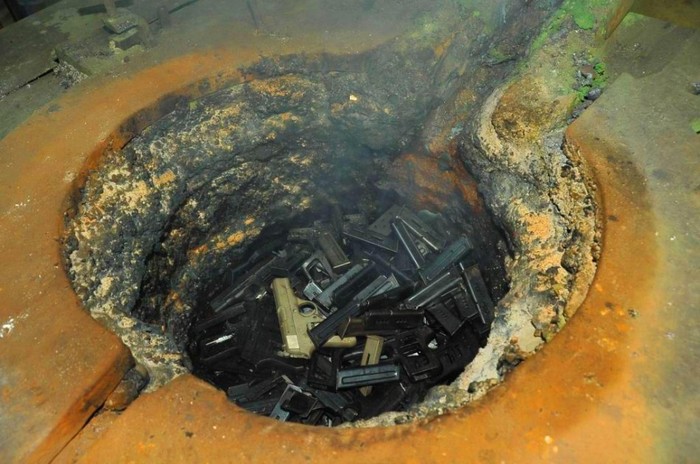
9th July Destruction in Montenegro

9th July Destruction in Albania (photo provided by NSPA)
Today, 9 July, is International Gun Destruction Day. To mark this important date, UNDP/SEESAC facilitated a region-wide destruction effort in the Western Balkans, resulting in the disposal of over 5000 pieces of SALW across the region in just 24 hours.
Albania, Bosnia and Herzegovina, Kosovo*, Montenegro, and the former Yugoslav Republic of Macedonia all took part in this initiative. By organizing national destructions and raising public awareness about the dangers posed by small arms, they strengthened safety and security at home and abroad.
Initiated by the UN in 2001, International Gun Destruction Day serves as a reminder about the threat that excess, poorly secured, and illegal weapons pose to the public’s everyday safety and security. In South East Europe, the problem of small arms circulation and proliferation knows no borders, and as such demands a joint, regional response.
Since 2002, UNDP/SEESAC has operated under this premise and since its inception, it has assisted South East Europe to rid itself of over 300,000 pieces of small arms. Today’s region-wide gun destruction was yet another way of making a stance across borders.
In Bosnia and Herzegovina, Montenegro, Kosovo1, and the former Yugoslav Republic of Macedonia, today’s destruction activities took place thanks to the generous support of the European Union, secured through the EU Council Decision 2013/730/CFSP, in Support of SEESAC Disarmament and Arms Control Activities in South East Europe in the framework of the EU Strategy to Combat the Illicit Accumulation and Trafficking of SALW and their ammunition”, dated 9 December 2013. The destructions in Albania were carried out with the support of NATO Support Agency (NSPA).
“We are very proud of today’s unique, coordinated effort as it not only illustrates the will and commitment of the Western Balkans to overcome their troubled past in order to build a safer future, but it clearly shows how far the region has progressed in this direction,” explained SEESAC Coordinator Dr. Ivan Zveržhanovski for this occasion.
For more on how the EU Support of SEESAC Disarmament and Arms Control Activities in South East Europe (EUSAC) project strengthens safety and security through Regional Cooperation in South East Europe, see the project page.
ABOUT EUSAC
EUSAC builds directly upon SEESAC’s decade-long SALW Control work, particularly achievements made through the previous EU-funded SALW Control project, conducted during the 2010-2012 period under the Council Decision 2010/179/CFSP. The new project, which was designed in close cooperation with national authorities, will work on the following five interrelated streams of activities:
- Increased security of stockpiles: through the renovation and security improvements to storages of arms and ammunition.
- Stockpile reduction: through the destruction of surplus arms and ammunition held in storages.
- Improved marking, tracing and registration of SALW: through the provision of support to the establishment or enhancement of existing weapons registration and record-keeping systems.
- Improved regional cooperation on awareness raising, information sharing and knowledge transfer: through the facilitation of regional cooperation between national institutions tasked with arms control.
- Implementation of collection and awareness raising campaigns.