
NEW ON OUR WEBSITE: An Overview of Armed Violence Victim Support in the Western Balkans
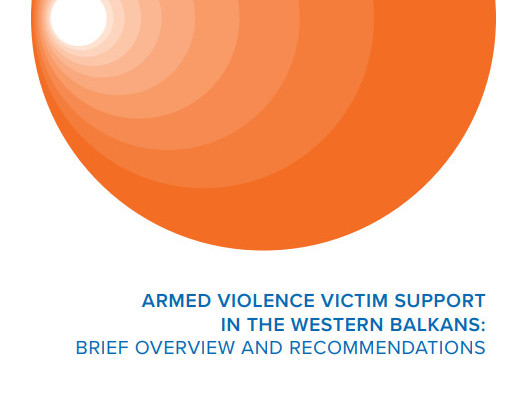
SEESAC has published the first regional study focused on support for victims of armed violence, presenting an overview of victims’ rights and new insights into support systems available across the Western Balkans. Drawing on a legal review and empirical research conducted between May and September 2024 in six jurisdictions, this publication highlights that victim support - particularly in cases involving firearms - remains an under-researched area.
Despite armed violence being a persistent public safety and development challenge, the needs of victims often remain on the margins of policy discussions. This publication offers actionable recommendations for policymakers, law enforcement institutions, civil society organisations, and international partners working to prevent and reduce armed violence, shedding new light on a critical yet overlooked dimension: support for victims of firearm-related violence.
The findings show that, while jurisdictions in the Western Balkans have made important progress in strengthening Small Arms and Light Weapons (SALW) control and reducing armed violence, victim-support systems remain fragmented. In most jurisdictions, legal definitions of ‘victim’ do not fully align with international standards and sometimes exclude indirect victims such as family members, an important safeguard required by the EU Victims’ Rights Directive.
The study overview calls for a multi‑faceted, whole‑of‑government approach that places victims’ rights at the centre of policy and practice. It underscores the need to harmonise legal frameworks with international standards, to ensure a comprehensive definition of the term ‘victim’, and to guarantee access to support before, during, and after criminal proceedings. Recognising the crucial role of police as the first point of contact, the recommendations highlight the importance of equipping law-enforcement officers and other first responders with the information and appropriate training for victim‑centred, trauma‑informed approaches that ensure sensitive engagement and timely referral to appropriate services.
To enhance the sustainability and effectiveness of victim-support systems, the study highlights the need for stable, predictable funding, alongside specialised training for all actors involved in providing assistance. It also identifies the need for more consistent and disaggregated data collection on both direct and indirect victims of firearm‑related violence to enable evidence‑based policymaking.
Leveraging existing regional cooperation among security sector actors will be essential. By sharing good practices through established security and coordination mechanisms, Western Balkans jurisdictions are well-positioned to accelerate alignment with EU and UN victims’ rights standards and build more robust systems capable of protecting and empowering all those affected by armed violence. The findings are expected to inform regional initiatives in 2026 as jurisdictions continue aligning with EU Victims’ Rights standards.
The publication is available in English, BCMS, Albanian, and Macedonian.
This publication was prepared as part of the regional project „Support for Enhancing the Fight Against the Illegal Possession, Misuse, and Trafficking of Small Arms and Light Weapons (SALW) in the Western Balkans” funded by the European Commission’s Directorate-General for Neighbourhood and Enlargement Negotiations, through the Instrument for Pre-accession Assistance (IPA II). It contributes to ongoing efforts by SEESAC and partners under the 2025-2030 SALW Control Roadmap and helps align policies in Western Balkans jurisdictions with EU policies on victims’ rights.