
SEESAC facilitates bilateral visit between MoDs of Albania and BiH
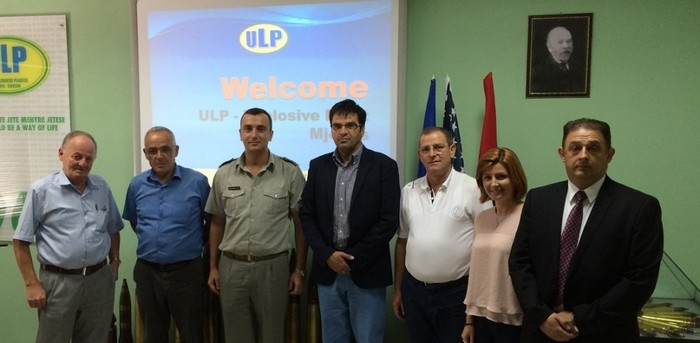
On 15 September 2015, SEESAC facilitated a bilateral exchange between experts of the Ministries of Defence of Bosnia and Herzegovina (BiH) and the Republic of Albania. The focus of the visit was on Albania’s demilitarization capacities and experiences, and included a visit to the ULP Mjekes demilitarization facility.
During the visit, the BIH delegation could see first-hand the capacities of the Albanian MoD to destroy various types of ammunition. The visit was an opportunity for the two sides to exchange knowledge of past and ongoing demilitarization processes and highlighted the importance and potential of regional cooperation in solving the surplus ammunition problems.
The visit was an integral part of the EUSAC Project activities in support of regional cooperation and exchange of expertise among national authorities in control of small arms and light weapons (SALW) and ammunition.
EUSAC:
SEESAC provides support to national and regional stakeholders in strengthening their capacities to control and reduce the proliferation and misuse of small arms and light weapons and in this way contribute to stability, security and development in South East Europe (SEE). European Union supports SEESAC’s disarmament and arms control activities in SEE through the Council Decision 2013/730/CFSP, from 9 December 2013.
EUSAC builds directly upon SEESAC’s decade-long SALW Control work, particularly achievements made through the previous EU funded SALW Control project, conducted during the 2010-2012 period under the Council Decision 2010/179/CFSP. Designed in close cooperation with national authorities, the project works on the following five interrelated streams of activities:
- Increased security of stockpiles: through the renovation and security improvements to storages of arms and ammunition.
- Stockpile reduction: through the destruction of surplus arms and ammunition held in storages.
- Improved marking, tracing and registration of SALW: through the provision of support to the establishment or enhancement of existing weapons registration and record-keeping systems.
- Improved regional cooperation on awareness raising, information sharing and knowledge transfer: through the facilitation of regional cooperation between national institutions tasked with arms control.
- Implementation of collection and awareness raising campaigns