
200 police administration staff from Serbia trained on the new Law on Weapons and Ammunition
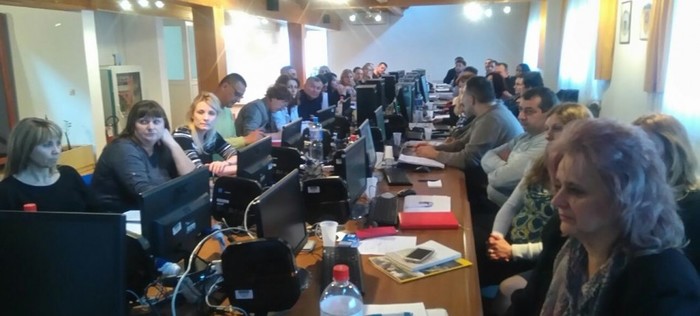
UNDP SEESAC supported Serbian Interior Ministry Police Directorate in holding five two-day training sessions for 200 staff of the Police Administration about the new Law on Weapons and Ammunition that is coming into force on 5 March this year. The first group of 40 staff began their course on 17 February, 2016 at the Interior Ministry’s educational facility close to capital Belgrade. The last
group completed their training on 1 March, 2016.
Police administration staff from all over the country were trained about the new law and how to practically implement it in their daily work. “We will see how the law is being implemented from March 7, 2015, we are expecting feedback from you”, Assistant to the Head of Administration Department at the Police Directorate Miljko Simovic told the participants at the beginning of the training.
The new Law on Weapons and Ammunition was passed on 27 February 2015, but its implementation began with one year delay. The new law is changing many procedures, as well as the types of licenses and how they look. Ministry of Interior had one year to make those alterations, including preparation of the training for the personnel from across the state who are directly involved in implementing the law and issuing documents, and which is now taking place.
SEESAC is supporting the training through its EUSAC project, funded by the European Union under EU Council Decision 2013/730/CFSP, in support of SEESAC disarmament and arms control activities in South East Europe in the framework of the EU Strategy to combat the Illicit Accumulation and Trafficking of SALW and their Ammunition.
ABOUT EUSAC
EUSAC builds directly upon SEESAC’s decade-long SALW Control work, particularly achievements made through the previous EU-funded SALW Control project, conducted during the 2010-2012 period under the Council Decision 2010/179/CFSP. The project, designed in close cooperation with national authorities, works on the following five interrelated streams of activities:
- Increased security of stockpiles: through the renovation and security improvements to storages of arms and ammunition.
- Stockpile reduction: through the destruction of surplus arms and ammunition held in storages.
- Improved marking, tracing and registration of SALW: through the provision of support to the establishment or enhancement of existing weapons registration and record-keeping systems.
- Improved regional cooperation on awareness raising, information sharing and knowledge transfer: through the facilitation of regional cooperation between national institutions tasked with arms control.
- Implementation of collection and awareness raising campaigns.