
SEESAC Continues Its Capacity-building Training Series in North Macedonia with a focus on Crisis Communication
When a firearm-related incident occurs, within minutes, social media fills with speculation, rumors spread, and public anxiety builds. How institutions respond in those first hours, or fail to, can determine whether a crisis is contained or deepened.
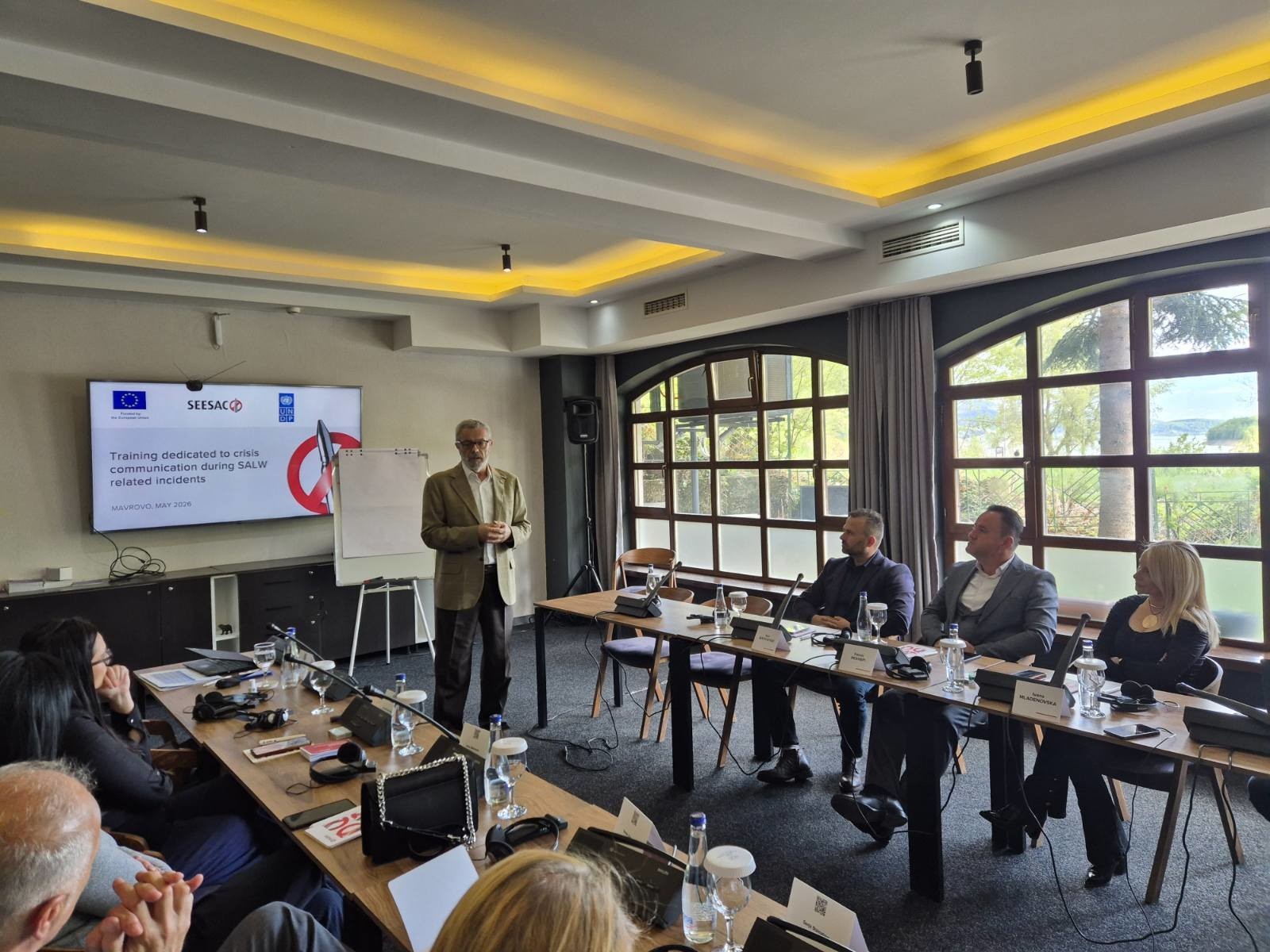
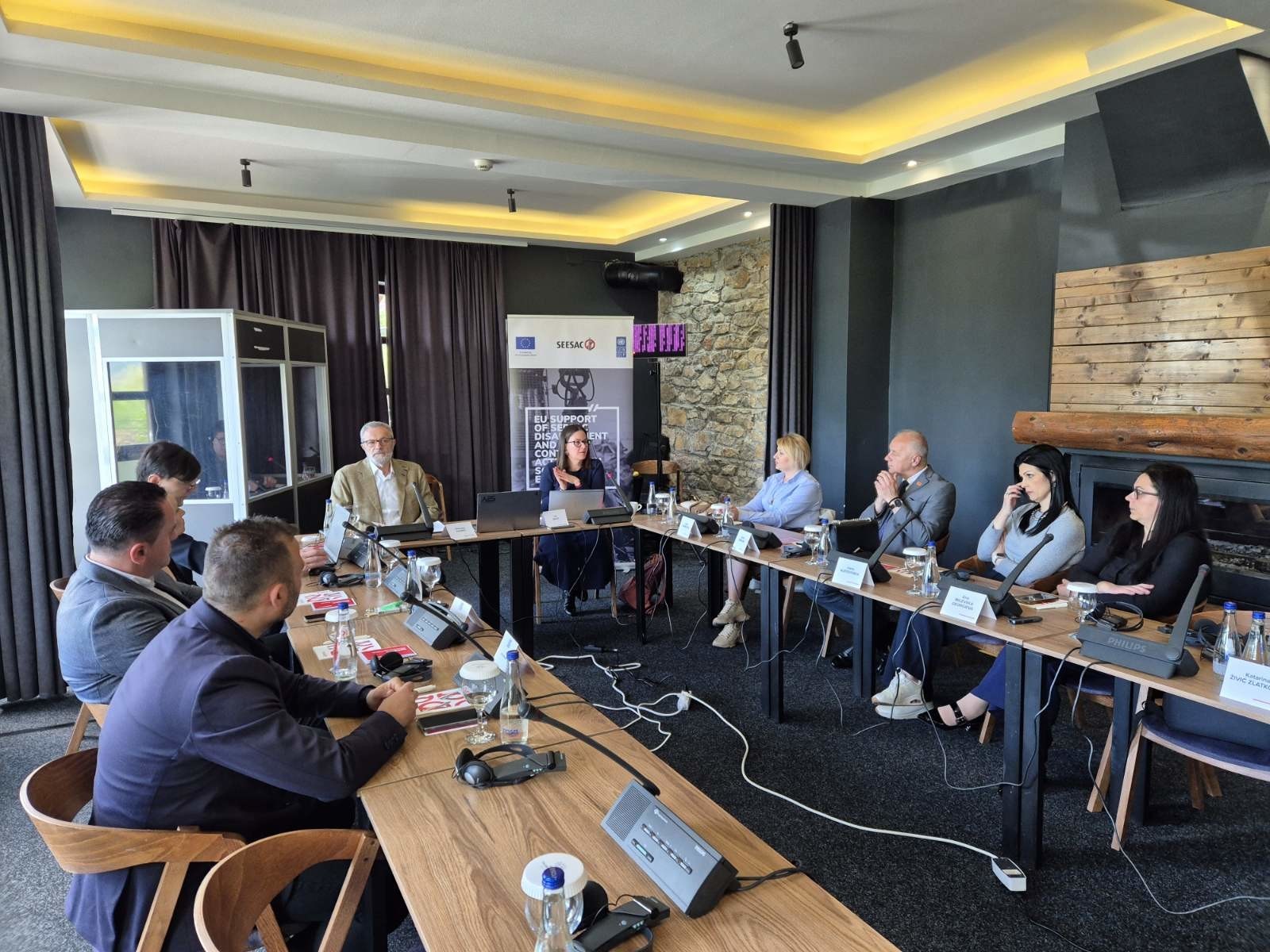
It is this challenge that brought together representatives of the Ministry of the Interior and police authorities of North Macedonia in Mavrovo on 14–15 May 2026, for a two-day training on crisis communication during SALW-related incidents, organised by SEESAC as part of a series of trainings aimed to build capacities for more effective awareness raising for authorities across the Western Balkans.
The training addressed the full cycle of crisis communication, from preparation that must happen before any incident occurs and includes assessment of risk, to the critical first hours when institutions must speak clearly, consistently, and with one voice and ending with evaluation of communication following a crisis event.
Participants worked through practical mechanics: how to form and deploy a crisis communication team, how to assess risks and anticipate likely scenarios, how to craft messages that are clear, truthful and relevant to the public, and how to choose the right communication channels for different audiences. Hands-on exercises challenged them to build a crisis communication plan from the ground up and stress-test it under simulated conditions.
A key resource throughout the training was the Guidelines for Communication in Crisis Situations Linked to Firearms, recently published by SEESAC.
The Guidelines make clear that in today's information environment, where misinformation has been identified as one of Europe's greatest risks, institutions that are not prepared to take control of the narrative will inevitably lose it.
The training is part of the needs identified within the Regional Awareness-Raising Task Force, facilitated by SEESAC, which brings together ministries of the interior and police authorities from the six Western Balkan jurisdictions with the shared goal of reducing the misuse and illicit possession of small arms and light weapons through increased awareness and communication activities.
The training was made possible with the financial support of the European Union as part of the second phase of the regional project 'Support for Enhancing the Fight Against the Illegal Possession, Misuse, and Trafficking of Small Arms and Light Weapons (SALW) in the Western Balkans', funded by the European Commission, Directorate-General for Neighbourhood and Enlargement Negotiations, through the Instrument for Pre-accession Assistance (IPA II).