
North Macedonian Authorities Sharpen Awareness Campaigning Skills in Mavrovo
Awareness campaigns are a powerful tool available to authorities seeking to reduce the demand for and misuse of firearms. When done well, they can shift attitudes and change behaviors. Yet implementing an effective campaign is far from simple. It demands a clear understanding of target audiences, carefully crafted messages, the right choice of channels, and the skill to bring all these elements together coherently.
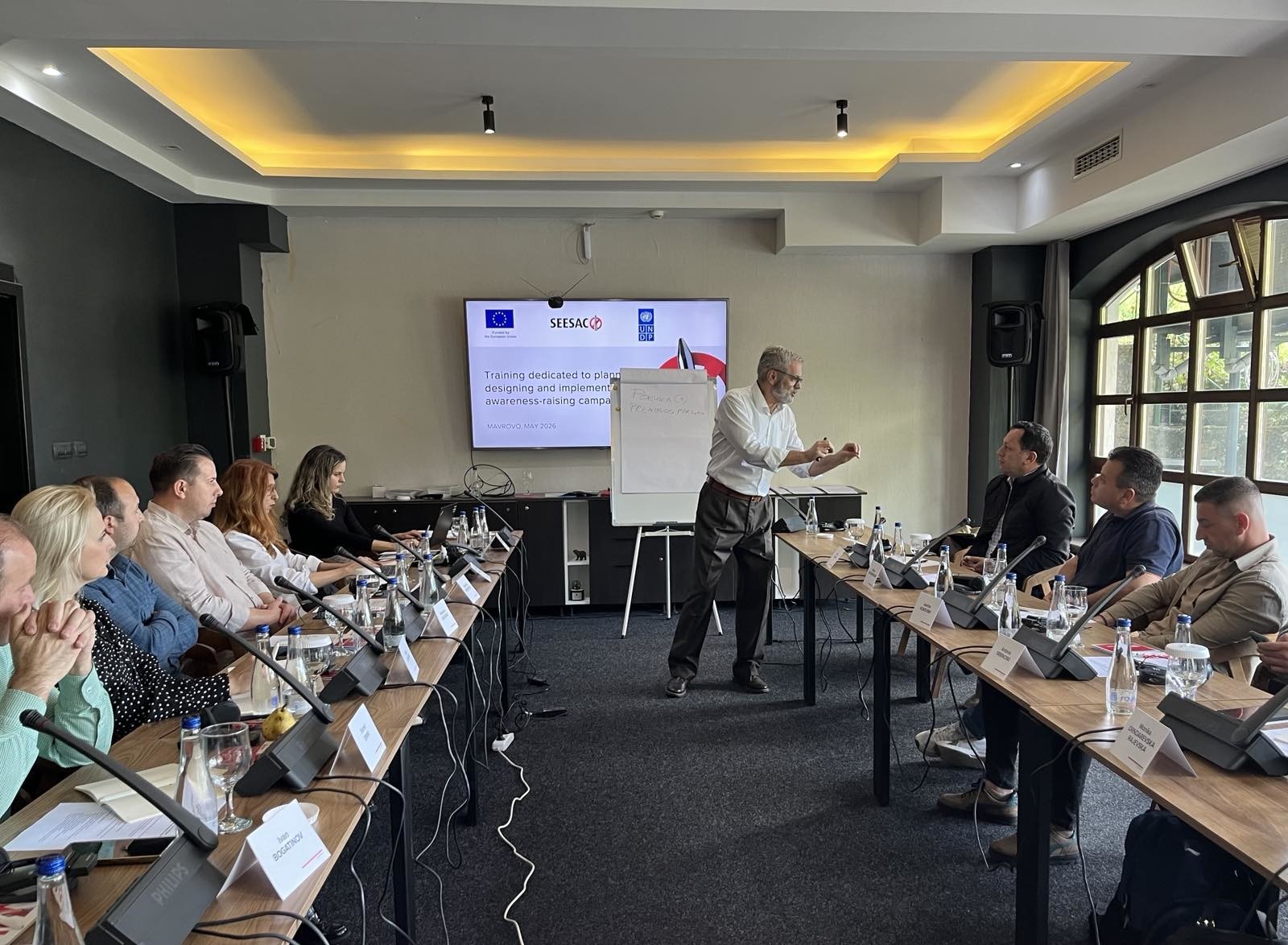
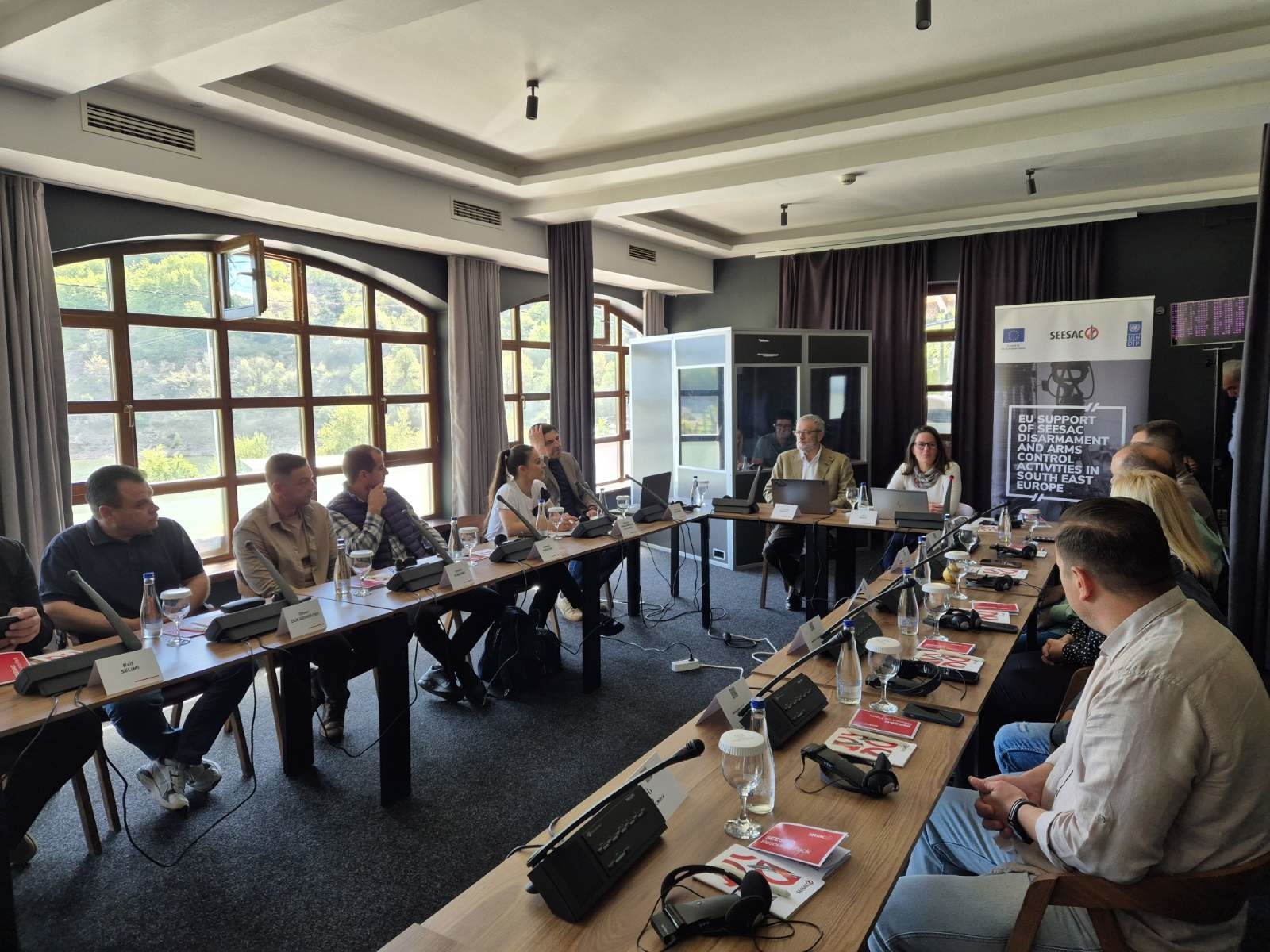
These are the skills representatives of the Ministry of the Interior and police authorities of North Macedonia came to further improve at a two-day training, held in Mavrovo on 12-13 May 2026, organised by SEESAC as part of a series of trainings for authorities across the Western Balkans.
The training covered the full architecture of an effective campaign, from research and target group identification to message development, choice of communication channels, and event planning. Participants practiced building actual campaign frameworks through hands-on exercises, developing messages, and implementing them across different communication channels.
To inform their future campaign planning and ensure it is rooted in evidence, participants were presented with some of the key findings from SEESAC's study Understanding the Factors Fuelling the Demand for Firearms in the Western Balkans, with a specific focus on North Macedonia.
The findings reveal an interesting picture. While 81.5% of respondents do not wish to own a firearm, interest is notably higher among students (16%) and in rural areas (11.5%). Young people aged 18–30 stand out as a priority group, nearly one in three believes all adult men should own a firearm and views gun ownership as part of national identity, while 18% justify celebratory shooting.
These are examples of insights that enable moving beyond generic messaging and design campaigns that speak directly to the attitudes and behaviors of the target audience. Translating that evidence into campaign planning and implementation was one of the central threads throughout the two days.
The training came as a direct response to the expressed needs identified by authorities within the Regional Awareness-Raising Task Force. The task force, facilitated by SEESAC, brings together ministries of the interior and police authorities from the six Western Balkan jurisdictions with the shared goal of reducing the misuse and illicit possession of SALW through increased awareness and communication activities.
The training was made possible with the financial support of the European Union as part of the second phase of the regional project 'Support for Enhancing the Fight Against the Illegal Possession, Misuse, and Trafficking of Small Arms and Light Weapons (SALW) in the Western Balkans', funded by the European Commission, Directorate-General for Neighbourhood and Enlargement Negotiations, through the Instrument for Pre-accession Assistance (IPA II).