
Regional Steering Group on SALW meets to Review Achievements and Plan Future Activites in SEE


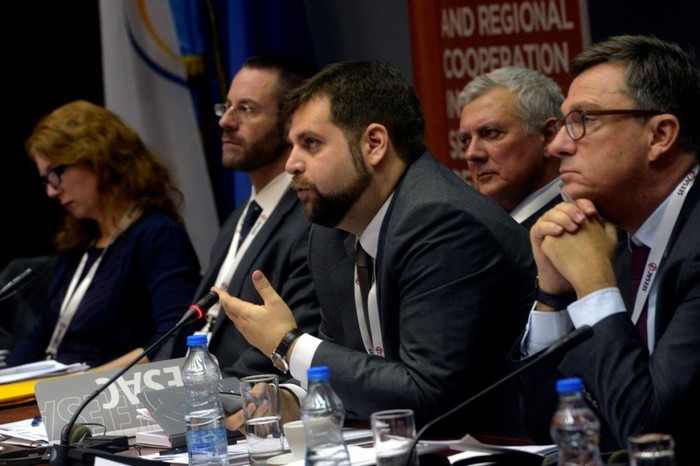
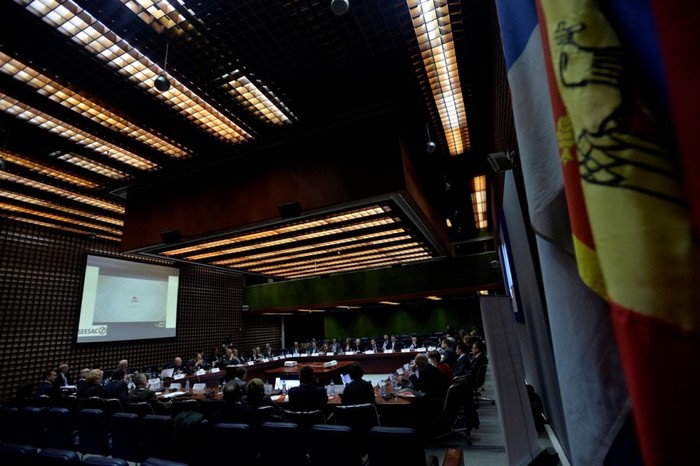

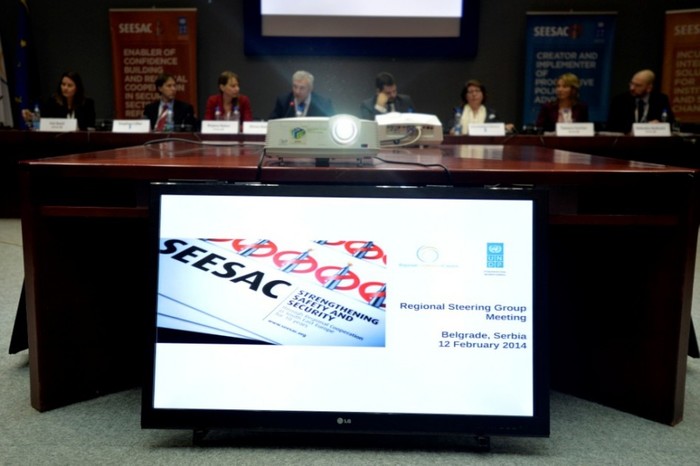
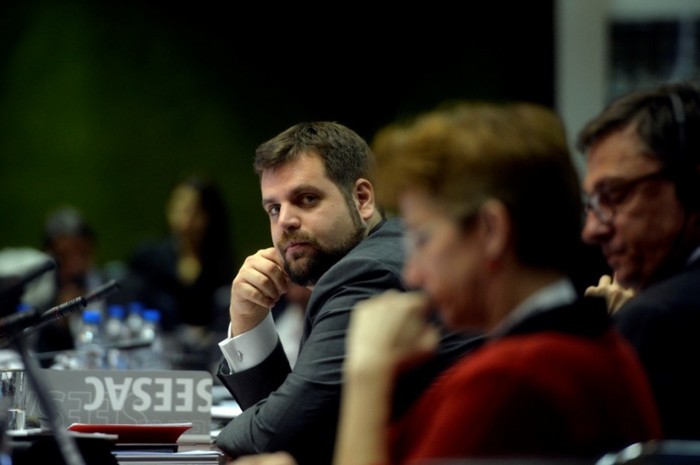

On 12 February 2014, the Regional Steering Group for Small Arms and Light Weapons (RSG) held its annual meeting in Belgrade, Serbia. Hosted by SEESAC, the meeting, co-chaired by UNDP and the Regional Cooperation Council (RCC), gathered national SALW focal points or their representatives from Albania, Bosnia and Herzegovina, Croatia, Moldova, Montenegro, Serbia and the former Yugoslav Republic of Macedonia, providing an opportunity for a collective overview of the 2013 SALW Control activities and informed discussion of future plans.
This year, the RSG benefited from an exceptionally strong presence of UNDP leadership. Resident Representatives from Albania, Bosnia and Herzegovina, Croatia, Serbia, the former Yugoslav Republic of Macedonia, and Development Coordinator in Kosovo1 attended, as well as several high officials from the UNDP Regional Bureau for Europe and CIS.
Also present, in the role of observers, were colleagues from UNDP country offices in Bosnia and Herzegovina, Croatia, Kosovo, Montenegro, as well as representatives of the UN Office in Belgrade, United Nations Office on Drugs and Crime, EU Delegation to the Republic of Serbia, Organization for Security and Cooperation in Europe (OSCE), North Atlantic Treaty Organization (NATO), EUROPOL, ITF, Small Arms Survey, RACVIAC, and Embassies of Austria, Croatia, France, Germany, Norway, Sweden, Switzerland and the United States.
RSG meetings are an essential part of the SEESAC governance structure. SEESAC receives its political and strategic guidance and key indigenous support from the RSG which is composed of representatives of the governments from the states concerned, the Regional Cooperation Council (RCC), UNDP, and observers from relevant international and regional institutions and civil society.
The meeting was opened by Irena Vojáčková-Sollorano - UN Resident Coordinator and UNDP Resident Representative in Serbia, Olivier Adam – Director of the Bratislava Regional Center of UNDP Europe and the CIS, Efrem Radev - Senior Expert for Security Issues at the Regional Cooperation Council and Luca Bianconi, Head of Political Section of the EU Delegation to Serbia. Dr. Ivan Zverzhanovski, SEESAC Coordinator moderated the meeting.
Ms. Vojáčková-Sollorano opened the event and noted the high attendance of national counterparts which clearly reflects their buy-in and commitment to the SALW control activities. The results made in this realm are concrete and in Serbia, for instance, the SALW control activities implemented with the support of SEESAC, gave way to the disposal of over 100,000 SALW, highlighted Ms. Vojáčková-Sollorano.
Mr. Adam also commended the countries of the region on the results achieved thus far. Whether it is better marking, tracing and record-keeping, the implementation of important national collection campaigns, the enhancement of stockpile management or the destruction of some 300,000 pieces of surplus and confiscated firearms – these are all results of which the region can rightly be proud, said Mr. Adan. He further encouraged all present to continue to coordinate their respective national and regional responses to the existing challenges, because those challenges transcend borders.
Mr. Radev commended SEESAC on its significant success and encouraged countries in the region to use the benefits offered by such a regional initiative and to further deepen their collaboration.
The Head of the Political Section of the EU Delegation to Serbia, Mr. Bianconi took the opportunity to highlight the three principles of the EU Strategy to Combat the Illicit Accumulation and Trafficking of Small Arms and Light Weapons (SALW) and their Ammunition: prevention, support to multilateralism and cooperation with partners. The SALW control work implemented by SEESAC neatly fits with the aforementioned principles, which is why the Council of the European Union decided to continue to Support SEESAC Disarmament and Arms Control Activities in South East Europe. Through the recent Council Decision 2013/730/CFSP, the European Union dedicated over €5 million to SALW control activities to be implemented by SEESAC over the course of the next three years (2014-2016).
In addition to providing an overview of SEESAC’s 2013 activities, during the following session, SEESAC Coordinator - Dr. Zverzhanovski familiarized all present with the activities planned under the new EU funded project - EUSAC, which will be implemented across the SEE, and which are all based on the specific needs expressed by national authorities themselves.
SALW focal points from Albania, Bosnia and Herzegovina, Croatia, Montenegro, Serbia and the former Yugoslav Republic of Macedonia unanimously expressed their support of and gratitude to SEESAC for its excellent work and relentless support in achieving a difficult task - strong arms control in SEE.
Furthermore, the SALW focal points presented relevant activities already carried out on national levels, as well as their ongoing needs and future plans. The presentations served as starting point for a subsequent discussion on challenges encountered during the implementation of the national projects, further coordination of planned activities and support for development of future SALW projects.
Most of SEESAC’s SALW Control activities are currently generously supported by the Kingdom of Norway and by the European Union, as an integral part of the EU Strategy to combat the illicit accumulation and trafficking of SALW and their ammunition.