
Planning - key to preventing unplanned explosions and arms trafficking
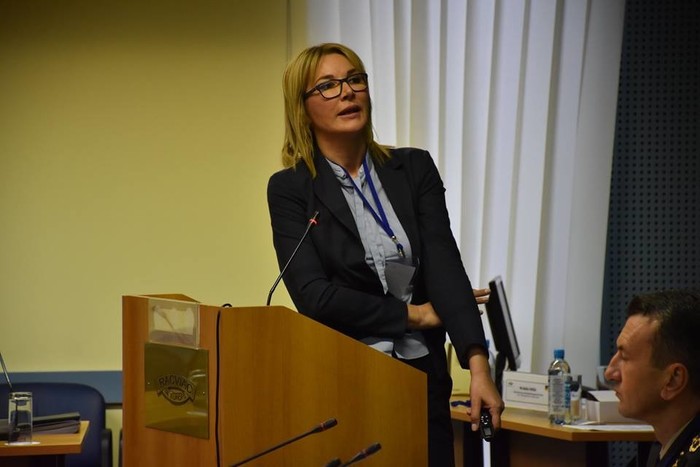
SEESAC shared its experience in implementing activities devoted to preventing illicit arms trafficking at a Physical Security and Stockpile Management (PSSM) Seminar, organized by RACVIAC - Centre for Security Cooperation and attended by representatives of international organizations and Ministries of Defence in the Western Balkans. The seminar took place from 7–9 November 2017 on the RACVIAC premises in Rakitje, Croatia.
Small arms and light weapons (SALW) and ammunition across South East Europe are too often stored in aging, inadequate facilities. Unsafe and unsecured storage practices are a threat to public safety as they can lead to unplanned explosions and fuel illicit arms trafficking. Over the course of the last fifteen years, SEESAC has been working in South East Europe to improve storage security infrastructure and human capacities and destroy surplus weapons and ammunition. Investing in people to develop the necessary skills is essential to prevent these dangers, so SEESAC staff regularly participate in seminars and conferences to pass on their knowledge and experience.
SEESAC’s ammunition expert, Arben Kotobelli, and Tamara Svircev, who regularly monitors the upgrade of storage facilities across South East Europe, shared their knowledge at the RACVIAC seminar. Arben highlighted how an explosion at an ammunition depot in Gerdec in 2008 made the safe disposal of surplus ammunition the top priority for the Ministry of Defence of Albania.
Complementing Arben’s contribution, Tamara gave an overview of SEESAC’s infrastructure interventions to bring SALW and ammunition storage facilities in South East Europe up to international standards, focusing on physical security upgrades such as security fences, gates, doors, CCTV and access control systems, as well as the provision of targeted PSSM training. Tamara emphasised that security and safety upgrades to storages are only part of the SALW control puzzle. Enhancement of storage facilities is ineffective if it is implemented in isolation, instead it must be part of a wider strategy including diverse interventions from policy development to public awareness-raising campaigns.
SEESAC has been sharing expertise in stockpile management across South East Europe since 2002.