
SEESAC Publishes Guidelines to Support Ministries of Interior and Police in Strengthening Crisis Communication
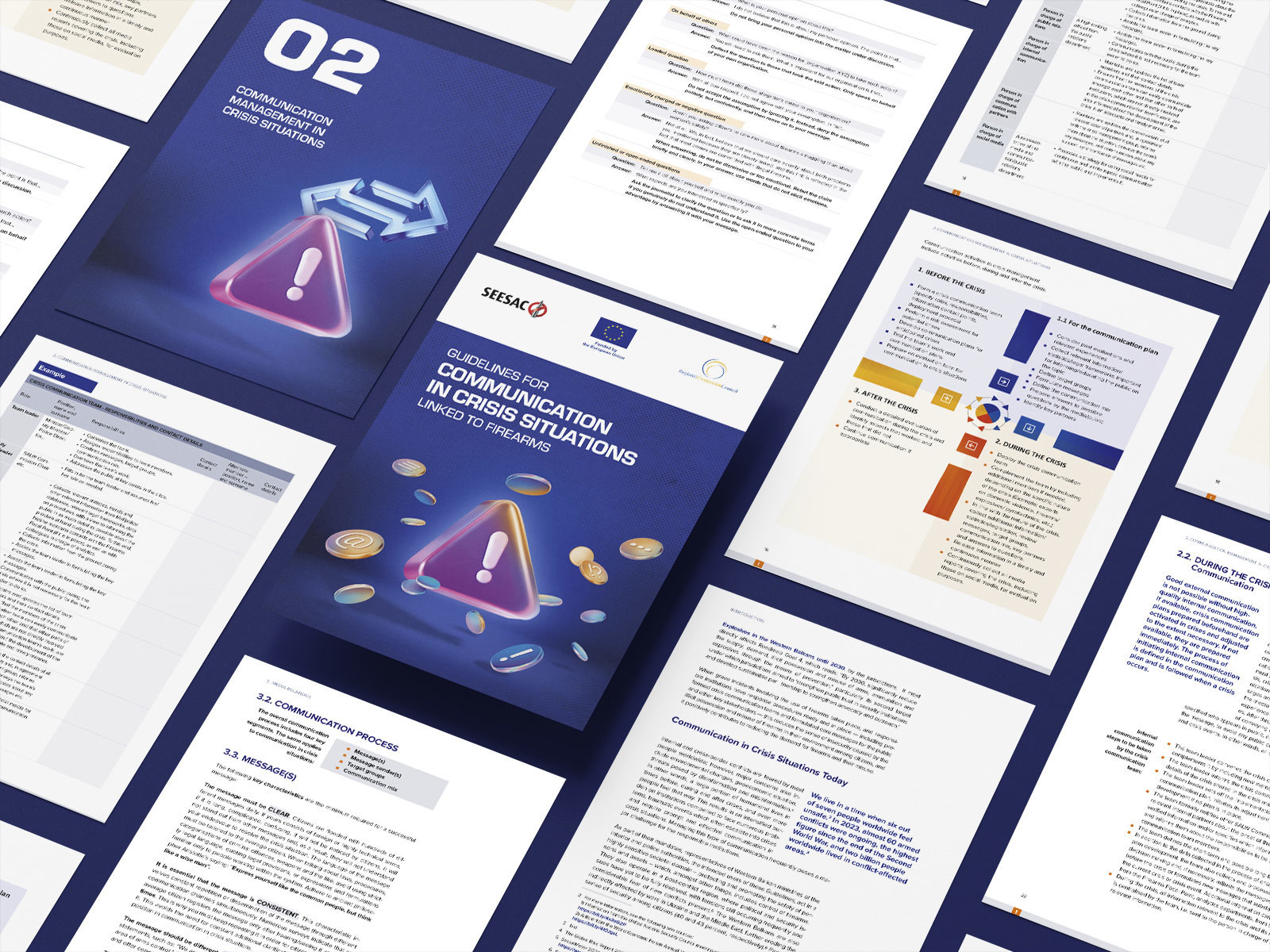
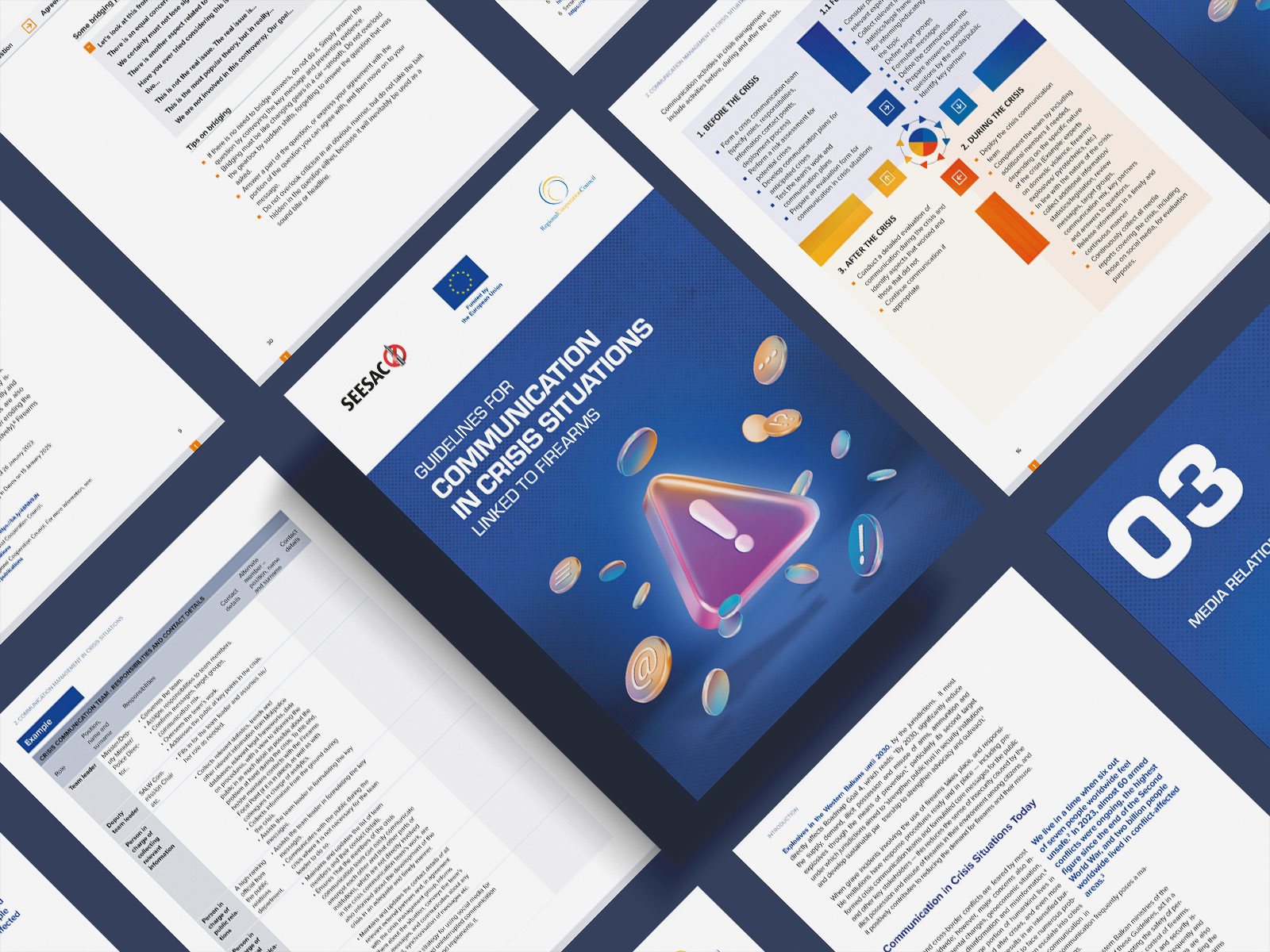
Representatives of the Ministries of Interior (MoI) and police services from the Western Balkans have been working to improve how their communication with the public during crisis situations, and have requested SEESAC’s support in this effort. In response, SEESAC has developed and published Guidelines for Communication in Crisis Situations Linked to Firearms, providing practical guidance to support institutions in managing public communication during highly sensitive events involving firearms.
Recent tragic events involving mass murders in several WB jurisdictions have deeply affected the region. The severity of these incidents, combined with intensive coverage via traditional and social media, underscored the vital role of timely, transparent, and credible communication. The newly published Guidelines aim to help MoIs and police authorities in the region be better prepared to respond to similar crises through prompt and efficient communication, ensuring adequate and timely information is provided and the sense of safety restored.
The Guidelines provide specific and practical steps responsible institutions should take before, during and after a crisis to ensure that their messages are informative, relevant, and trusted by the public while also helping lead the general discourse in the face of often widespread mis- and disinformation. The document considers exterior and interior factors that can trigger a crisis, provides examples of interorganizational structure and communication plans that should be put in place in advance, and offers practical tips for communicating with the media.
The Guidelines are available in three local languages (Albanian, BCMS, Macedonian) and in English.
This document complements the support already provided by SEESAC in the form of trainings on the same subject. A 2-day training on crisis communication was first organized in 2023, during the 4th Regional Awareness Raising Task Force meeting, in which over 30 of representatives of MOIs and police services from the Western Balkans took part. In 2025, the trainings were brought to the local-level, when they were organized for the relevant MOI/police staff in Montenegro (16-17 October, 2025) and Bosnia and Herzegovina (October 9-10, 2025). Local trainings widened the circle of staff who have access to this educational tool and allow for its content to be adjusted to the local context, relevant structures and sensitive issues. The trainings were conducted and the Guidelines developed within the framework of the regional project Support for Enhancing the Fight Against the Illegal Possession, Misuse, and Trafficking of Small Arms and Light Weapons in the Western Balkans, funded by the European Union through the Instrument for Pre-accession Assistance (IPA II).
The efforts directly contribute to the implementation of the Roadmap for a sustainable solution to the illegal possession, misuse and trafficking of small arms and light weapons and their ammunition and explosives in the Western Balkans by 2030, with a focus on Goal 4 of the Roadmap, which states: Significantly reduce the supply, demand, illicit possession and misuse of arms, ammunition and explosives through the means of prevention.