
SEESAC contributes to Key Leader Seminar on Gender in Military Operations
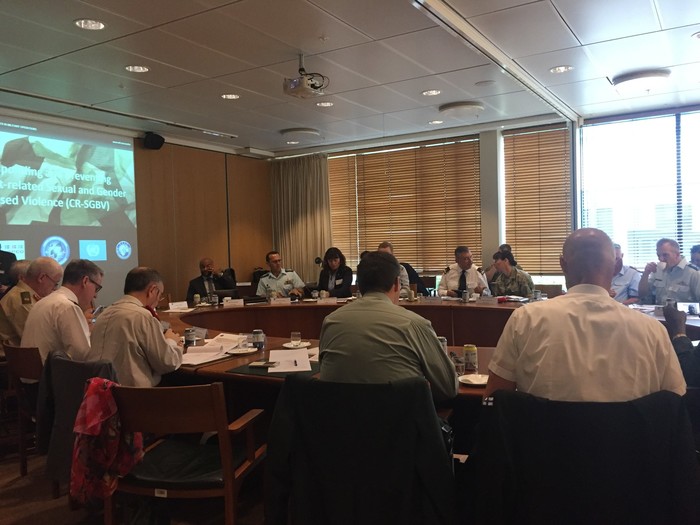
SEESAC Coordinator took part in the Key Leader Seminar on Gender in Military Operations organized by the Nordic Centre for Gender in Military Operations in Stockholm on 12-13 June. The Key Leader Seminars aim to increase key leader’s knowledge on how to integrate gender perspective into operations planning, execution and evaluation at strategic and operational level and how to argue in favor of integrating gender perspectives at political- and military strategic level.
During the session on “How to integrate Gender into military operations” SEESAC Coordinator Ms. Bojana Balon shared experience from the Western Balkans. SEESAC has worked closely with Ministries of Defense in BiH, Montenegro, Serbia and the former Yugoslav Republic of Macedonia on the implementation of Gender Equality in the Military in the Western Balkans project contributing thus towards the implementation of sustainable development goals; namely, gender equality (SDG Goal 5) and peace, justice and strong institutions (SDG 16). Apart from presenting ways how human resources polices became more gender responsive, mechanisms for gender equality stronger, and how increased gender awareness in the militaries throughout the region was achieved, she highlighted the importance of south south cooperation that was established when gender trainers from the Western Balkans delivered A Gender Training of Trainers for members of the Armed Forces from Ghana, Nigeria, Uganda and Rwanda.
The seminar covered several themes on integrating gender into armed forces, including integration of international frameworks on gender perspective in the armed forces, integrating gender into military operations and military organizational structures, conflict related sexual and gender based violence and integrating gender at a strategic level.
SEESAC continues working towards developing effective, accountable and transparent institutions at all levels and enhancing gender equality in the security sector by working closely with small arms and light weapons commissions on the integration of the gender perspective in SALW policymaking within the framework of the European Union Council Decision (CFSP) 2016/2356.