
It’s time for many more women to join the ranks of the military in the Western Balkans: UNDP
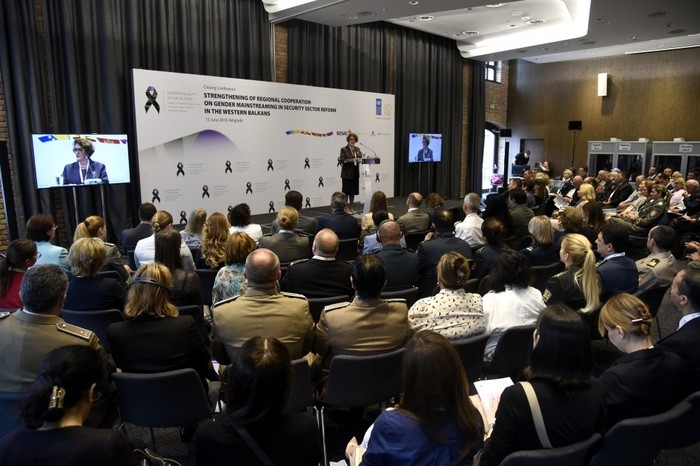
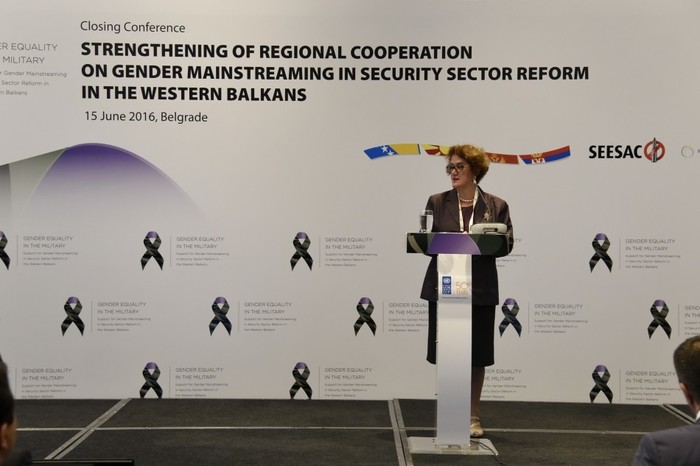
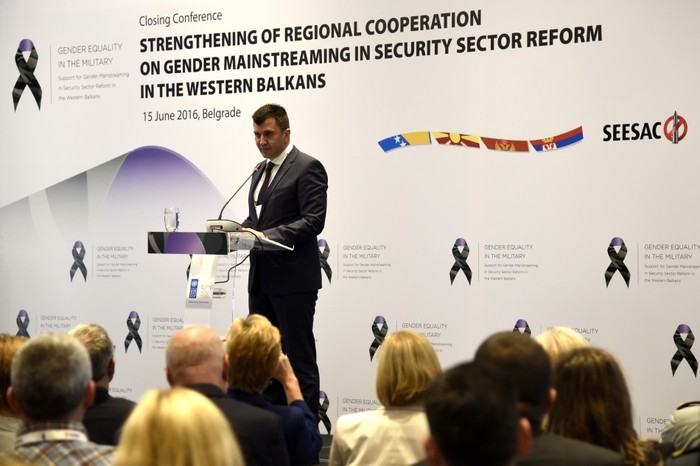
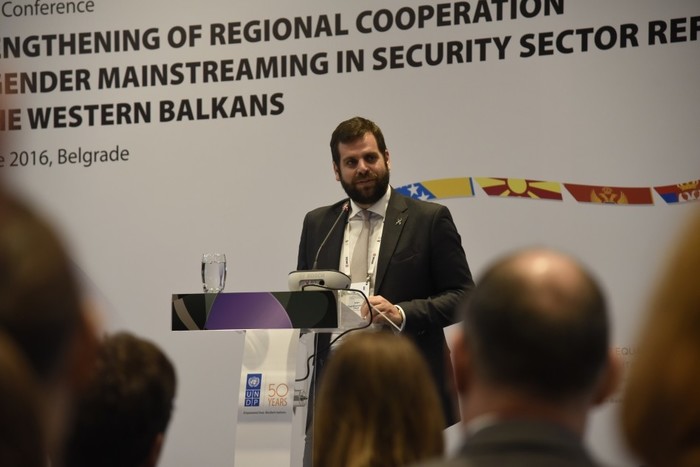
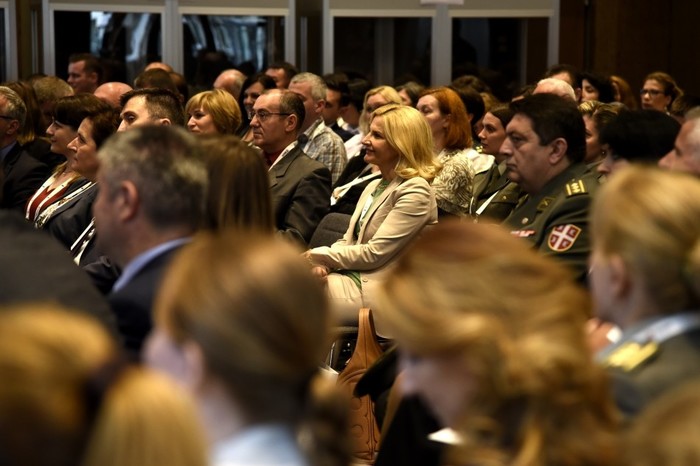
Women still only represent six to nine percent of the military staff in the sub-region
Belgrade, Serbia, 15 June – It’s time for many more women to join the ranks of the military in the Western Balkans, said the U.N. development programme (UNDP), concluding the first phase of a three-year programme that has trained over 4,000 cadres on principles of gender equality.
“Gender equality in the military and in all public institutions is a matter of human rights, but also essential for accountable and responsive institutions, which are a precondition for sustainable development,” said Cihan Sultanoğlu, U.N. Assistant Secretary-General and Director of UNDP’s Regional Bureau for Europe and the CIS.
Security sector reform in the sub-region has long focused on ensuring civilian oversight of the armed forces, but the numbers and decision-making opportunities for women have remained limited, particularly in management and command positions.
Women only make up between six and nine percent of the armed forces in the Western Balkans, with recruitment efforts in these countries only a few years old. Many of the women that have made it to the military face stigma and sometimes violence from their male peers.
Increasing and retaining higher proportions of women in uniform expands their career opportunities, but also promotes more efficient and responsive armed forces, while helping the military in these countries to better equip themselves for sending peacekeeping missions to other parts of the world. Women in peacekeeping roles have contributed to making peace processes more effective across the world.
Funded by the Norwegian Ministry of Foreign Affairs, the Swedish Armed Forces and UNDP, the programme facilitated regional cooperation on gender equality in the military and focused on ensuring better integration, retention and professional development for women in the armed forces; stronger participation of women in decision-making; and gender sensitive change in the organizational culture of the Ministries of Defense (MoD).
Thanks to the initiative, the MoDs of the four countries worked together to develop a Study on the Position of Women in the Armed Forces that informed measures to improve gender equality as part of the programme.
Ultimately, with women in the military serving as role models, the programme aims to boost gender equality and the empowerment of women in other careers and disciplines in the four countries.
Zoran Djordjević, Minister of Defence of the Republic of Serbia, Marina Pendeš, Minister of Defence of Bosnia and Herzegovina, Marija Rashkovska, State Advisor, the former Yugoslav Republic of Macedonia, Goran Svilanović, Secretary General of the Regional Cooperation Council and Arne Sannes Bjørnstad, Ambassador of the Royal Norwegian Embassy in Belgrade took part in the ceremony.
The initiative falls under UNDP’s South Eastern and Eastern Europe Clearinghouse for the Control of Small Arms and Light Weapons (SEESAC).
***
For more information, please contact:
UNDP SEESAC Communications Expert + 381 63 105 2580 monika.lajhner@undp.org.
UNDP works in nearly 170 countries and territories, helping to achieve the eradication of poverty, and the reduction of inequalities and exclusion. We help countries to develop policies, leadership skills, partnering abilities, institutional capabilities and build resilience in order to sustain development results.
Gender Equality in the Military Video
Download
- Results-Gender Equality in the Military Infographic PDF 13,090 kb