
SEESAC Guidelines Turn Social Media into a Stronger Tool for Public Awareness
Social media is no longer an occasional addition to the work of ministries of the interior and police authorities across the Western Balkans. It is becoming an integral part of a more deliberate and strategic approach to reaching citizens where they are already active – online.
Data from 2025 show that 63.9% of the global population use social media, with the average user spending 2 hours and 21 minutes per day on these platforms. Across the Western Balkans, usage rates range from 54% to 74% and are even higher in several jurisdictions. Social media is now the region’s second most common source of information, after television. Although traditional media remain more widely used, trust in the media is limited, with fewer than half of citizens in every jurisdiction expressing confidence in it.
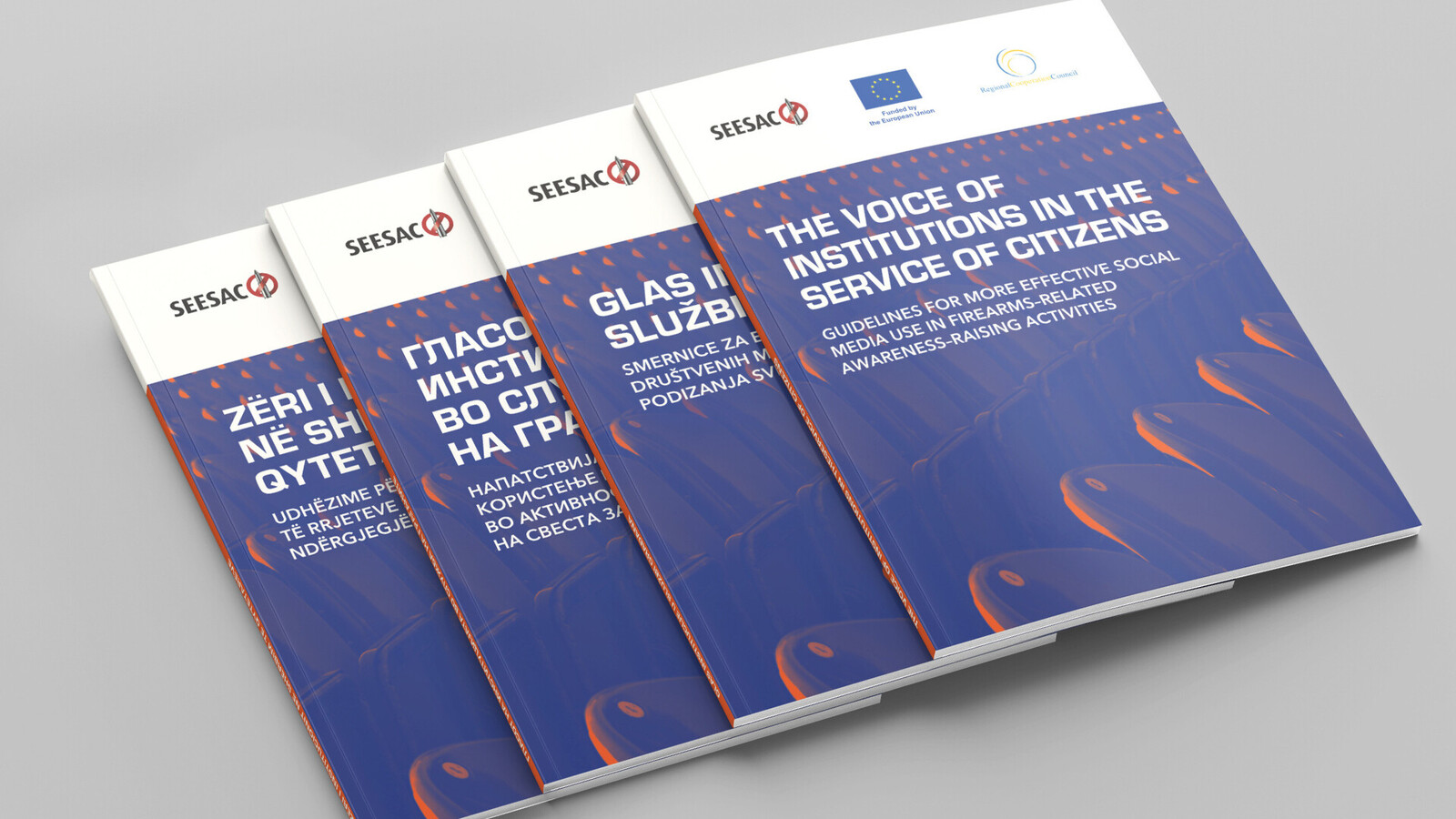
To support this shift, SEESAC, with the financial support of the European Union, has published a new practical resource: The Voice of Institutions in the Service of Citizens: Guidelines for More Effective Social Media Use in Firearms-Related Awareness-Raising Activities.
The publication covers the full social media content-creation process. To lay the groundwork, it helps the reader understand today’s platforms and their specific features, it stresses importance of identifying specific target audiences and their specific concerns, setting communication objectives and planning content on a continuous, year-round basis while drawing on sources available uniquely to the institution.
It also addresses the development of an appropriate institutional tone and visual identity that elicits wanted response from the wanted audience, alongside practical advice on filming, editing and producing formats such as carousels and reels.
Although tailored to social media activity related to firearms-related awareness-raising, the approach can also be applied to other topics within the mandates of ministries of the interior and police authorities.
The Guidelines are designed as a living tool rather than a one-off publication. Their rollout has been accompanied by practical, hands-on training for communication officers and content creators across the region within the ministries of interior and police services. These activities will help institutions translate the recommendations into consistent, high-quality content that reaches citizens, raises awareness and strengthens trust between authorities and the communities they serve.
The publication contributes directly to the implementation of the Western Balkans SALW Control Roadmap, in particular, Roadmap Goal 4, which calls for stronger public trust in security institutions and sustainable partnerships that advance advocacy and outreach.
These activities are possible with the financial support of the European Union, through the second phase of the regional project 'Support for Enhancing the Fight Against the Illegal Possession, Misuse, and Trafficking of Small Arms and Light Weapons (SALW) in the Western Balkans', funded by the European Commission, Directorate-General for Neighbourhood and Enlargement Negotiations, through the Instrument for Pre-accession Assistance (IPA II).