
Working Towards More Gender Responsive HR Policies
A two-day workshop was organized for ten representatives of the Human Resources Sector of the Ministry of Defence (MoD) of the Republic of Serbia and Human Resources Department of the Serbian Armed Forces (SAF) on 10 and 11 September 2015 in Arandjelovac, Serbia. The aim of the workshop was to strengthen the capacities of the MoD and AFs in developing, evaluating and monitoring gender responsive human resources polices.
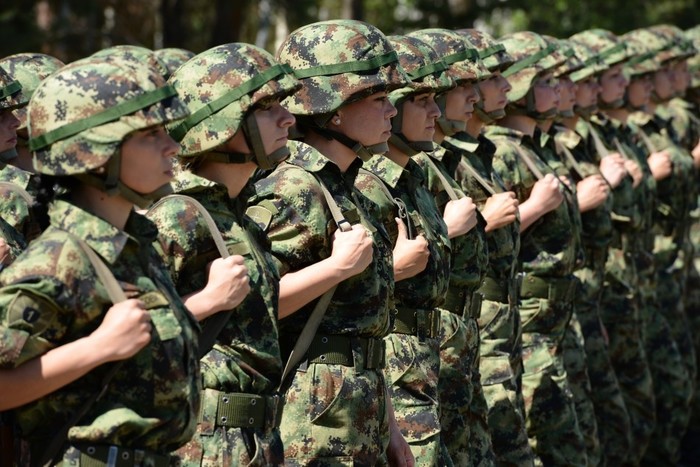
Given that there is a low number of female military personnel, especially in command and management positions, the MoD is working proactively to attract qualified women to the military profession and ensure that those that join are given equal career development prospects. Strengthening of gender perspective of human resources policies and practices is an essential part of this process.
The workshop provided theoretical framework for gender analysis, evidence based and gender sensitive policy making as well as practical exercise in conducting gender analysis of human resources data and contributed to participants’ better understanding of gender analysis and how to apply it in the MoD.
The workshop will be followed up by a study visit to the Observatory for Gender Equality in the Ministry of Defence of Spain on 17 September where participants will learn about the Spanish model on gender-sensitive data collection and analysis, as well as human resources policy development.
About THE GENDER EQUALITY IN THE MILITARY PROJECT
SEESAC's Gender Equality in the Military: Strengthening of Regional Cooperation on Gender Mainstreaming in Security Sector Reform in the Western Balkans project aims to create a more conducive environment for the advancement of women in the military in the Western Balkans. With this as its goal, SEESAC is supporting the Ministries of Defense in Bosnia and Herzegovina, the former Yugoslav Republic of Macedonia, Montenegro and Serbia in their efforts to ensure better integration, retention and professional development for women in the armed forces; stronger participation of women in decision-making; and gender sensitive change in their organizational cultures.