
Women Police Officers from 8 Countries in Southeast Europe Meet for the 4th Time
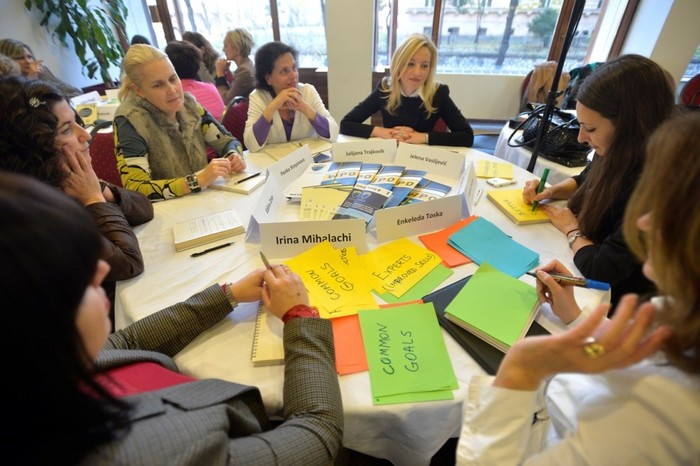
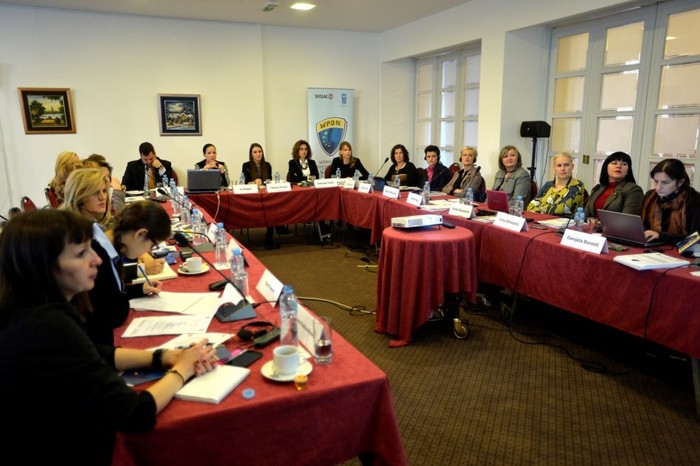
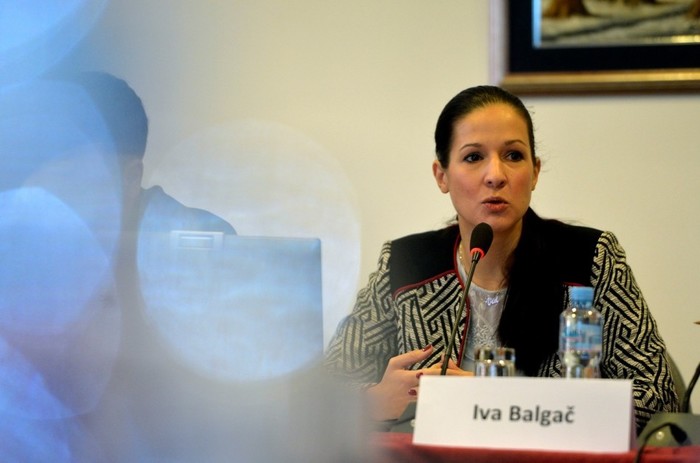
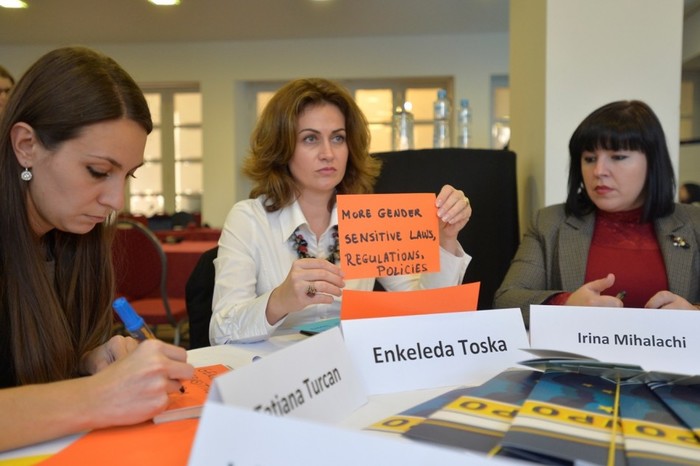
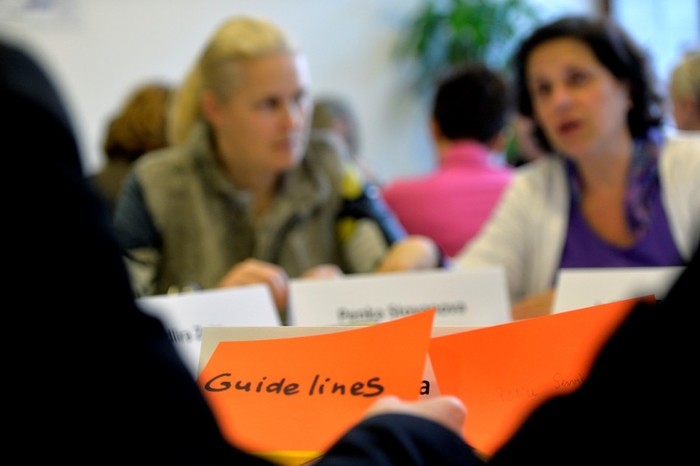
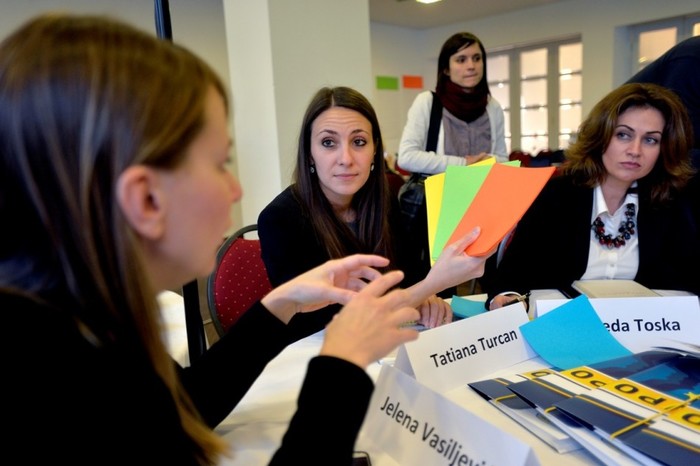

Since 26 November 2010, representatives of nine (9) polices services in Southeast Europe (SEE) have actively been working together to improve the status of women in police services and to ensure security for women in the region. Their work was conducted within the framework of the Women Police Officers Network in Southeast Europe (WPON). On 4 December, WPON members held their 4th Annual Meeting in Belgrade, Serbia, and UNDP/SEESAC, in its role of the network secretariat, provided the administrative and expert support for the planning and organization of the meeting.
Utilizing the benefits of the regional network, WPON members exchanged invaluable information on activities their respective police services carried out to advance gender equality on a national level in 2013. On this occasion, members also evaluated the implementation of the WPON Work Plan for 2013 and, more generally, reviewed the results of their overall efforts over the past three years – or since WPON’s establishment.
Members concluded that WPON directly contributed to the enhanced regional cooperation and growing confidence and trust building among nine police services. The Regional Study – Research findings, which constituted the first joint effort and which facilitated the establishment of WPON, provided a better understanding of the position women hold in the police services of the region and clearly indicated the problem areas. The study was followed by a set of jointly formulated set of recommendations found in WPON’s Guidelines for Gender Sensitive Policing, which paved the way to addressing the problems at hand.
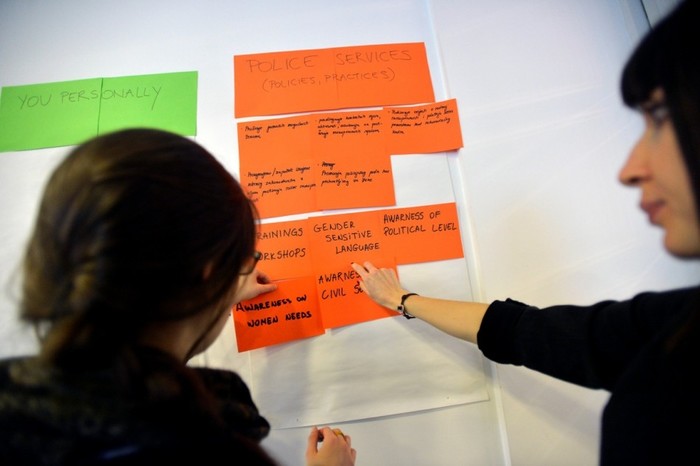
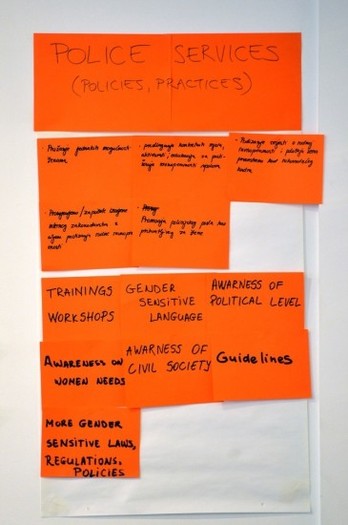
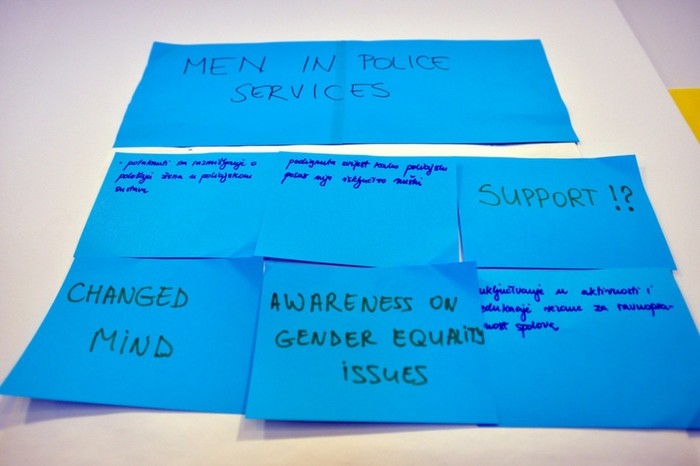
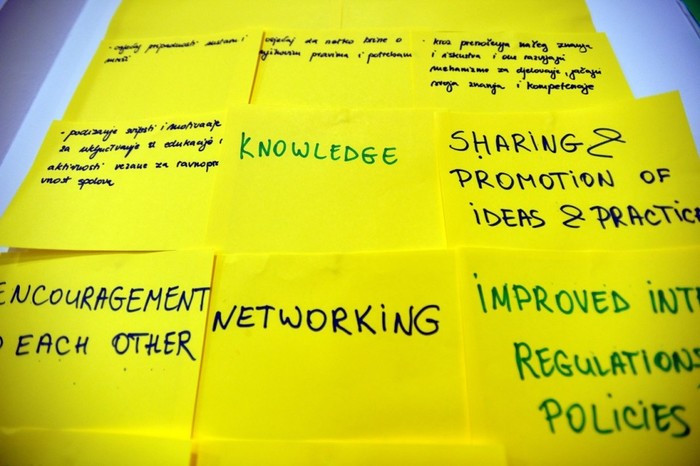
At the meeting, participants discussed the impact their engagement in WPON had on them personally, on their male colleagues, on other women in police services and on police services in general. WPON not only enabled its members to become more gender aware, but more importantly enhanced their capacities and the will to advocate for change within their national police service, that way contributing to the many-fold increased visibility of women as police officers.
Since WPON’s establishment its members worked to raise gender awareness among police officers, enabled further networking of women police officers through the establishment of national level women police officers associations; developed training manuals; organized lectures and seminars on women’s human rights and worked to strengthen police response to gender based violence; promoted police profession among girls and young women and formulated changes to police laws and bylaws to make sure they are more gender responsive.
The lessons learned throughout this three-years-long process were used as a basis for discussing and defining the future of WPON. Continued establishment of national associations of women police officers throughout the region was identified as one of the key goals of WPON’s future efforts.
Another of the goals clearly defined at the Annual Meeting, for the next phase of WPON engagement, is a follow up research study on the position of women in the police services in SEE, through which progress achieved as a result of WPON, and any other efforts to advance gender equality in the participating police services, will be identified and a new baseline drawn.
To oversee the upcoming work, the network voted for and elected the new WPON Executive Committee for 2014. This year Ms. Enkeleda Toska, Specialists of the NCB Interpol in Tirana, the Albanian State Police took on the responsibilities of the Executive Committee Chair. Ms. Tatiana Turcan, Head of EU Integration Unit at the Ministry of Internal Affairs of the Republic of Moldova was chosen as the Chair Elect, while Ms. Ljulja Djonaj, High Police Inspector 1st Class at the National Police Directorate of the Montenegro’s Ministry of Interior was elected Deputy Chair.
ABOUT WPON
WPON was established under the umbrella of the South East Europe Police Chiefs Association (SEPCA) by representatives of 9 police services in SEE: Albania, BiH-Federation, BiH-Republika Srpska, Bulgaria, Croatia, Moldova, Montenegro, Serbia, the former Yugoslav Republic of Macedonia.
Regional study on the position of women in police services, Establishing the Southeast Europe Women Police Officers Network – Research Findings, facilitated the network’s establishment. The study compiled the data on women in police services in nine SEE countries, which clearly indicated the necessity of improving recruitment, retention, promotion and working conditions of the women in the police, as well as a need for a network such as WPON. With this in mind, WPON was established at the first Annual Meeting of the Network in 2010.
WPON later followed up with a corresponding, jointly formulated the Guidelines for Gender Sensitive Policing, or a set of recommendations defining a set of simple and low cost measures, which would help police services in SEE attract and retain more qualified women and advance gender equality. Collecting the research findings and formulating the subsequent joint recommendations was a unique experience for national police services.
Through WPON, its members enjoyed the benefits of networking and exchanging information with colleagues from across the region, and of participating in trainings for women police officers to advocate for gender equality in police services;
Since the establishment of WPON and with the support of SEESAC, three women police officers association have been established on national levels – that way further entrenching the efforts to improve the position of women police officers in individual countries.