
WPON’s Work, Including the Development of Guidelines for Gender Sensitive Policing, Presented at the Police Academy in Croatia
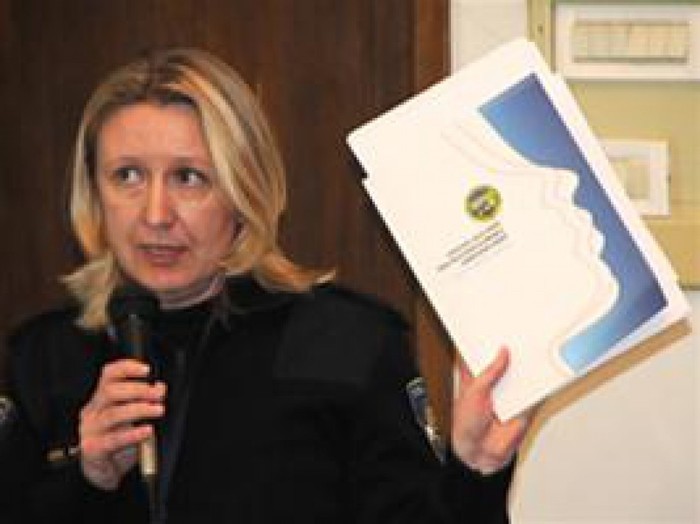
On 12 March 2013, Ms Lidija Pentavec , Head of Illegal Migrations Department and Ms. Iva Balgac, from the Department of the International Strategic Cooperation of the Ministry of Interior of the Republic of Croatia, presented activities and achievements of the Women Police Officers Network in South East Europe (WPON)
and its latest publication The Guidelines for Gender Sensitive Policing with the Emphasis on Recruitment, Selection and Professional Development of Women in Police Services . Both women are members of WPON and Ms. Balgac is the network’s current Chair.
The presentation was held at the Academy in Zagreb, for the benefit of its current students. It was designed to Introduce the students of the police Academy to WPON, the reasons the network was founded, its initiatives, results and achievements in the field of advocating for the implementation of gender equality and democratic principles in policing.
Ms. Pentavec and Ms. Balgac introduced the students to two relevant publications – Establishing the South East Europe Women Police Officer Network – Research findings and The Guidelines for Gender Sensitive Policing with the Emphasis on Recruitment, Selection and Professional Development of Women in Police Services.
The Research findings present results of a groundbreaking survey conducted by 8 police services in SEE on the position of women in police services.
The Guidelines were published subsequently, and they outline concrete and simple steps that can help better integration of women in the police services. The analysis and recommendations proposed in the Guidelines are based on the Research findings.
ABOUT WPON
The Women Police Officers Network in South Eastern Europe is a UNDP/SEESAC supported project, which aims to provide a platform for the exchange of experience and knowledge across police services in the region on the status, needs and priorities of police women in South East Europe; facilitate the advancement of the position of women in police services and gender sensitive policing practices in the region; and advocate for the implementation of gender equality and democratic principles in
policing. The project is generously funded by the Norwegian Ministry of Foreign Affairs and UNDP.