Information
UN Continues its Support for Resilient Recovery in Serbia
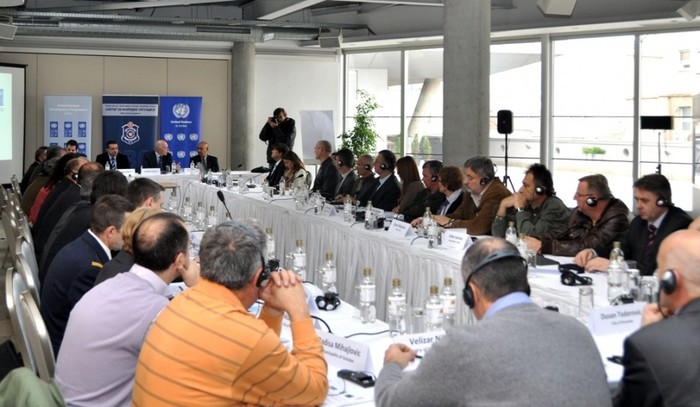
On 26 – 29 November, the United Nations Development Programme (UNDP), the International Recovery Platform (IRP), the United Nations Office for Disaster Risk Reduction (UNISDR) and the Sector for Emergency management of the Ministry of Interior of the Republic of Serbia are jointly holding a “Training on the Resilient Recovery.”
The objective of the training is to identify constraints experienced in post-disaster recovery, to advance the knowledge and understanding of the “build back better” approach, as well as to further explore opportunities for resilient development and disaster risk reduction (DRR). In the course of the training, the participants are encouraged to define recommendations for the next steps towards improved recovery and disaster resilience in Serbia. The training was conducted by the International Recovery Platform and the National Training Center of the Sector for Emergency Management resource and capacity building experts.
Members of the Republican and city/municipal Emergency Management Headquarters from 50 Serbian cities and municipalities that have joined the UN global campaign Making Cities Resilient: My City is Getting Ready! were identified as key stakeholders and invited to participate in the event.
The event was funded by the European Union.
The three-day event was opened by Mr. Wiliam Infante, UN Resident Coordinator and UNDP Resident Representative in Serbia, Mr. Predrag Maric, Assistant Minister and Head of the Sector for Emergency Management of the Ministry of Interior of the Republic of Serbia.
“Disaster risk reduction is directly linked to the long-term development of the country” emphasized Mr. Infante in his opening statement. Although, Serbia has done a lot to advance safety and security in the realm of disaster risk reduction, there is still ample room for improving prevention mechanisms, Mr. Infante explained. One of the ways to do so is to recover better and to incorporate DRR into our recovery, reconstruction and rehabilitation. Although both national and local governments have an important part in DRR, local governments are at the forefront, said Mr. Infante.
Mr. Maric seconded the view that prevention is the weakest link in Serbia’s ability to deal with disasters. We hope that 2013 will be the turning year in this respect, said Mr. Maric, explaining that key tools including risk assessment methodology have been prepared and passed, enabling us to both asses the risks and prepare and prevent accordingly.
UNDP and Disaster Risk Reduction
The United Nations Development Programme (UNDP) recognizes the importance of disaster risk management to poverty reduction and sustainable human development, and has, over the past four decades, supported interventions in the areas of prevention, response and recovery. The aim of such programmes has been to strengthen national capacity to prevent /reduce risk as well as to respond to natural disasters. More specifically, UNDP provides assistance to develop government capacity to manage recovery and to ensure renewed progress towards the Millennium Development Goals while reducing vulnerability to future disasters. Programming in key areas of development, an extensive national presence and partnership with governments and other national stakeholders provides UNDP with a unique opportunity to address disaster risk as a development challenge and to focus recovery on reducing vulnerabilities.
UNDP Serbia supports the Ministry of Interior, Sector for Emergency Management, through the provision of policy level advice and technical assistance. The National Disaster Risk Adviser leads UNDP Serbia’s work in DRR, while support was also provided to recovery efforts in the aftermath of the Kraljevo Earthquake.
The objective of the training is to identify constraints experienced in post-disaster recovery, to advance the knowledge and understanding of the “build back better” approach, as well as to further explore opportunities for resilient development and disaster risk reduction (DRR). In the course of the training, the participants are encouraged to define recommendations for the next steps towards improved recovery and disaster resilience in Serbia. The training was conducted by the International Recovery Platform and the National Training Center of the Sector for Emergency Management resource and capacity building experts.
Members of the Republican and city/municipal Emergency Management Headquarters from 50 Serbian cities and municipalities that have joined the UN global campaign Making Cities Resilient: My City is Getting Ready! were identified as key stakeholders and invited to participate in the event.
The event was funded by the European Union.
The three-day event was opened by Mr. Wiliam Infante, UN Resident Coordinator and UNDP Resident Representative in Serbia, Mr. Predrag Maric, Assistant Minister and Head of the Sector for Emergency Management of the Ministry of Interior of the Republic of Serbia.
“Disaster risk reduction is directly linked to the long-term development of the country” emphasized Mr. Infante in his opening statement. Although, Serbia has done a lot to advance safety and security in the realm of disaster risk reduction, there is still ample room for improving prevention mechanisms, Mr. Infante explained. One of the ways to do so is to recover better and to incorporate DRR into our recovery, reconstruction and rehabilitation. Although both national and local governments have an important part in DRR, local governments are at the forefront, said Mr. Infante.
Mr. Maric seconded the view that prevention is the weakest link in Serbia’s ability to deal with disasters. We hope that 2013 will be the turning year in this respect, said Mr. Maric, explaining that key tools including risk assessment methodology have been prepared and passed, enabling us to both asses the risks and prepare and prevent accordingly.
UNDP and Disaster Risk Reduction
The United Nations Development Programme (UNDP) recognizes the importance of disaster risk management to poverty reduction and sustainable human development, and has, over the past four decades, supported interventions in the areas of prevention, response and recovery. The aim of such programmes has been to strengthen national capacity to prevent /reduce risk as well as to respond to natural disasters. More specifically, UNDP provides assistance to develop government capacity to manage recovery and to ensure renewed progress towards the Millennium Development Goals while reducing vulnerability to future disasters. Programming in key areas of development, an extensive national presence and partnership with governments and other national stakeholders provides UNDP with a unique opportunity to address disaster risk as a development challenge and to focus recovery on reducing vulnerabilities.
UNDP Serbia supports the Ministry of Interior, Sector for Emergency Management, through the provision of policy level advice and technical assistance. The National Disaster Risk Adviser leads UNDP Serbia’s work in DRR, while support was also provided to recovery efforts in the aftermath of the Kraljevo Earthquake.
