
Third Information Sharing Forum on Gender and Security in BiH discusses next phase of UNSCR 1325 implementation
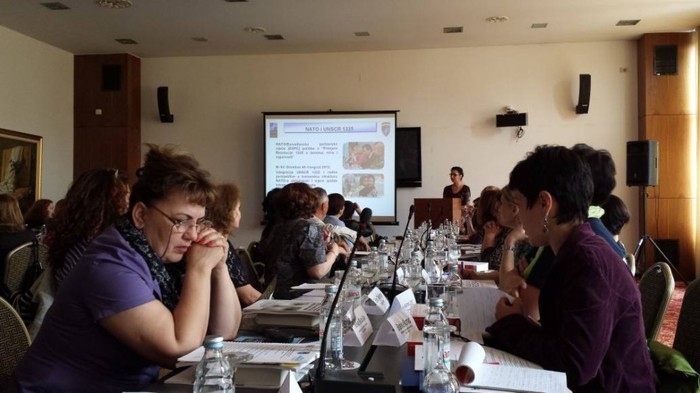
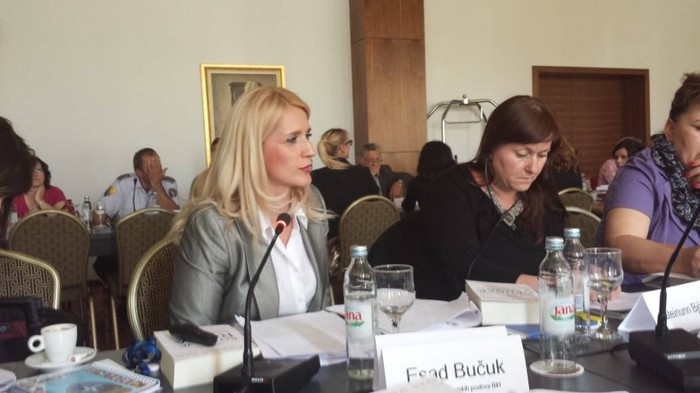
On 11 June 2013, NATO HQ Sarajevo, the BiH Gender Equality Agency and the UN Women Project Office in BiH jointly organized the 3rd Information Sharing Forum on Gender in Security in BiH, in Sarajevo Bosnia and Herzegovina (BiH). The Forum meets annually and gathers representatives of relevant government institutions, civil society and international organizations. The BiH Parliamentary Assembly, the Parliamentary Committee for Gender Equality, the Ministry of Defence, the Ministry of Foreign Affairs, the Gender Center of Republic of Srpska, the Office of the BiH Ombudsperson for Human Rights, the BiH Border Police and the Ministry of Interior FBiH were joined by representatives of twenty seven (27) NGOs, SEESAC, NATO, EUFOR, USAID and the OSCE to discuss their UNSCR 1325 related activities and identify priorities to be included in the next Action Plan (2014-2017).
The Forum identified key strategic areas of future work including: increased representation of women in the decision making positions at all levels in BiH; combating trafficking in human beings; protecting women and girls victims of war; and increasing the number of women in the armed and police forces as well as the decision making positions in military and police structures. Participating NGOs stressed the need to focus on human security at the local level, particularly in rural areas with economic empowerment of women as a prerequisite for sustainable peace.
Opening the Forum, Colonel Harald Hiorth, Deputy Commander of NATO HQ Sarajevo, emphasized the importance of including women in the armed forces as a way of increasing effectiveness of military operations and gave the example of Norway’s decision to introduce gender neutral conscription in 2014. He stressed NATO’s commitment to gender equality principles in military operations which in Bosnia and Herzegovina resulted in several years of support to women officers in the BiH Armed Forces and in education for military staff about gender equality and UNSCR 1325.
Ms. Samra Filipovic – Hadziabdic, Director of the Gender Equality Agency, explained that in order to prepare for the next phase of the implementation of the UNSCR 1325, the Agency was conducting an assessment of the current Action Plan for the Implementation of UNSCR 1325 (2010 to 2013), aiming to identify results and weaknesses which would inform future activities.
Ms. Amna Muharemovic, Head of the UN Women Office in BiH, emphasized the role of NGOs which have the financial and technical support of the UN Women, in the implementation of UNSCR 1325. Ms. Muharemovic particularly highlighted UN Women’s cooperation with SEESAC at the regional level. SEESAC is the only organization implementing regional project on gender in security sector reform in the Western Balkans.
All opening statements shared the emphasis on the importance of cooperation between actors involved in implementing UNSCR 1325 at all levels in BiH.
SEESAC was invited to share its experience and provide inputs for the new Action Plan. Ms. Bojana Balon, SEESAC Programme Officer, spoke about the work of the Women Police Officers Network in the South East Europe (WPON) as a unique practical example of successful implementation of UNSCR 1325, through regional cooperation, aimed at mainstreaming gender perspective into the security sector reform. In her presentation Ms. Balon placed particular emphasis on the role of the two women police officers associations in BiH. She also briefly touched upon the ‘Gender Equality in the Military’ project implemented in partnership with the Ministries of Defense of Bosnia and Herzegovina, Montenegro, Serbia and the former Yugoslav Republic of Macedonia was also presented at the Forum. It is through these two flagship projects that SEESAC supports national authorities in Southeast Europe (SEE) in their efforts to advance gender equality in security sector reform through regional cooperation.
ABOUT WPON
The Women Police Officers Network in South Eastern Europe is a UNDP/SEESAC supported project, which aims to provide a platform for the exchange of experience and knowledge across police services in the region on the status, needs and priorities of police women in South East Europe; facilitate the advancement of the position of women in police services and gender sensitive policing practices in the region; and advocate for the implementation of gender equality and democratic principles in policing.
ABOUT Gender Equality in the Military
SEESAC's project Gender Equality in the Military is assisting Ministries of Defense in Bosnia and Herzegovina, the former Yugoslav Republic of Macedonia, Montenegro and Serbia to ensure better integration, retention and professional development for women in the armed forces as well as stronger participation of women in decision-making and gender sensitive change in their organizational cultures.