
The Guidelines for Gender Sensitive Policing presented in Tirana
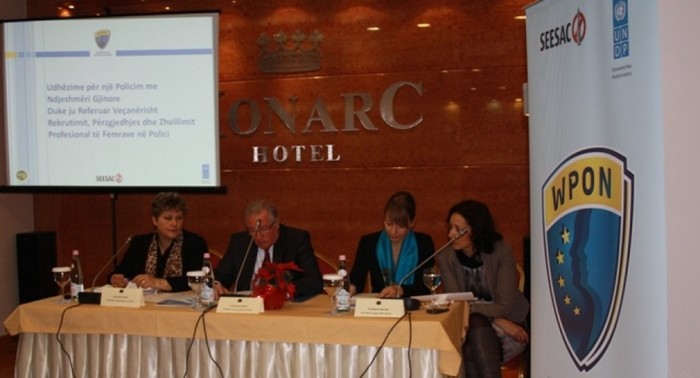
The Guidelines for Gender Sensitive Policing were presented in Tirana on 6 December 2012
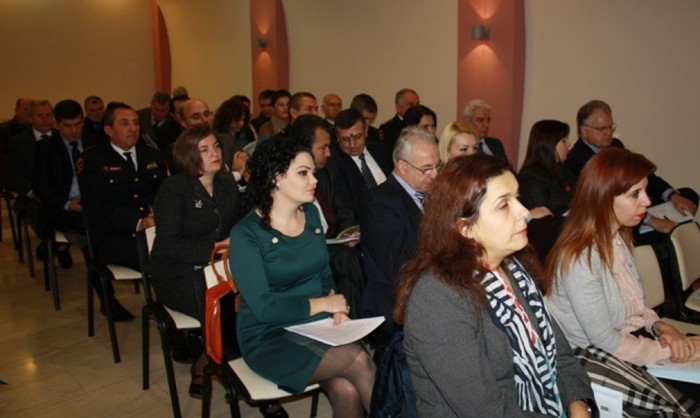
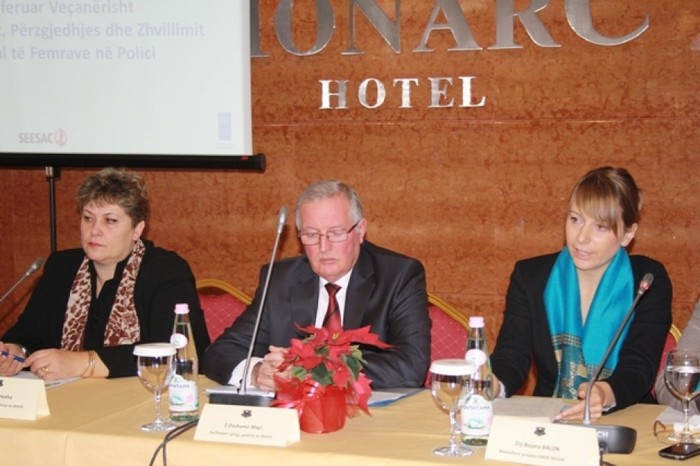
Deputy Police Directors Mr. Dashamir Maci and Ms. Anila Hoxa spoke at the Guidelines launch
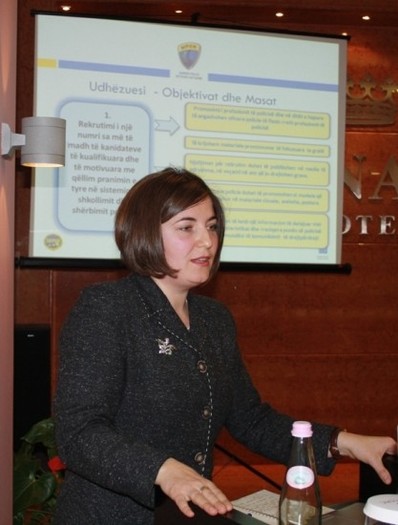
Member of the Women Police Officers Network from Albania, Ms. Edlira Zoto presented activities of the Women Police Officers Network in South East Europe.
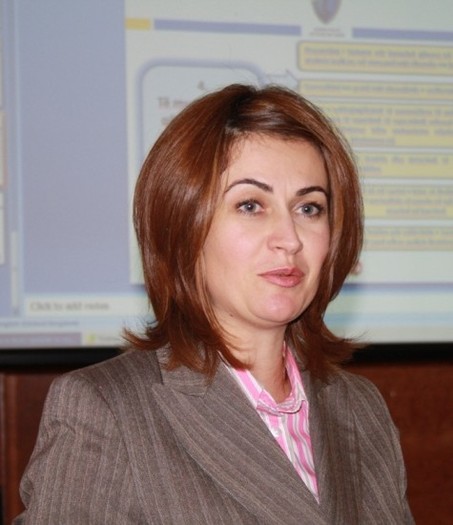
Member of the Women Police Officers Network from Albania, Ms. Enkeleda Toska presented activities of the Women Police Officers Network in South East Europe
On 6 December, The Guidelines for Gender Sensitive Policing with an Emphasis on Recruitment, Selection and Professional Development of Women in Police Services were presented in Tirana, at an event organized by the Albanian State Police, UNDP Albania and UNDP/SEESAC. The Guidelines, developed by the Women Police Officers Network in South East Europe (WPON), were designed to outline concrete and simple steps that can help better integration of women in the police services.
The presentation was attended by Senior Management of the Albanian State Police and representatives of United Nations Development Programme (UNDP), UNWOMEN, International Criminal Investigative Training Assistance Program (ICITAP) and Organization for Security and
Cooperation (OSCE) Mission to Albania.
Deputy Police Directors Mr. Dashamir Maci and Ms. Anila Hoxa reiterated the support and commitment of the Albanian State Police to gender equality. As one of key results they highlighted the successful campaign to enroll more women in the Basic Police Training. Dissatisfied with the representation of women in the Albanian State Police, in 2012 an enrollment campaign was launched targeting specifically women to enroll. As a result, 100 women were enrolled and
graduated from the program of basic police training in 2012. In addition, in 2012 a woman was appointed as Deputy Police Director and the first woman was accepted in the Special Police Forces.
Nevertheless, it was stressed that more needs to be done to challenge the existing taboos and stereotypes surrounding the police work as a male profession. Mr. Maci and Ms. Hoxa stressed that the Guidelines for Gender Sensitive Policing represent an excellent practical tool which will provide guidance to police service in advancing gender equality and diversity in policing and called for their implementation.
Members of the Women Police Officers Network from Albania, Ms. Enkeleda Toska and Ms. Edlira Zoto presented activities of the Women Police Officers Network in South East Europe. Established under the umbrella of the South East Europe Police Chiefs Association (SEPCA), WPON brings together high ranking police women from nine police services in SEE
(Albania, Bosnia and Herzegovina - Federation, Bosnia and Herzegovina - Republika Srpska, Bulgaria, Moldova, Montenegro, Serbia, the former Yugoslav Republic of Macedonia). Since its establishment the WPON has grown into a unique regional advocacy mechanism for gender equality.
In 2012 WPON Working Group developed the Guidelines for Gender Sensitive Policing with an Emphasis on Recruitment, Selection and Professional Development of Women in Police Services. The Guidelines define a set of low-cost quick-win measures designed to foster gender quality and improve the position of women in the police services. They were developed based on data provided by the nine Police Services participating in the project.
In the last few years, women’s contribution to various aspects of police work has been increasingly recognized. This progress is reflected in higher numbers of women currently training to join or already serving in the police services. Nevertheless, if the police services are to offer an effective response to the security needs of their communities, they need to systematically implement new measures to ensure successful integration of more women in their ranks.
THE PURPOSE OF THE GUIDELINES
The Women Police Officers Network in South East Europe (WPON) has developed the Guidelines for Gender Sensitive Policing with an Emphasis on Recruitment, Selection and Professional Development of Women in Police Services in order to:
• Identify the challenges in recruitment, selection and professional development of women in the police services of South East Europe;
• Develop a greater understanding of the problems that women face within the police services;
• Foster the exchange of information and good practice in this area; and
• Define measures that can improve the existing practice.
Ms. Edlira Zoto stressed that the Guidelines are designed as a manual for police managers at all levels, particularly those working in departments responsible for education, human resources and public relations or other officials within the Ministry of Interior and the police who handle recruitment, admission, selection, and professional development. The Guidelines identify areas of improvements in the recruitment, selection and professional development procedures, all of which can be
introduced while using existing resources and without extensive organizational changes.
She reiterated that the Guidelines are a practical document which can be used in every day work as a simple map identifying simple and low cost measures for example, the necessary participation of women police officers in committees which decide on issues such as the uniform design, careful planning of shift schedules in order to avoid simultaneous scheduling of spouses – police officers with small children.
About WPON
The Women Police Officers Network in South Eastern Europe is a UNDP/SEESAC supported project, which aims to provide a platform for the exchange of experience and knowledge across police services in the region on the status, needs and priorities of police women in South East Europe; facilitate the advancement of the position of women in police services and gender sensitive policing practices in the region; and advocate for the implementation of gender equality and democratic principles in
policing. The project is generously funded by the Norwegian Ministry of Foreign Affairs and UNDP.