
SEESACs Regional Steering Group Meets to Review Results and Future Plans
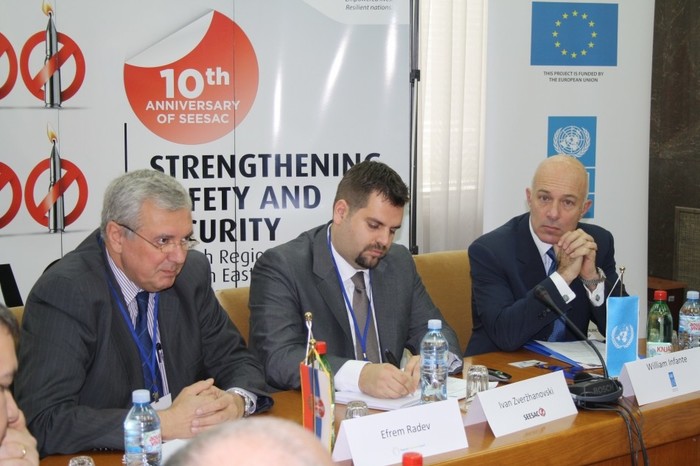
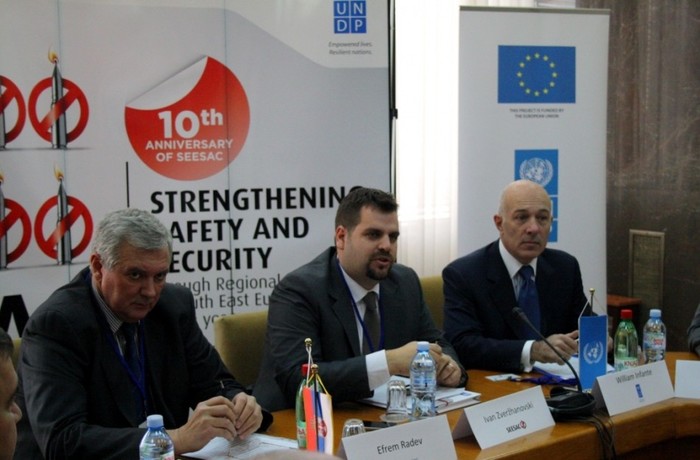
Chiaring the meeting were (left to right) Efrem Radev Senior Expert for Security Issues from the RCC, Ivan Zverzhanovski - SEESAC Team Leader and Wiliam Infante, UN RC in Serbia
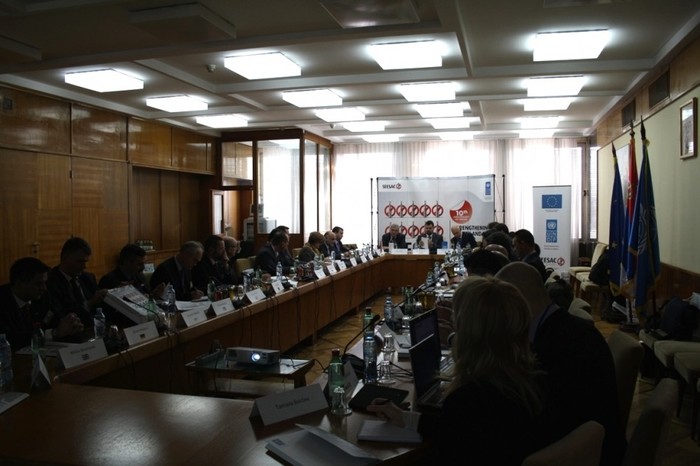
SEESAC receives its political and strategic guidance and key indigenous support from the RSG which is composed of representatives of the governments, RCC, UNDP, and observers from institutions such as the EU, NATO, OSCE and civil society.
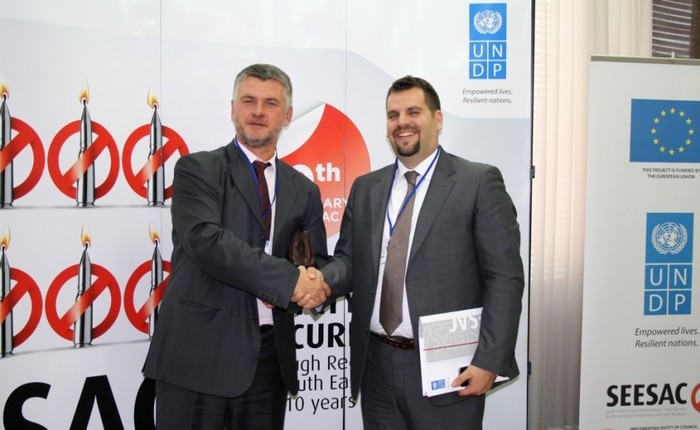
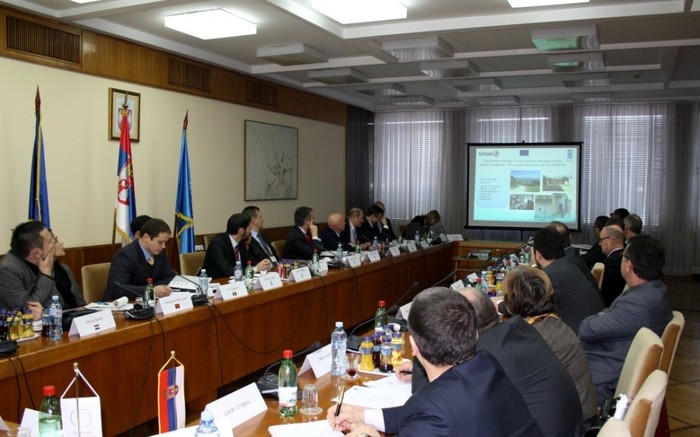
On 7 December 2012, the Regional Steering Group for Small Arms and Light Weapons (RSG) held its annual meeting in Belgrade, Serbia. Hosted by the Ministry of Foreign Affairs of Serbia and SEESAC, the meeting gathered national SALW focal points from Bosnia and Herzegovina, Croatia, Moldova, Montenegro, Romania, Serbia and the former Yugoslav Republic of Macedonia as well as representatives of the Regional Cooperation Council (RCC), and the UNDP. Also present, in the role of observers, were colleagues from UNDP country offices in Bosnia and Herzegovina, Croatia, Kosovo*, Montenegro, as
well as representatives of the Organization for Security and Cooperation in Europe (OSCE), RACVIAC, EU Delegation to the Republic of Serbia, North Atlantic Treaty Organization (NATO), and Embassies of Norway,
Sweden, Great Britain, and Germany.
RSG meetings are an essential part of the SEESAC governance structure. SEESAC receives its political and strategic guidance and key indigenous support from the RSG which is composed of representatives of the governments from the states concerned, the (RCC), UNDP, and observers from institutions such as the European Union (EU), North Atlantic Treaty Organization
(NATO), Organization for Security and Co-operation in Europe (OSCE) and civil society.
The meeting was opened by Branka Latinovic - Head of Arms Control Directorate at the Ministry of Foreign Affairs of the Republic of Serbia, Efrem Radev - Senior Expert for Security Issues at the Regional Cooperation Council and William Infante - UN Resident Coordinator and UNDP Resident Representative in Serbia.Dr. Ivan Zverzhanovski, SEESAC Team Leader a.i. moderated the meeting.
Mr. Radev commended SEESAC on its significant success in advancing regional cooperation in the realm of small arms control. He further noted that SEESAC has expanded and will continue to do so, becoming a regional actor working on a variety of security related issues including, not only SALW but also, gender mainstreaming in the security sector reform and disaster risk reduction.
Mr. Infante noted that SEESAC’s good work has been recognized by the European Union. He commended RCC for its commitment to promoting safety and security and all the participating countries for making their contribution through their work with SEESAC. Together, we are building an image of safe and secure region, emphasized Mr. Infante.
Dr. Zverzhanovski informed the RSG about SEESAC’s activities in 2011 and 2012, as well as plans for future endeavors. He was followed by project managers from UNDP Bosnia and Herzegovina, UNDP Croatia, and MONDEM in Montenegro as well as SALW Focal points from participating countries who presented on their current national activities, priorities, needs and plans.
The presentations served as starting point for a subsequent discussion on challenges encountered during the implementation of the national projects, further coordination of planned activities and support for development of future SALW projects.
Most of SEESAC activities are currently generously supported by the Kingdom of Norway as well as by the European Union, as an integral part of the EU Strategy to combat the illicit accumulation and trafficking of SALW and their ammunition.