
SEESAC at the RCC Annual Meeting
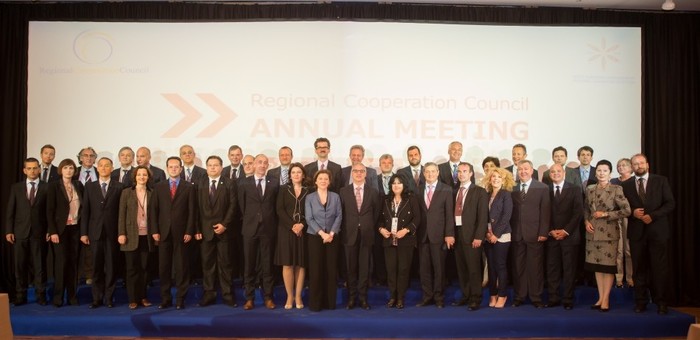
Photo by RCC
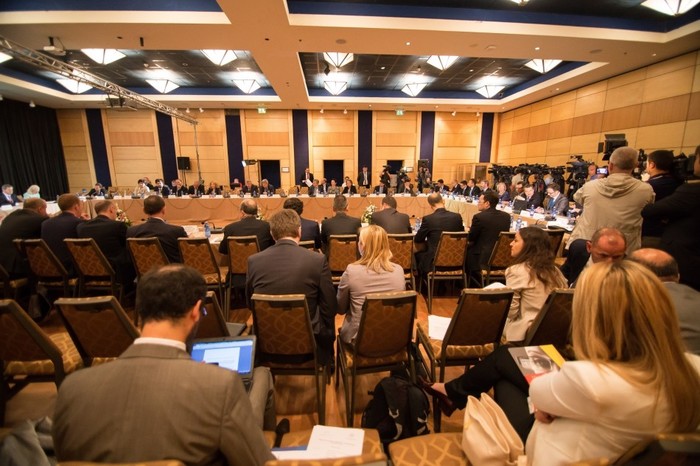
Photo by RCC
TIRANA – SEESAC Coordinator Dr. Ivan Zveržhanovski took part at the Annual Meeting of the Regional Cooperation Council (RCC) held on 22 May 2015.
SEESAC is a joint initiative of the RCC and the UNDP and has been working since 2002 on strengthening safety and security through regional cooperation in South East Europe (SEE), and therefore contributing to creating conditions for sustainable development.
“As the executive arm of the Regional Implementation Plan on Combating the Proliferation of Small Arms and Light Weapons (SALW), SEESAC continues to demonstrate commitment, dedication, and results in reducing the threats posed by the uncontrolled proliferation and illicit trafficking of firearms”, Dr. Zveržhanovski said in his address, adding that the recent events in Paris, Brussels, and Kumanovo show that SEESAC’s work is relevant beyond the region.
Dr. Zveržhanovski highlighted the assistance provided by the European Union and Norway, allowing SEESAC to facilitate three regional processes that address the threat posed by the widespread possession and use of small arms and light weapons in SEE. “We are doing this by creating the enabling environment in which information sharing, knowledge transfer, networking, and standardization can occur”, Dr. Zveržhanovski said.
While emphasizing the 2nd meeting of the South East Europe Firearms Expert Network (SEEFEN), the upcoming 4th Regional Meeting of SALW Commissions, and the 14th meeting of the Regional Information Exchange Process on Arms Transfers, Dr. Zveržhanovski explained that SEESAC looks for “regional solutions to regional problems, with the belief that we have enough in common to make learning from each other the most efficient way forward”.
He also emphasized SEESAC’s work on Security Sector Reform in the region by supporting the integration of a gender perspective. “As the Secretariat of the Women Police Officers Network and the facilitator of the regional network of representatives of gender equality mechanisms in the Ministries of Defence and Armed Forces in the Western Balkans, SEESAC is proud of the progress made in this field in the region and the evidence has shown that regional cooperation increases results”, Dr. Zveržhanovski said.
However, more needs to be done to create conditions in which men and women are equal in decision and policy making in security institutions, Dr. Zveržhanovski noted in his speech, adding that such progress would make security institutions more responsive to the communities they serve, strengthening democratic governance and Rule of Law.
The SEESAC Coordinator gave the RCC an overview of the areas where SEESAC could provide more assistance. Dr. Zveržhanovski pointed out that SEESAC is ready to support a regional platform to counter radicalization, and that more focus should be directed at the impact firearms have on radicalization in the region, as the link between firearms and violent extremism is evident. “The cost of death and injuries inflicted by firearms in our region, their role in domestic and gender-based violence, as well as the persistent insecurity they cause, are impeding sustainable development”, Dr. Zveržhanovski said.
As he expressed gratitude to the RCC for the successes achieved together, Dr. Zveržhanovski reiterated SEESAC’s stern commitment to the principles of cooperation, effectiveness, and efficiency in making the Western Balkans more secure and delivering coordinated and focused assistance and support under the umbrella provided by the RCC.
The Annual meeting was opened by RCC Secretary General Goran Svilanovic and Albanian Foreign Minister and Chair in Officer of the South East European Cooperation Process (SEECP) Ditmir Bushati. Serbian Deputy Prime Minister and Foreign Minister Ivica Dacic also addressed the meeting. The Annual Meeting endorsed the candidacy of Goran Svilanovic for his second term as RCC Secretary General, as well the Annual Report on Regional Cooperation in SEE 2014 - 2015.