
SEESAC at BMS6
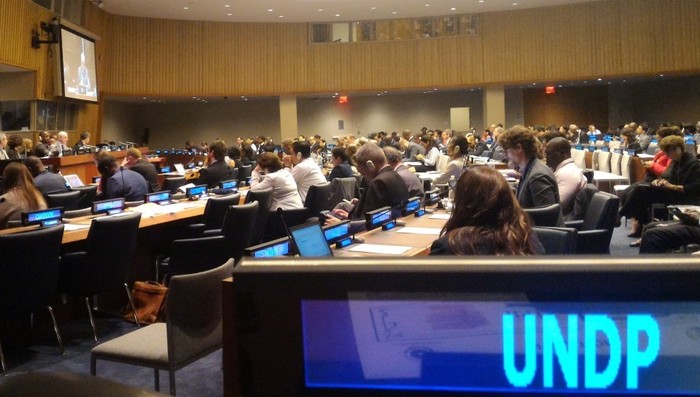
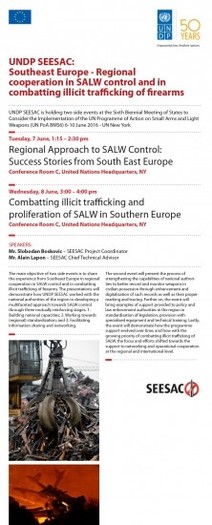
SEESAC held two side events at the Sixth Biennial Meeting of States to Consider the Implementation of the UN Programme of Action on Small Arms and Light Weapons (UN PoA BMS6), organized from 6-10 June 2016 in United Nations Head Quarters in New York. UN PoA envisioned the convening of Biennial Meetings of States “to consider the national, regional and global implementation of the Programme of Action.” BMS6 is the last meeting before the 2018 3rd Review Conference (RevCon3).
The main objective of SEESAC’s two events was to share the experience in regional cooperation from South East Europe (SEE) in control of small arms and light weapons (SALW) and in combatting illicit trafficking of firearms.
SEESAC has been enabling information exchange and knowledge transfer through regional cooperation in SEE to effectively tackle both regional and national challenges in arms control, SEESAC Project Coordinator Slobodan Boskovic explained during the first event “Regional Approach to SALW Control: Success Stories from South East Europe”, organized on 7 June.
“As SEESAC continues to facilitate several regional processes, including regional meetings of National Commissions for Small Arms and Light Weapons (SALW Commissions), South East Europe Firearms Expert Network (SEEFEN) and the Regional Information Exchange Process on Arms Transfers (RIEP), we are looking for regional solutions to regional problems, with the belief that experiences and lessons learned from the region could serve as a great guidance that could be replicated elsewhere”, Boskovic explained.
During the second event on 8 June “Combating illicit trafficking and proliferation of SALW in South East Europe”, SEESAC’s Chief Technical Advisor Alain Lapon presented examples of how SEESAC is providing support to national authorities to better record and monitor weapons in civilian possession through enhancement and digitalization of such records, as well as their proper marking and tracing.
“We wanted to show how over the years we have been assisting the authorities of the region to build their capacities to mark, record keep and trace firearms. Moreover, we wanted to demonstrate how the process evolved towards more operational support having in mind that since 2014, we assisted the establishment of the South East Europe Firearms Expert Network (SEEFEN), gathering senior police officers, customs investigators, and prosecutors working together and in close cooperation with their European Union counterparts in contributing to the overall ability to successfully investigate and prevent trafficking of firearms and gun-enabled crime”, Lapon said.
SEESAC’s expertise is available and can be transferred to other regions and institutions through our newly established Regional Security Sector Reform Platform (RSSRP).