
SEESAC Supports Gender in Multinational Operations Course at the SAF POC
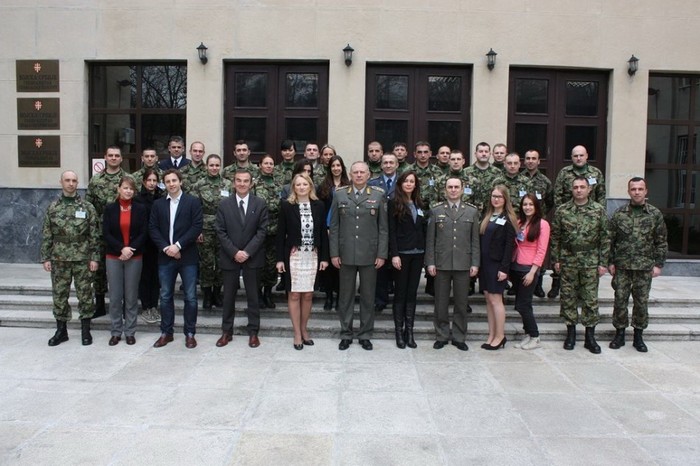
Seventeen members of the Serbian Armed Forces and four representatives of the University of Belgrade completed Gender in Multinational Operations Course from 30 March to 3 April 2015 in the Peacekeeping Operations Center in Belgrade.
The course, held for the fourth year in a row, was organized by the Peacekeeping Operations Center of the Serbian Armed Forces General Staff with support of SEESAC.
The course is organized with the aim to increase operational efficiency and better understanding of gender needs and challenges of the local population in areas where multinational operations are taking place.
SEESAC supported the participation of one of the course lecturers Ms. Rana Rahal, Gender Advisor at the United Nations Interim Force in Lebanon (UNIFIL). Ms. Rahal presented the institutional mechanisms for gender in UNIFIL, mechanisms of working with the local community, gender mainstreaming in civil-military cooperation CIMIC, and the positon of women in conflict and post-conflict settings.
During her stay in Belgrade, Ms. Rahal also met with General Ljubiša Diković, Head of the General Staff of the Serbian Armed Forces and discussed the importance of inclusion of gender perspective in the multinational operations.
During the course, SEESAC also presented the results of the Gender Equality in the Military project to course participants and explained the relevance of gender in Security Sector Reform.
About THE GENDER EQUALITY IN THE MILITARY PROJECT
SEESAC's Gender Equality in the Military: Strengthening of Regional Cooperation on Gender Mainstreaming in Security Sector Reform in the Western Balkans project aims to create a more conducive environment for the advancement of women in the military in the Western Balkans. With this as its goal, SEESAC is supporting the Ministries of Defense in Bosnia and Herzegovina, the former Yugoslav Republic of Macedonia, Montenegro and Serbia in their efforts to ensure better integration, retention and professional development for women in the armed forces as well as stronger participation of women in decision-making and gender sensitive change in their organizational cultures.