
SEESAC Shares Results and Achievements made by its South East Europe Arms Exports Control Programme
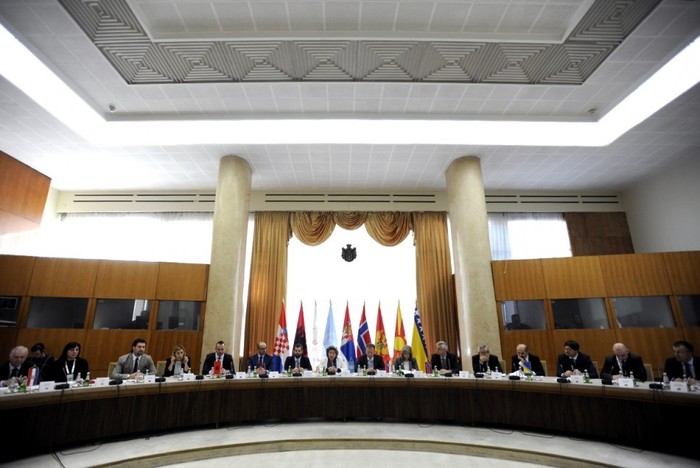
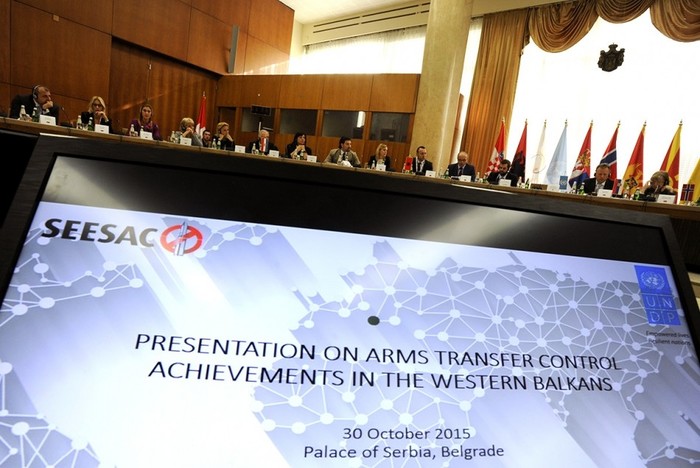
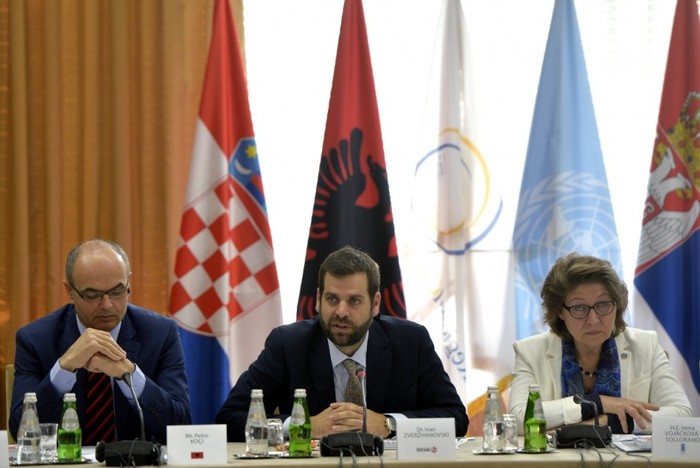
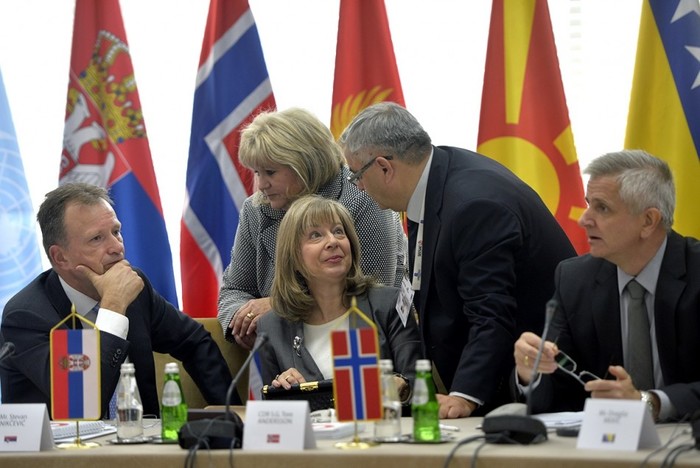
State Secretary of the Ministry of Trade, Tourism and Telecommunications of the Republic of Serbia Stevan Nikcevic, U.N. Resident Coordinator and UNDP Resident Representative Irena Vojackova Sollorano and Norwegian Defense Attaché to Serbia CDR S.G. Tore Andersson opened the public Presentation of Arms Transfers Controls Achievements in the Western Balkans on 30 October 2015 in Belgrade.
The event was an opportunity to take stock of the achievements of the UNDP SEESAC Arms Transfers Control Programme in the Western Balkans, generously supported by Ministry of Foreign Affairs of the Kingdom of Norway. The programme worked for over 9 years with the relevant institutions of Albania, Bosnia and Herzegovina, Croatia, Montenegro, Serbia and the former Yugoslav Republic of Macedonia. These joint efforts built regional confidence, bolstered control mechanisms, significantly increased transparency and enhanced knowledge transfer, and information sharing.
Over the past nine years, the Programme focused on increasing transparency by strengthening national capacities for detailed record-keeping and accurate reporting on the trade in arms and military equipment in line with the requirements established by the EU Code of Conduct on Arms Exports and the recently adopted Arms Trade Treaty. All countries are now
reporting on their annual arms exports and some of the Western Balkan counties are among the most transparent in the world.
Transparency, regional cooperation and confidence building was further increased with:
- a joint Regional Report on Arms Exports– a practice shared only by the European Union (seven regional reports on arms exports have been published and are all available from SEESAC’s website).
- Regional Information Exchange Process (RIEP), that brings together licensing authorities from Albania, Bosnia and Herzegovina, Croatia, the former Yugoslav Republic of Macedonia, Montenegro and Serbia, for an open exchange of practices, information, challenges, and tested solutions (15 meetings held).
- Different products such are: Knowledge Exchange Platform and The Weapons Categorization Tool.
The Western Balkan countries exported over $1.6 billion worth of arms and military equipment between 2007 and 2013. Significant military industry and considerable surpluses of weapons make arms transfers an important component of this region’s economies. At the same time, appropriate control of the arms trade is key to regional and international peace and security.