
SEESAC Organizes a Visit to the Observatory of Gender Equality in the Spanish MoD for Western Balkan MoDs
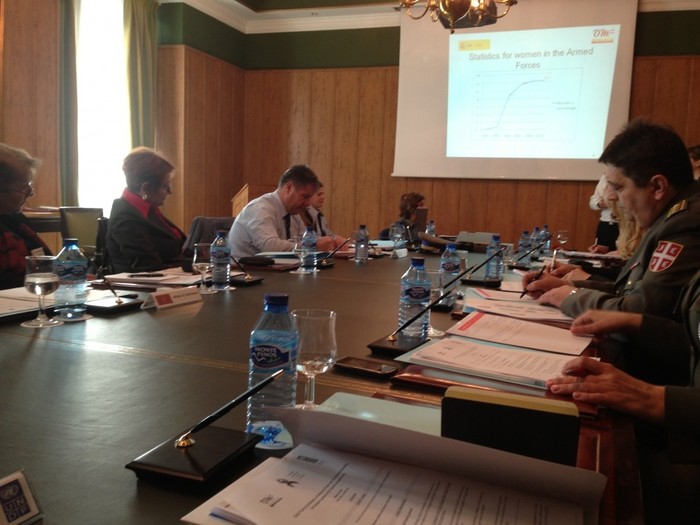
With the support of SEESAC, twelve representatives of four Ministries of Defence and the armed forces in the Western Balkans attended a study visit to the Spanish Ministry of Defence (MoD). The focus of the visit, which took place from 9 to 12 April 2013, was on the practical aspects of integrating gender into the everyday work of the armed forces.
Specifically, attendees from Bosnia and Herzegovina, Montenegro, the Former Yugoslav Republic of Macedonia and the Republic of Serbia had the opportunity to gain a firsthand experience of the work of the Military Observatory for Gender Equality, which serves as an advisory body to the Spanish Armed Forces, and is tasked to design and propose measures to improve the integration of gender
aspects into the work of armed forces.
The Observatory is a permanent structure, highly positioned within the Ministry of Defence, commanding an important role in the development of polices and legal framework related to gender equality in the military.
The visit was a unique opportunity for decision makers and human resources experts to exchange experiences with their Spanish colleagues and hear about the Spanish model of integrating the gender perspective into defense policy and military operations.
Representatives of the Spanish Military Observatory for Equality reviewed:
- Legal and institutional framework for gender equality;
- Policies and practices in the recruitment, retention and reconciliation processes;
- Data collection;
- Relevant communication strategies;
- The role of gender equality curricula in the military education and military operations.
The participants also visited the Day Care Center for children situated within the Spanish MoD – an excellent example of implementing reconciliation measures developed by the Observatory for the Equality.
Ms. Adoración Mateos, the Director General for Human Resources at the Spanish Ministry of Defense, welcomed the participants and emphasized the political will and deep commitment of the Ministry of Defence to implementing gender equality in the Armed Forces, which is perceived to be a motor behind the increased effectiveness as well as the basis for stable society.
The Western Balkan participants were extremely eager to learn from the Spanish model, particularly at the practical level. Also, they used the visit as an excellent opportunity to share information on the position of women in the military and experiences in implementation of National Action Plans for UNSCR 1325 in their respective countries.