
SEESAC Hosts the First Regional ISACS Assessment Tool Train-the-Trainers Course
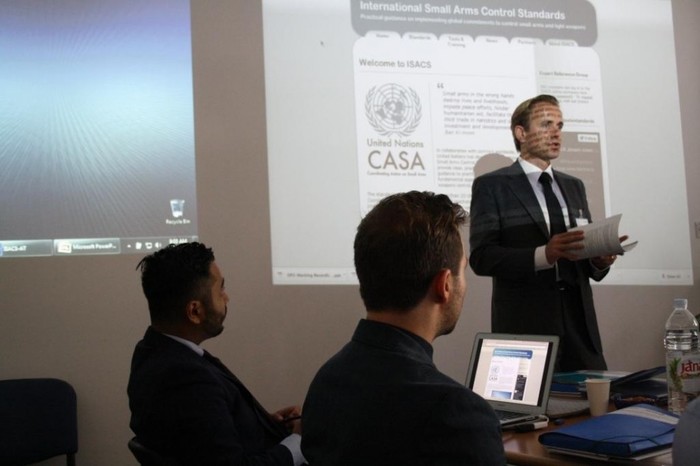
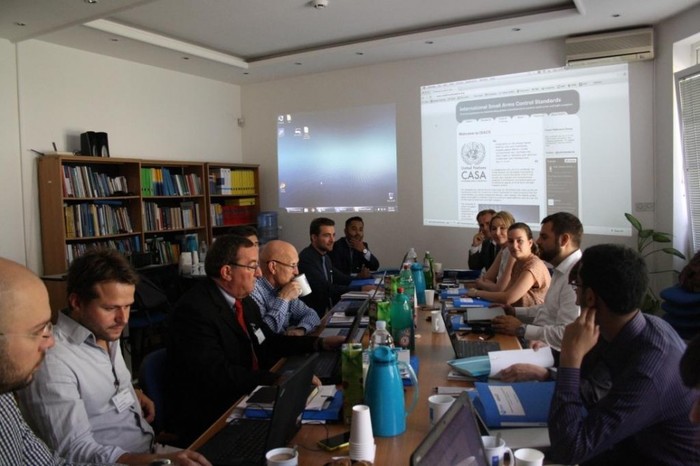

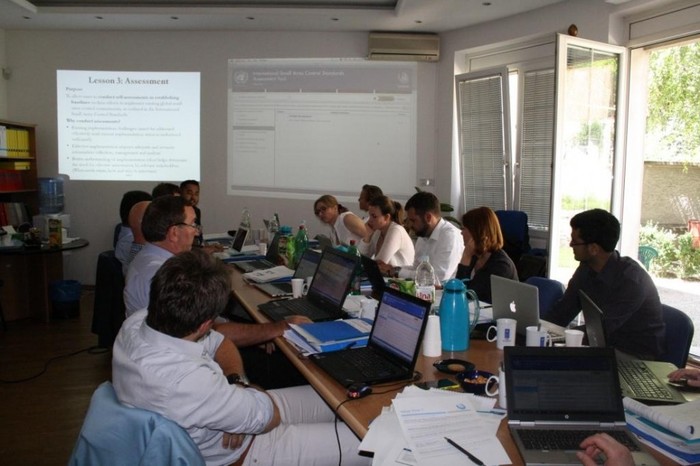
In order to provide clear, practical, and comprehensive guidance for practitioners and policymakers working on fundamental aspects of small arms and light weapons (SALW) control worldwide, the United Nations recently developed the International Small Arms Control Standards (ISACS). Between 22-24 July, SEESAC hosted the First Regional Train-the-Trainers Course on the use of the ISACS
Assessment Tool (ISACS-AT) – a knowledge management software tool designed to facilitate the use of the Standards.
The event was organized in co-operation between the United Nations Institute for Disarmament Research (UNIDIR) and SEESAC, and is the first out of six regional courses to be organized by UNIDIR across the world in the upcoming months.
The Train-the-Trainers Course is designed to prepare a group of professionals to be proficient in using the tool, so that they can subsequently train their national counterparts and other relevant practitioners on how to benefit from the tool. Topics covered in the training include: stockpile management, SALW awareness-raising and collection campaigns, destruction of weapons, marking and tracing, border controls, and conducting surveys and assessments
These regional workshops primarily target relevant personnel of the United Nations (including its Specialized Agencies), regional organizations, training institutes, and civil society. Apart from SEESAC team members, the training was attended by representatives from OSCE Moldova, OSCE Bosnia and Herzegovina, UNDP Kosovo1, and UNDP Bosnia and Herzegovina.
The Standards are used by more than 20 UN entities that make up the UN Coordinating Action on Small Arms (CASA) mechanism. They fit within the global framework created by the UN Programme of Action, the International Tracing Instrument, the UN Firearms Protocol, and the Arms Trade Treaty and build upon best practices elaborated at regional and sub-regional levels.
A number of institutions were consulted in the process of creating ISACS. Among them was SEESAC as the institution that developed the Regional Micro-Disarmament Standards and Guidelines (RMDS/G). The RMDS/G were designed to improve safety and efficiency by providing guidance through establishing principles and, in some cases, by referring to other relevant international agreements and specifications. Furthermore, they provide a frame of reference to encourage the sponsors and managers of SALW Control programs and projects in South East Europe to achieve and demonstrate agreed levels of effectiveness and safety.
The ISACS-AT is a useful tool that assists agencies and experts in their everyday work pertaining to small arms control, giving them the opportunity to conduct comprehensive assessments and create surveys. The collected results then inform the decision-making process in designing better policies for the future based on past experiences and identifying previous gaps. The tool is an important innovation in the field of arms control, and is based on established international standards and regulations.