
SEESAC Contributes to the Discussion on Tracing of Illicit SALW in Vienna
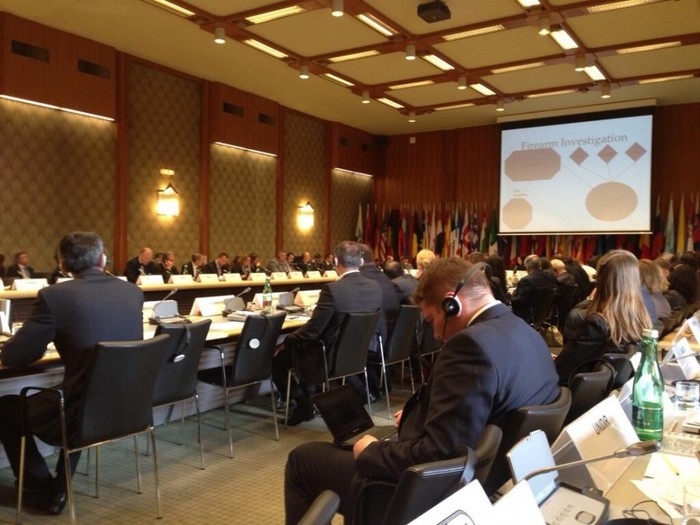
On 23-24 May 2013 SEESAC’s Coordinator, Dr. Ivan Zverzhanovski, is taking part in a conference that focuses on current methods of tracing illicit small arms and light weapons (SALW) and the existing legal frameworks defining the tracing of SALW.
The event is jointly organized by four key organizations which are, albeit from different directions, working towards the same goal of preventing proliferation of small arms. These are Organization for Security and Cooperation in Europe (OSCE), the INTERPOL, the United Nations Office on Drugs and Crime (UNODC), and the United Nations Office for Disarmament Affairs (UNODA).
At the conference, experts and officials are taking an in-depth look at the international legal framework by which tracing activities are defined, discussing relevant in-the-field lessons learned in the course of criminal investigations, learning about cooperation between various relevant agencies, all with the aim of improving methods and creating a more holistic approach to preventing illicit arms proliferation.
Alexey Lyzhenkov, Director of the Transnational Threats Department, opened the event on behalf of the OSCE and was joined by Angela Kane, High Representative for Disarmament from UNODA and Sara Greenblatt, Chief of the Organized Crime Branch from UNODC. Vincent A. Paris, Counsel to the Toronto Police Service on Organized Crime and Firearm Issues was the keynote speaker.
SEESAC has engaged with several governments in the Western Balkan region to assist them in overcoming the challenge of implementing their legal and political commitments in the areas of marking and tracking of firearms, including the UN Firearms Protocol, the International Tracing Instrument (ITI) and the UN Programme of Action on SALW. In this context, SEESAC has provided for the equipment and technical expertise necessary for overcoming these difficulties.
Furthermore, In September 2010, SEESAC organized in Belgrade a Regional Seminar on Marking and Tracing of Firearms, while in the summer of 2011 it completed its assistance efforts, to the Ministries of Interior of both the Republic of Montenegro and the Former Yugoslav Republic of Macedonia, establishing and upgrading their respective weapons registrations systems.