
SEESAC Contributes to Peacekeeping Operations Center Training
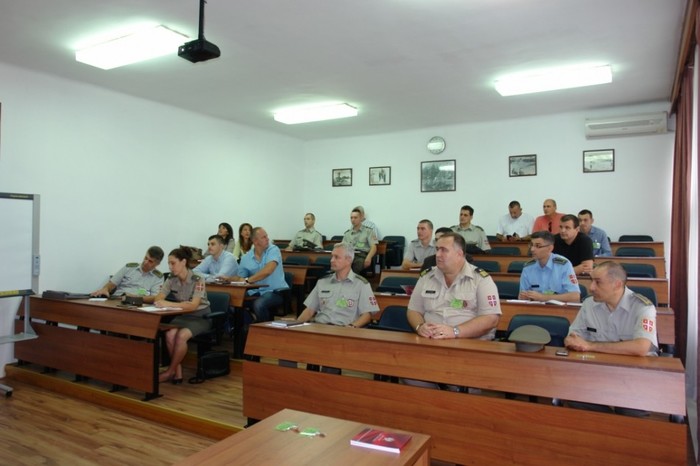
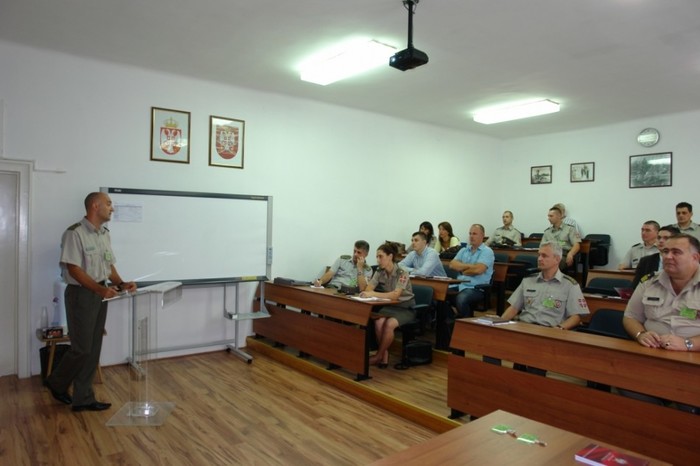
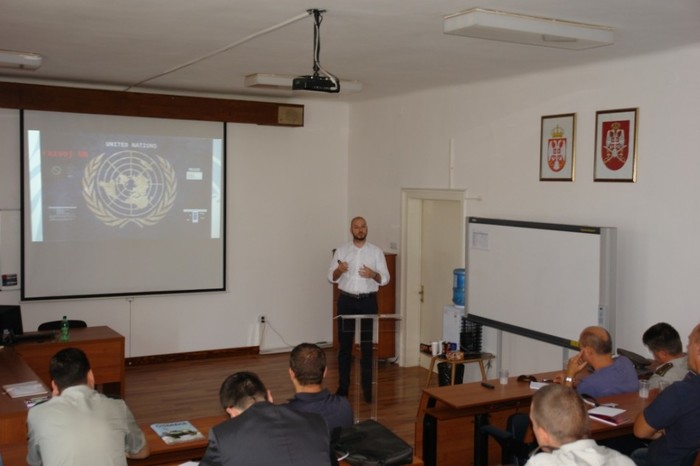
On 10 September 2014, UNDP/SEESAC guest lectured at the Peacekeeping Operations Center (PKOC) of the Serbian Armed Forces General Staff.
The lectures formed part of a week-long introductory training course offered to the civilian-military group of Functional Specialists currently undergoing general training to prepare for future peacekeeping operations. These specialists are professionals in their respective fields of expertise that may be sent to participate in peacekeeping missions, should the need arise. Participating in the lecture were also designated representatives of various governmental bodies of the Republic of Serbia, including experts from the Ministry of Justice, Ministry of Agriculture, and Ministry of Culture.
In order to prepare these specialists for future deployment, UNDP/SEESAC informed them about the UN in general and the humanitarian cluster approach in particular. Specifically, the focus was on the importance of civilian-military cooperation, the interaction between international organizations, governmental organizations, as well as non-governmental organizations – and current challenges facing humanitarian actors in peacekeeping missions.
UNDP/SEESAC gave two lectures. The first of these lectures introduced the UN system – explaining the functions and operations of different UN bodies and agencies in the context of peacekeeping operations; and the second outlined the UN Cluster System, including the main features of the cluster approach as well as how it operates in emergency settings.
ABOUT SEESAC
The South Eastern and Eastern Europe Clearinghouse for the Control of Small Arms and Light Weapons (SEESAC) works to strengthen the capacities of national and regional stakeholders to further reform the security sector in South East Europe, thus contributing to enhanced stability, security and development in the region.