
Regional PSSM Course for Police Experts - Certification Ceremony
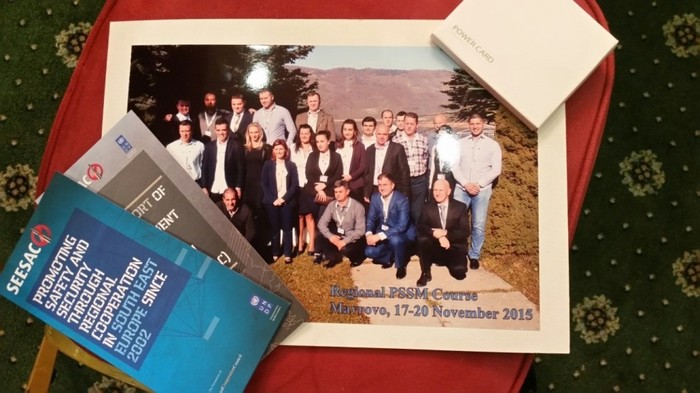
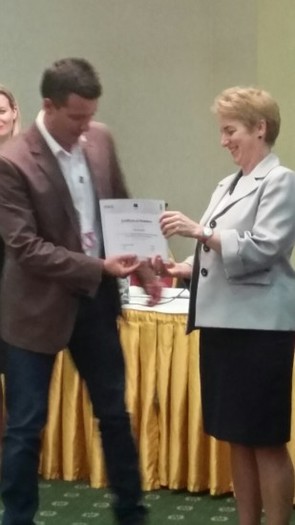
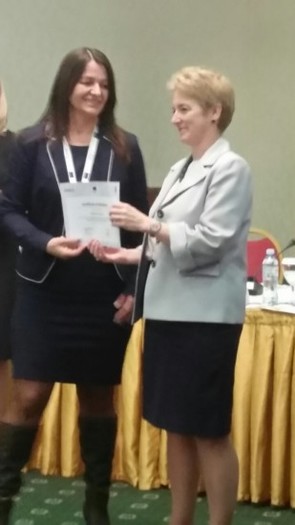
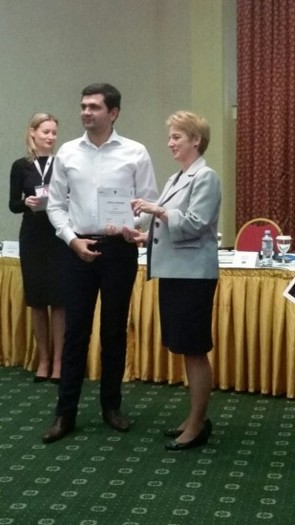
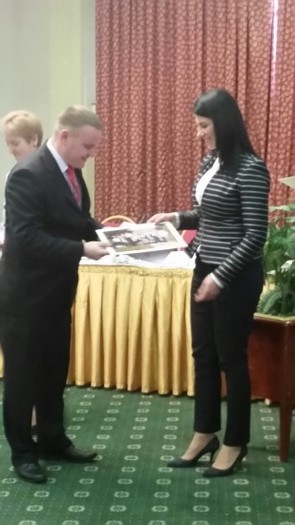
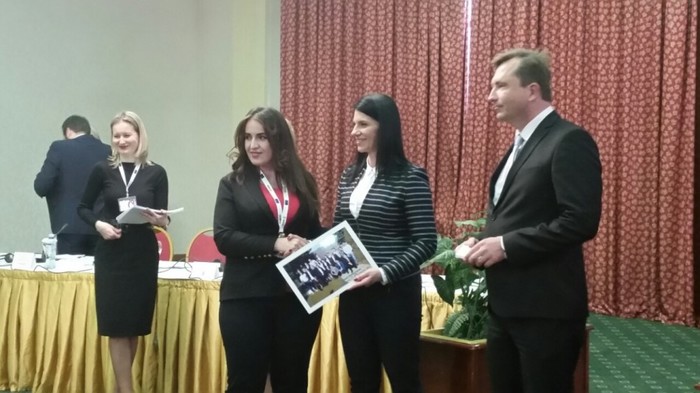
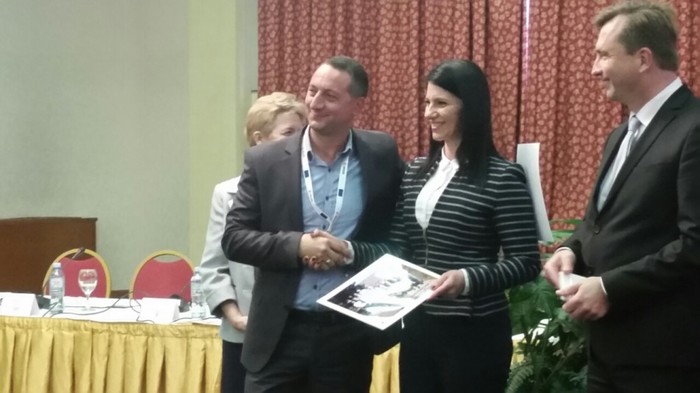
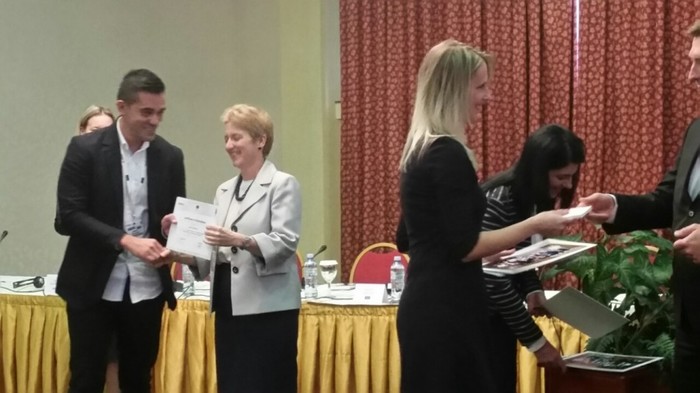
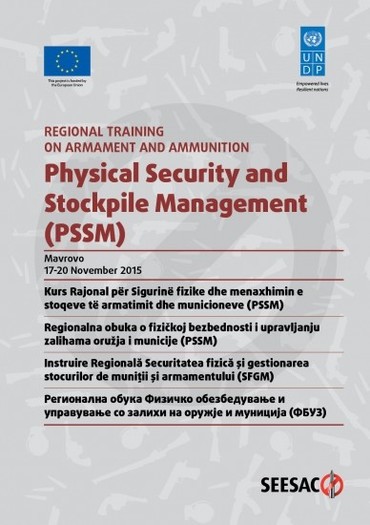
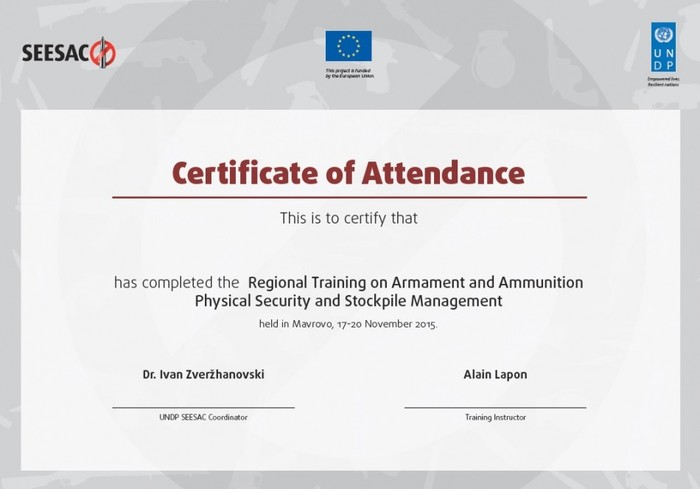
SKOPJE –Twenty three (23) experts from Police services and Ministries of Interior in South East Europe were awarded certificates at a ceremony held in Skopje on 20 November 2015. The event concluded the week-long Regional Course on Armament and Ammunition Physical Security and Stockpile Management (PSSM), organized by UNDP SEESAC and funded by the European Union. The course focused on the security aspects of the stockpiles.
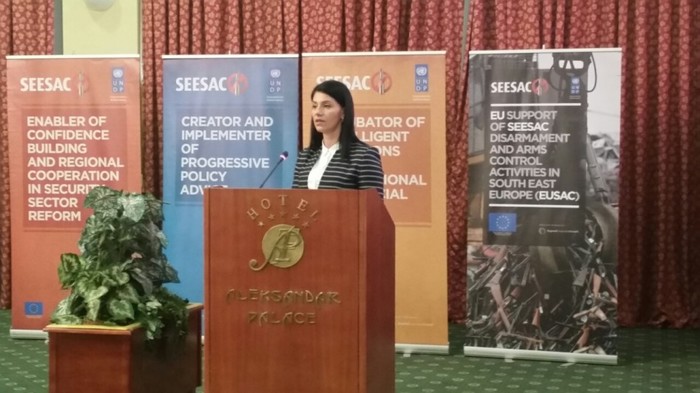
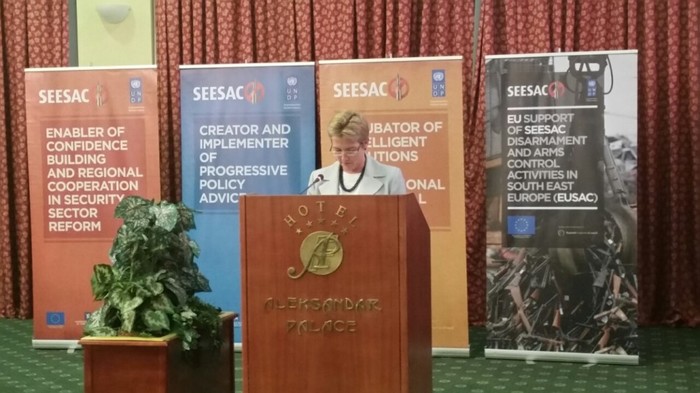
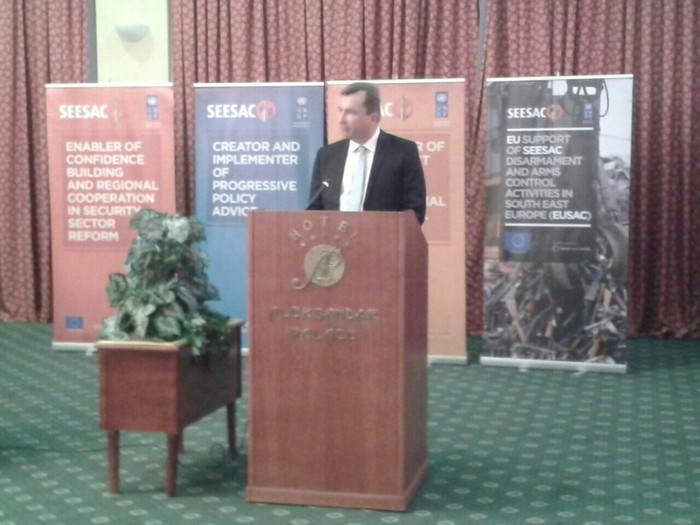
State Secretary of the Ministry of Interior Anastasija Ilieska, UNDP Resident Representative Louisa Vinton, and Head of Cooperation at the European Union Delegation Martin Klaucke spoke at the ceremony and awarded certificates to the participants from Albania, Bosnia and Herzegovina, Moldova, Montenegro, Serbia and the former Yugoslav Republic of Macedonia.
“This course is another confirmation of the commitment to support the police services in their daily work”, Ilieska said as she addressed the participants by thanking UNDP SEESAC for organizing the course.
“With the support of our partners such as the European Union, UNDP, through SEESAC, is working steadily to enhance the security infrastructure in key storage locations throughout South East Europe”, UNDP Resident Representative in Skopje Louisa Vinton underlined in her address. “However, we also recognize the need to further develop the capacities of the national authorities and experts to ensure that they are equipped with the latest knowledge in safeguarding the stockpiles. This regional course is a key contribution to those efforts”, Vinton concluded before awarding the certificates.
Head of Cooperation at the European Union Delegation in Skopje Martin Klaucke told the police experts that “the European Union is committed to maintaining the highest standards in SALW control and that secure storages are essential to non-proliferation”.
The participants praised the high quality of the course and the relevance of the topics covered despite the challenge of being held in five languages simultaneously.
The history of large-scale accumulation of small arms and light weapons and ammunition stockpiles in South East Europe (SEE), an insufficient number of secure storage locations, and the persistent lack of sufficient capacities to fully secure them has made the countries in the region a particular concern as well as an important challenge in the European Union Strategy to combat illicit accumulation and trafficking of small arms and light weapons (SALW) and their ammunition.
EU SUPPORT OF SEESAC DISARMAMENT AND ARMS CONTROL ACTIVITIES IN SOUTH EAST EUROPE (EUSAC)
The European Union entrusted SEESAC with the implementation of a series of region-wide activities in the period 2014 – 2016 through EU COUNCIL DECISION 2013/730/CFSP. The regional course is part of Component 1 of the resulting EUSAC Project (EU Support of SEESAC Disarmament and Arms Control Activities in South East Europe) which is an integral part of the SEESAC SALW Control portfolio.
EUSAC marks a continuation of the trust placed in SEESAC by the EU since 2002. The Union previously supported SEESAC through Council Decision 2002/842/CFSP, extended and amended by Council Decisions 2003/807/CFSP and 2004/791/CFSP. Most recently, the Union supported SEESAC arms control activities through Council Decision 2010/179/CFSP.
Designed in close cooperation with national authorities, the EUSAC project works on the following five interrelated streams of activities:
- Increased security of stockpiles: through the renovation and security improvements to storages of arms and ammunition.
- Stockpile reduction: through the destruction of surplus arms and ammunition held in storages.
- Improved marking, tracing and registration of SALW: through the provision of support to the establishment or enhancement of existing weapons registration and record-keeping systems.
- Improved regional cooperation on awareness raising, information sharing and knowledge transfer: through the facilitation of regional cooperation between national institutions tasked with arms control.
- Implementation of collection and awareness raising campaigns.