
PSSM Training Certificates Ceremony held for MoD Personnel from South East Europe
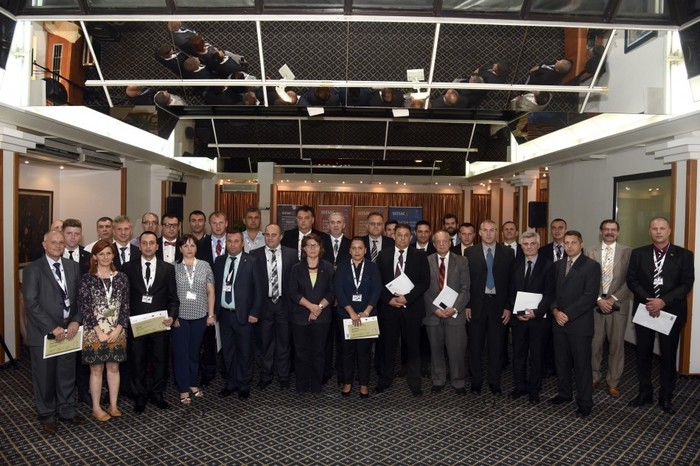
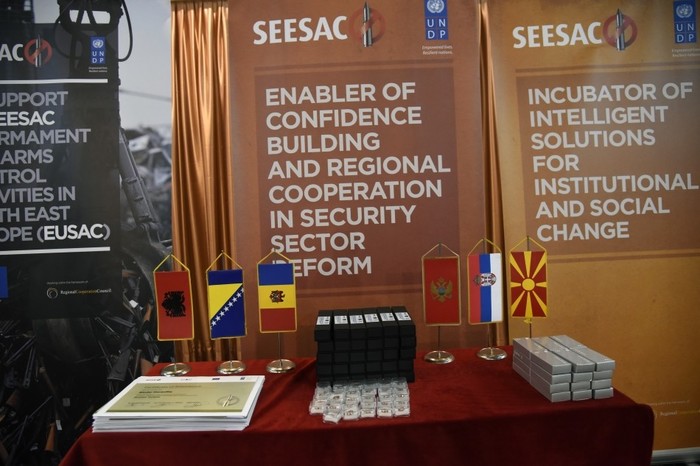
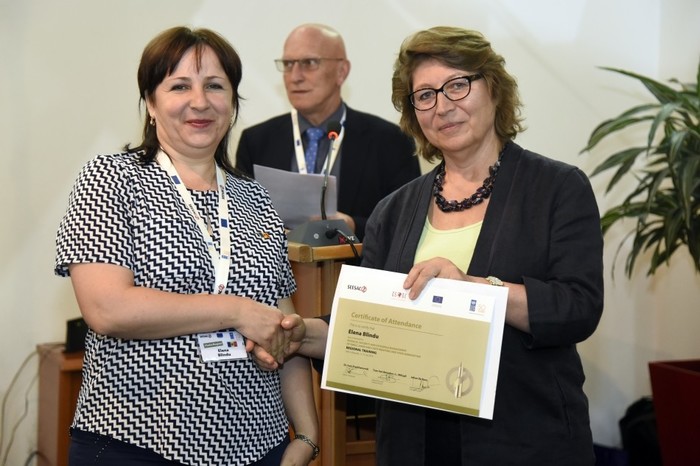
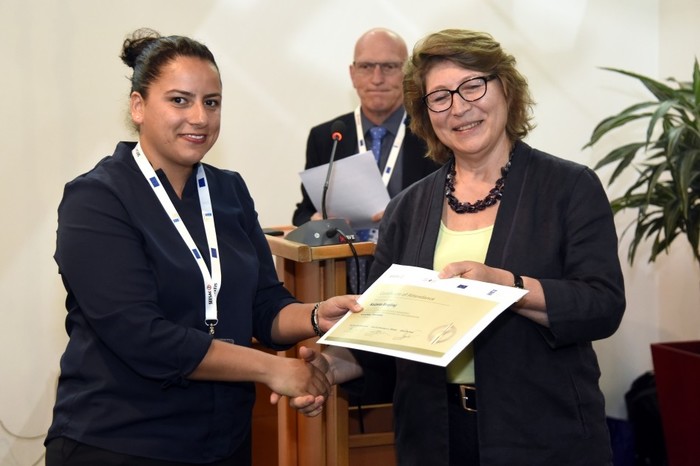
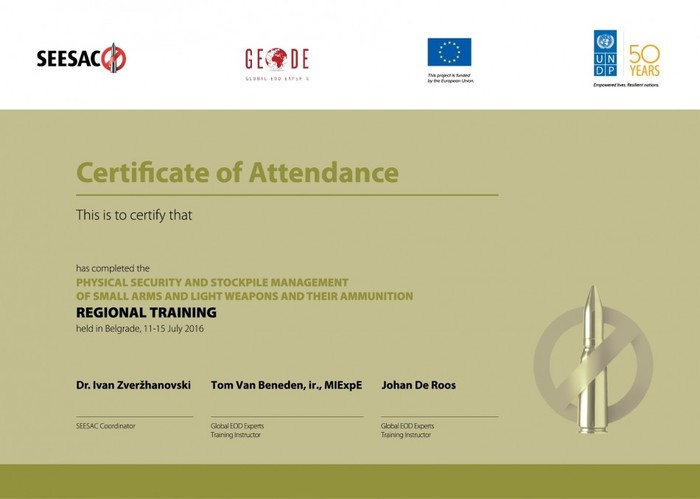
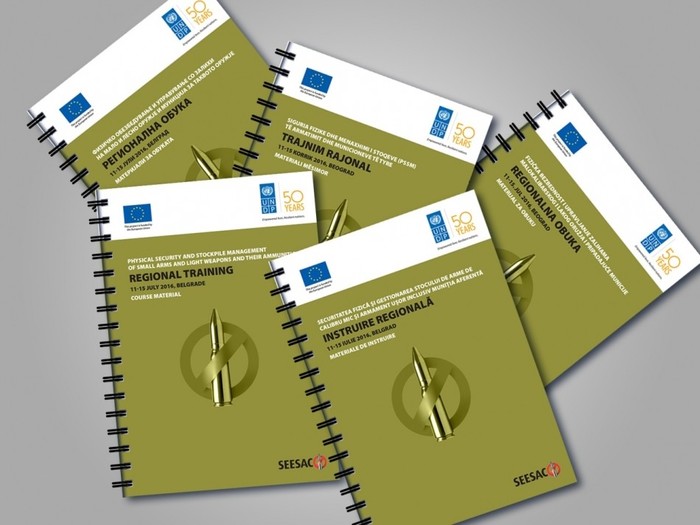
Certificates were awarded to 24 course participants from Ministries of Defence in South East Europe (SEE) who completed a week-long Regional Course on Physical Security and Stockpile Management (PSSM) of small arms and light weapons (SALW) and their ammunition. The course was funded by the European Union and organized by UNDP SEESAC in Belgrade on 11-15 July 2016.
United Nations Development Programme (UNDP) Resident Representative Ms. Irena Vojackova-Sollorano, SEESAC Coordinator Dr. Ivan Zverzhanovski and Global EOD Experts Training Instructors Tom Van Beneden ir., MIExpE, and Johan De Ross awarded the certificates and addressed the participants from Albania, Bosnia and Herzegovina, Moldova, Montenegro, Serbia and the former Yugoslav Republic of Macedonia.
“I am confident that the skills and expertise you have gained during this week, will allow you to perform your daily tasks in even more competent manner, thus contributing to the efforts that your countries are devoting to the control of weapons and ammunition”, United Nations Development Programme Resident Representative Ms. Irena Vojackova Sollorano told the participants during the ceremony.
“I would like to reaffirm strong commitment by UNDP and SEESAC and our valuable partners, such as the European Union, to providing continuous support to your institutions in the full range of activities aiming to facilitate the control of small arms and light weapons. By doing so we will create together conditions for a more secure, safer and prosperous region”, she emphasized.
Held simultaneously in five languages, the course was of the highest quality, covering the most relevant and useful topics that will help participants significantly improve management of the stockpiles in their own countries, representatives of MoDs from six SEE countries who attended the course said during the ceremony.
This Regional PSSM Course was organized as part of Component 1 of SEESAC’s EUSAC project, aiming to reduce the threat posed by the spread and illicit trafficking of SALW and their ammunition through capacity development of personnel tasked with managing stockpiles. The main objective of the course was to enhance the capacities of MoD and armed forces personnel tasked with managing and safeguarding SALW and their ammunition – with a specific focus on the security of stockpiles. The course complements efforts to increase security of storages through infrastructure improvements implemented under the same component of the EUSAC project.
EU SUPPORT OF SEESAC DISARMAMENT AND ARMS CONTROL ACTIVITIES IN SOUTH EAST EUROPE (EUSAC)
The European Union entrusted SEESAC with the implementation of a series of region-wide activities in the period 2014 – 2016 through EU COUNCIL DECISION 2013/730/CFSP. The regional course is part of Component 1 of the resulting EUSAC Project (EU Support of SEESAC Disarmament and Arms Control Activities in South East Europe) which is an integral part of the SEESAC SALW Control portfolio.
EUSAC marks a continuation of the trust placed in SEESAC by the EU since 2002. The Union previously supported SEESAC through Council Decision 2002/842/CFSP, extended and amended by Council Decisions 2003/807/CFSP and 2004/791/CFSP. Most recently, the Union supported SEESAC arms control activities through Council Decision 2010/179/CFSP.
Designed in close cooperation with national authorities, the EUSAC project works on the following five interrelated streams of activities:
- Increased security of stockpiles: through the renovation and security improvements to storages of arms and ammunition.
- Stockpile reduction: through the destruction of surplus arms and ammunition held in storages.
- Improved marking, tracing and registration of SALW: through the provision of support to the establishment or enhancement of existing weapons registration and record-keeping systems.
- Improved regional cooperation on awareness raising, information sharing and knowledge transfer: through the facilitation of regional cooperation between national institutions tasked with arms control.
- Implementation of collection and awareness raising campaigns.