
Montenegro Publishes its Ninth National Report on Foreign Trade in Controlled Goods
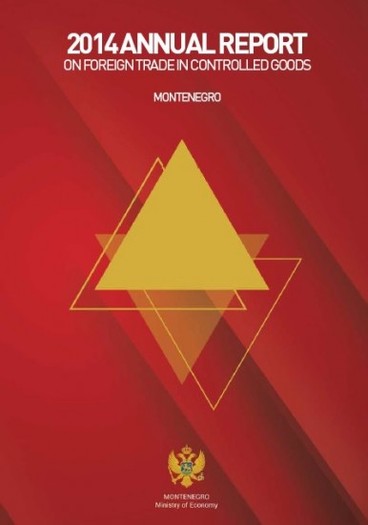
Montenegro’s Ministry of Economy, published its 2014 Annual Report on Foreign Trade in Controlled Goods contributing thus to higher level of transparency in the field of foreign trade in controlled goods
Translated into English and printed with support of SEESAC’s Western Balkans Arms Transfers Control Programme, the report provides information on Montenegro’s national legislation, its international commitments and activities, as well as details on licenses issued for import and export of arms
and military equipment (AME), and non-military munitions.
In its section on national legislation Montenegro’s 9th National Report contains information on national control list, international legal instruments and control regimes and international treaties and conventions. Section on Montenegro’s role in the foreign trade control system covers international cooperation, technical support for the country’s capacity building in the area of transfer controls of controlled goods, and further activities in foreign trade in this field. The report’s annexes
provide tables with figures on the approved licenses for foreign trade in controlled goods.
The Report closely follows recommendations by the European Union on the form and content of national reports, making it compatible with the EU reports as well as national reports in the region. It is available in both English and Montenegrin on
SEESAC’s National and Regional Reports page.
Publishing the report contributes to strengthening Montenegro’s credibility worldwide and improving international cooperation in this area.
SEESAC has been assisting Western Balkan countries in translating and publishing their national reports since 2007. So far 36 national annual reports have been published with SEESAC’s support.
Under the auspices of its Western Balkans Arms Transfers Control Programme SEESAC has been supporting the authorities of Albania, Bosnia and Herzegovina, Croatia, Montenegro, Serbia, and the former Yugoslav Republic of Macedonia as they work to further strengthen their national arms transfer control capacities. Arms Transfers Control Programme has contributed to a significant increase of transparency in arms transfers, as well as regional confidence building, knowledge transfer, and information sharing in the Western Balkans.