
Gender Trainers in MoD and Army of the former Yugoslav Republic of Macedonia Review Results
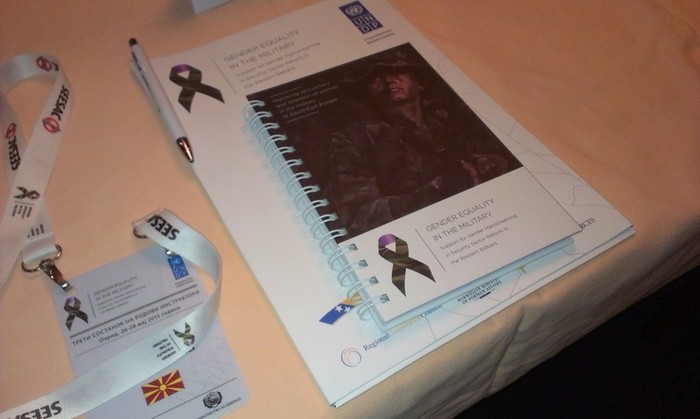
OHRID - Gender Trainers in the Ministry of Defence (MoD) and the Army (ARM) of the former Yugoslav Republic of Macedonia reviewed results during their first meeting on 27 May 2015. They exchanged experiences and lessons learnt about gender awareness activities they delivered so far and made plans for the rest of 2015. SEESAC supported the meeting on request of the Ministry of Defence of the former Yugoslav Republic of Macedonia.
From March to May this year, over 1,100 professional soldiers, NSOs, officers and civilians received gender awareness briefings by Gender Trainers who attended the Ohrid meeting.
During the meeting in Ohrid, Trainers discussed the briefing they delivered, completed planning for the second part of 2015, agreed on venues and locations where upcoming briefings will take place as well as assigned tasks to each Trainer.
Gender Trainers are members of the Regional Network of Gender Trainers, created in 2014 after the first Gender Training of Trainers organized by UNDP SEESAC in cooperation with the NCGM and Ministries of Defence and Armed Forces in Bosnia and Hercegovina, Montenegro, Republic of Serbia and the former Yugoslav Republic of Macedonia. The trainers are working to mainstream gender equality throughout the Armed Forces by sensitizing the staff, which in turn would help to attract and keep female personnel.
SEESAC is supporting the Regional Network of Gender Trainers through facilitation of regional meetings to enable information and knowledge sharing among gender trainers in the region, additional training and expert support.
About THE GENDER EQUALITY IN THE MILITARY PROJECT
SEESAC's Gender Equality in the Military: Strengthening of Regional Cooperation on Gender Mainstreaming in Security Sector Reform in the Western Balkans project aims to create a more conducive environment for the advancement of women in the military in the Western Balkans. With this as its goal, SEESAC is supporting the Ministries of Defense in Bosnia and Herzegovina, the former Yugoslav Republic of Macedonia, Montenegro and Serbia in their efforts to ensure better integration, retention and professional development for women in the armed forces as well as stronger participation of women in decision-making and gender sensitive change in their organizational cultures.