
“From Cradle to Grave” – Tracing the firearms
The illicit trade in small arms and light weapons occurs in all parts of the globe but is concentrated in areas afflicted by armed conflict, violence, and organized crime, where the demand for illicit weapons is often highest. Arms trafficking fuels civil wars and regional conflicts; stocks the arsenals of terrorists, drug cartels, and other armed groups; and contributes to violent crime.
The European Union Firearms Strategy states the following: One area of law enforcement cooperation which merits particular mention is work on tracing firearms. Tracing is essential for identifying who is responsible for firearms offences and how he acquired the firearm. It can uncover arms trafficking structures and detect offenders, and it helps governments put in place efficient and targeted firearms policies.
According to the International Small Arms Control Standards; tracing is the systematic tracking of illicit small arms or light weapons from their point of manufacture or most recent import, through their lines of supply, to their last legal title-holder, in order to determine the point, in space and time, at which they became illicit.
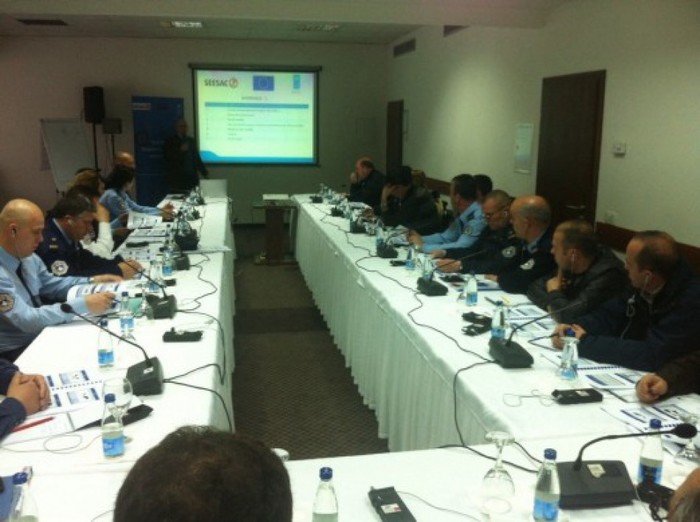
UNDP’s Firearms and Explosives Risk Minimization Project (FERM) aims to provide training to 140 Kosovo Police officers in the field of tracing of firearms, its parts and ammunition in the period from 23 March 2015 till 02 April 2015. The lectures include accurate firearms identification, logistics and modus operandi of illicit firearms trafficking and tracing.
This activity is part of the EUSAC Project of EU Council Decision 2013/730/CFSP in support of SEESAC disarmament and arms control activities in South East Europe.