
A Groundbreaking Study on the Position of Women in the Armed Forces in the Western Balkans Launched
Although military careers are now open to women in the Western Balkan countries, a more systematic approach is needed to attract and retain them in the defense and armed forces, and gender perspective must be integrated into the human resource policies and practices.
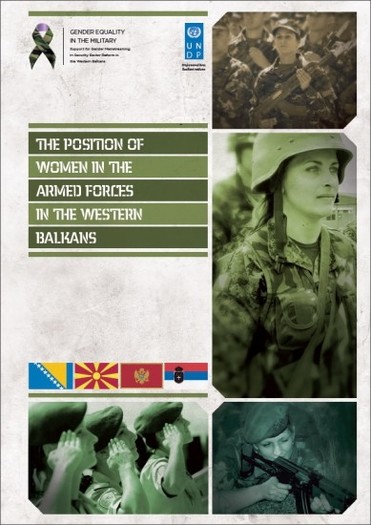
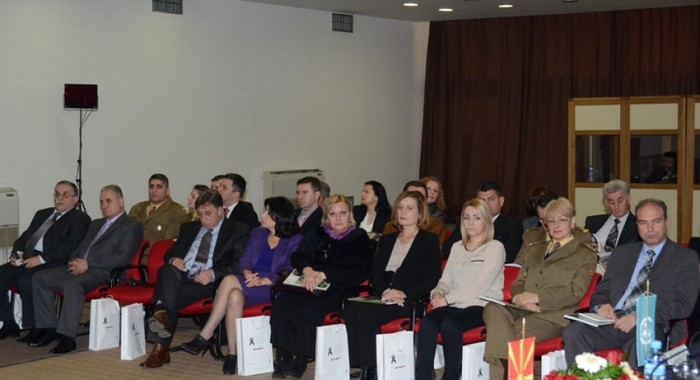
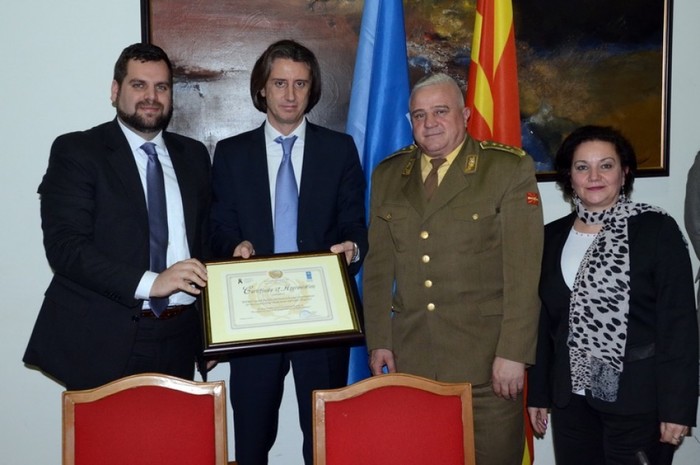
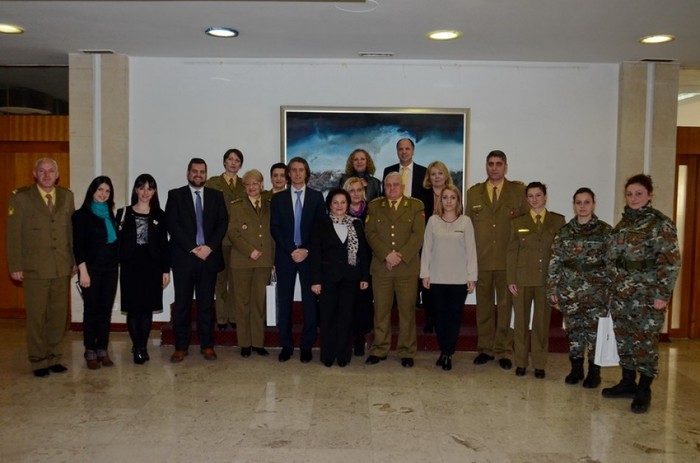
Recognizing this need, the Ministries of Defence of Bosnia and Herzegovina, Montenegro, Serbia and the former Yugoslav Republic of Macedonia, with the support of UNDP/SEESAC, conducted a joint baseline study of The Position of Women in the Armed Forces in the Western Balkans, which was officially launched in Skopje on 4 February.
The Study provides regionally comparable data on the position of women in the armed forces in the Western Balkans and as such represents a truly unique example of regional cooperation. Endorsed by all four Ministries, it is an essential tool for the development and implementation of gender sensitive recruitment and retention policies.
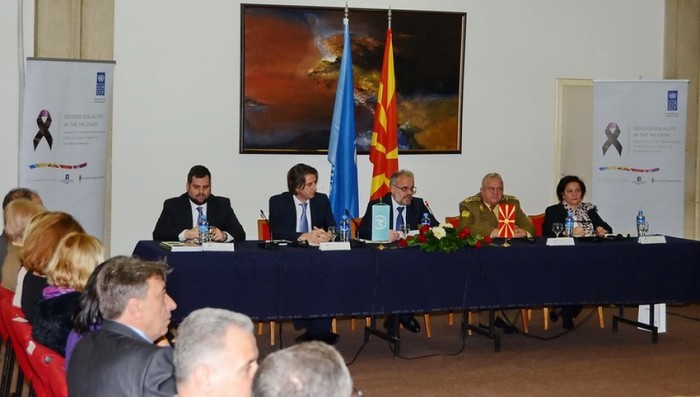
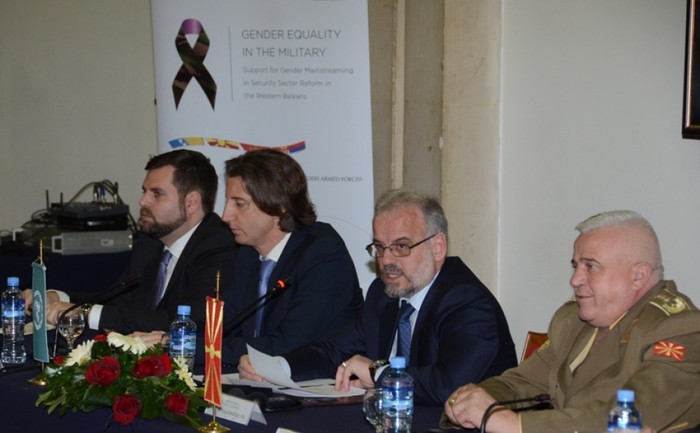
Its first, in a series of region-wide presentations, was hosted by Mr. Talat Xhaferi, Minister of Defence of the former Yugoslav Republic of Macedonia. Minister Xhaferi emphasized that in spite of efforts to include gender perspectives in the military, Ministries and the Armed Forces continue to face challenges in achieving better inclusion of women in their ranks.
„This study will inform decision-making on improving recruitment, retention and professional development of women in the military, and will serve as a basis for the implementation of UNSCR 1325,” Mr. Xhaferi said.
Mr. Alessandro Fracassetti, UNDP Deputy Resident Representative in the fYR of Macedonia, emphasized the important role of the working group, nominated by the MoDs, which was responsible for the development of the methodology of the research, collection of data, analysis and formulation of recommendations.
“The study represents a much needed baseline of the position of women in the military in these four Western Balkan countries. It identifies gaps and ceilings but also provides quick-win and low-cost measures to make security institutions more efficient. The implementation of the study’s recommendations is the next step,” said Dr. Ivan Zveržhanovski, UNDP/SEESAC Coordinator.
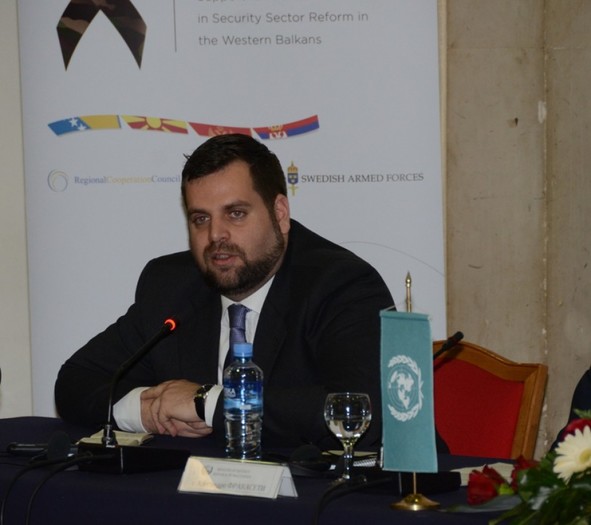
The findings of the study were presented by a working group member, Ms. Julijana Stojanova, Assistant Head of the Human Resources Department. Among the highlighted data were the following:
- Women make up between 5.69 and 8.97% of the armed forces in the Western Balkans, and a majority of them are in administrative, medical and civilian positions;
- Women represent no more than 4,93% of the uniformed personnel in the army, 4.89% in the air force and 0,69 in the navy;
- Women occupy up to 2.94% of command positions.
The Study was conducted as an activity of the regional Gender Equality in the Military: Strengthening of Regional Cooperation on Gender Mainstreaming in Security Sector Reform in the Western Balkans project, implemented by UNDP/SEESAC.
The study is currently available in English, Macedonian and Albanian.
ABOUT THE GENDER EQUALITY IN THE MILITARY PROJECT
SEESAC's Gender Equality in the Military project aims to create a more conducive environment for the advancement of women in the military in the Western Balkans. With this as its goal, SEESAC is supporting the Ministries of Defense in Bosnia and Herzegovina, the former Yugoslav Republic of Macedonia, Montenegro and Serbia in their efforts to ensure better integration, retention and professional development for women in the armed forces as well as stronger participation of women in decision-making and gender sensitive change in their organizational cultures.