
6th RASR Workshop Reconfirms - Unstable and Inadequately Managed Stockpiles Remain a Threat to the Region
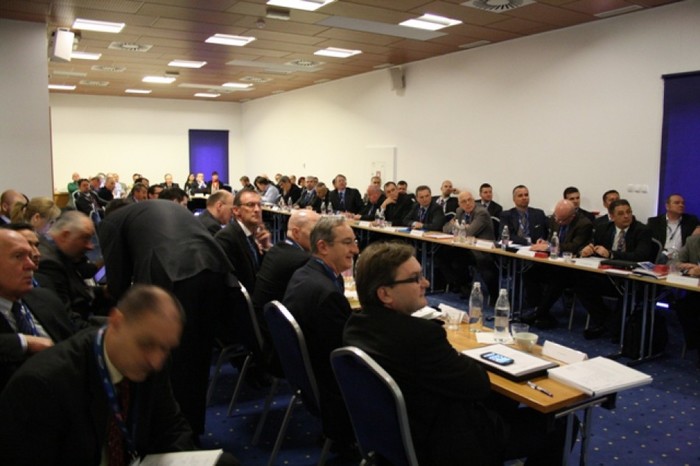
The workshop was attended by more than 80 participants
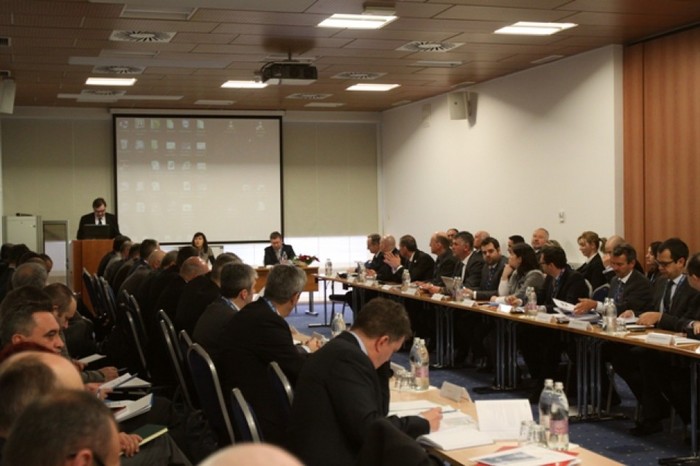
Opening of the 6th RASR Workshop
On 3-5 April, the 6th Workshop of the Regional Approach to Stockpile Reduction (RASR) of Conventional Weapons and Munitions Initiative took place in Bled, Slovenia. The focus of the 6th RASR workshop were national legal frameworks regulating import, export and transit of weapons, ammunition and dual-use goods, particularly as they relate to the surplus weapons and munitions.
RASR is a regional initiative which aims to coordinate and support countries of South East Europe (SEE) and regional organizations in their efforts to reduce unstable and excess stockpiles of conventional weapons and munitions.
The 6th workshop was hosted by this year’s RASR chair– ITF Enhancing Human Security and by the Ministry of Defence (MoD) of Slovenia. Dr. Alenka Temeljotov Salaj, MoD Director General for Logistics and Mr. Eugene S. Young, U.S. Deputy Chief of Mission in Slovenia officially opened the event, while more than 80 high level MoD officials from
countries in the region and technical experts in the field of stockpile management attended it.
The provided presentations reconfirmed that the surplus weapons and munitions in SEE continue to present a threat to the safety and security of the region. Furthermore, comparative review of national laws on arms exports showed that most countries encounter similar obstacles in trying to resolve the problem of surplus.
On this occasion, RASR Steering Committee members updated all present on the relevant activities implemented in the region.
UNDP/SEESAC shared experiences regarding the disposal of the napalm surplus, one of the key activities of the Capacity Development Programme for Conventional Ammunition Stockpile Management for the Republic of Serbia (CASM) - a joint development programme of the Ministry of
Defense of the Republic of Serbia, the United Nations Development Programme (UNDP), and the Organization for Security and Cooperation in Europe (OSCE).
The ITF presented a short video featuring unplanned explosions at munitions sites (UEMS) followed by a detailed explanation of the technical consequences of an explosion and steps to be taken in order to prevent one from taking place. NATO Support Agency (NSPA) shared their experiences in the transfer of ammunition.
Small Arms Survey (SAS) provided an update on the latest publications regarding stockpiles control while RACVIAC Centre for Security, informed all present about the training capacities, resources, experiences, future workshops and conferences which are taking place at RACVIAC and are complementary to the RASR initiative.
RASR initiative is coordinated by the RASR Steering Committee members: ITF Enhancing Human Security, NATO Support Agency (NSPA), RACVIAC, UNDP/SEESAC and Small Arms Survey, with the assistance from the U.S. Department of
State. Albania, Bosnia and Herzegovina, Bulgaria, Croatia, the former Yugoslav Republic of Macedonia, Montenegro, Romania, Slovenia and Serbia are the nine countries participating in the RASR initiative.